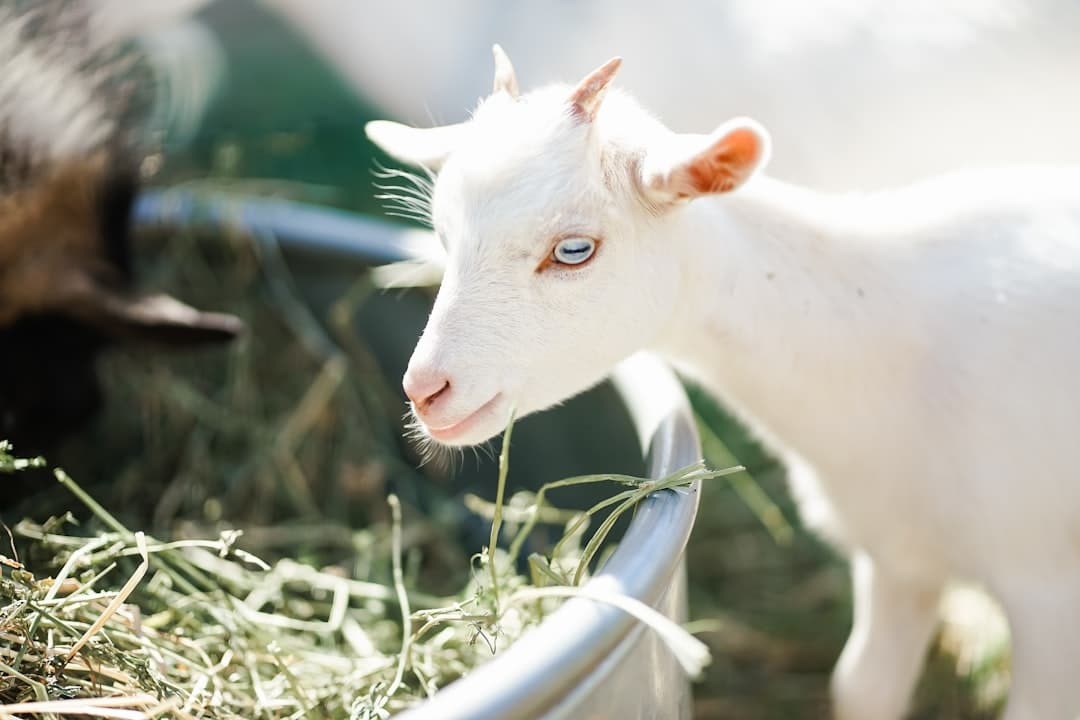
Once you’ve settled on a breed — whether that’s a meat goat, a dairy goat, or one of the smaller dual-purpose breeds — the next question is almost always the same: what should you actually be feeding it?
Goat feed isn’t one-size-fits-all. What a doe needs while nursing kids is very different from what a browsing buck needs the rest of the year, and one of the most common beginner mistakes — feeding sheep mineral to goats — can quietly make your goats sick over time.
This guide covers goat feed basics by life stage, how hay, pellets, and browse fit together, and why copper matters so much more for goats than most beginners realize.
Goat Feed by Life Stage
Goat nutrition needs shift quite a bit depending on age, sex, and whether an animal is pregnant or nursing.
Kids
Kids need milk (from their dam or a bottle) for the first several weeks, then a gradual transition onto a higher-protein starter feed and good quality hay as they wean. Growing kids benefit from a bit more concentrated feed than adult goats since they’re building frame and muscle.
Does
A dry (non-lactating) doe can usually get by on good hay or pasture with modest supplemental feed. Once she’s pregnant, and especially once she’s nursing kids, her energy and protein needs climb sharply — this is when most goat feed pellets and grain supplements earn their keep.
Bucks
Bucks generally need less concentrated feed than a lactating doe, but they’re prone to urinary calculi if their diet leans too heavily on grain, so keep an eye on the calcium-to-phosphorus ratio and don’t overfeed pellets just because they’re bigger animals.
Hay vs Pellets vs Browse
Goats aren’t grazers in the way cattle or sheep are — they’re natural browsers, which means they’d rather eat brush, leaves, and weeds at chest height than graze short grass at their feet. That instinct should shape how you think about goat feed generally, covered in our broader look at the different types of animal feed.
Browse should be the foundation whenever it’s available — it’s free, it’s what goats are built to digest, and it keeps them busy. Hay fills the gap when browse and pasture aren’t available, particularly over winter, and should make up the bulk of their diet if pasture is limited. Pelleted or grain feed is a supplement on top of that, mainly for pregnant or lactating does, growing kids, or goats in noticeably poor body condition — not a replacement for forage.
A goat fed too much grain and not enough forage is at real risk of bloat and digestive upset, so resist the urge to over-supplement just because pellets are convenient.
Copper: The Mineral Goats Need More Than You’d Think
Here’s the beginner mistake worth repeating until it sticks: goats need substantially more copper than sheep, and sheep mineral is formulated with little to no copper because copper is actually toxic to sheep at goat-appropriate levels.
If you keep both species, or you buy mineral at a feed store without checking the label carefully, it’s very easy to accidentally hand your goats a sheep-safe mineral mix that leaves them copper-deficient. Signs of copper deficiency in goats include a dull, faded coat, a “fish tail” (thin tuft at the tip of the tail), and reduced fertility over time.
The fix is simple: always buy mineral labeled specifically for goats, not a generic “sheep and goat” blend, and check the copper content on the tag before you buy.
Goat Feed and Mineral Products Worth Considering
Purina Goat Chow Plus Up Goat Feed (50 lb)
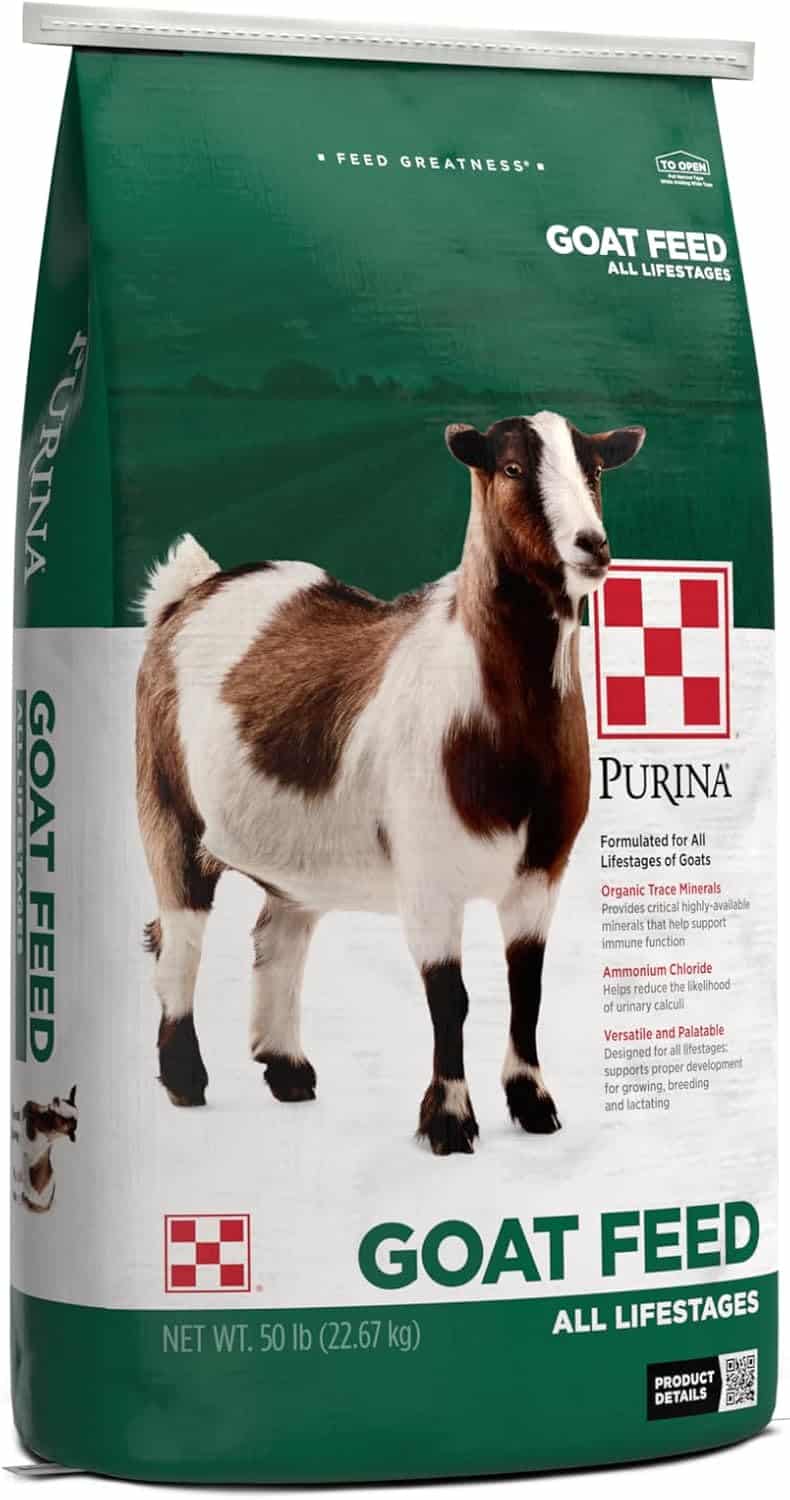
Purina’s Goat Chow Plus Up is a widely available, general-purpose goat feed built around high-quality grains and plant proteins, with organic trace minerals folded into the base formula. It’s a solid everyday supplemental feed for does that need extra energy during late pregnancy or lactation, and for kids being weaned onto solid feed.
It’s not a substitute for good hay or pasture — treat it as the supplemental layer, not the base of the diet, and adjust the amount down for goats that aren’t pregnant, nursing, or actively growing.
Manna Pro Goat Mineral Supplement (8 lb)
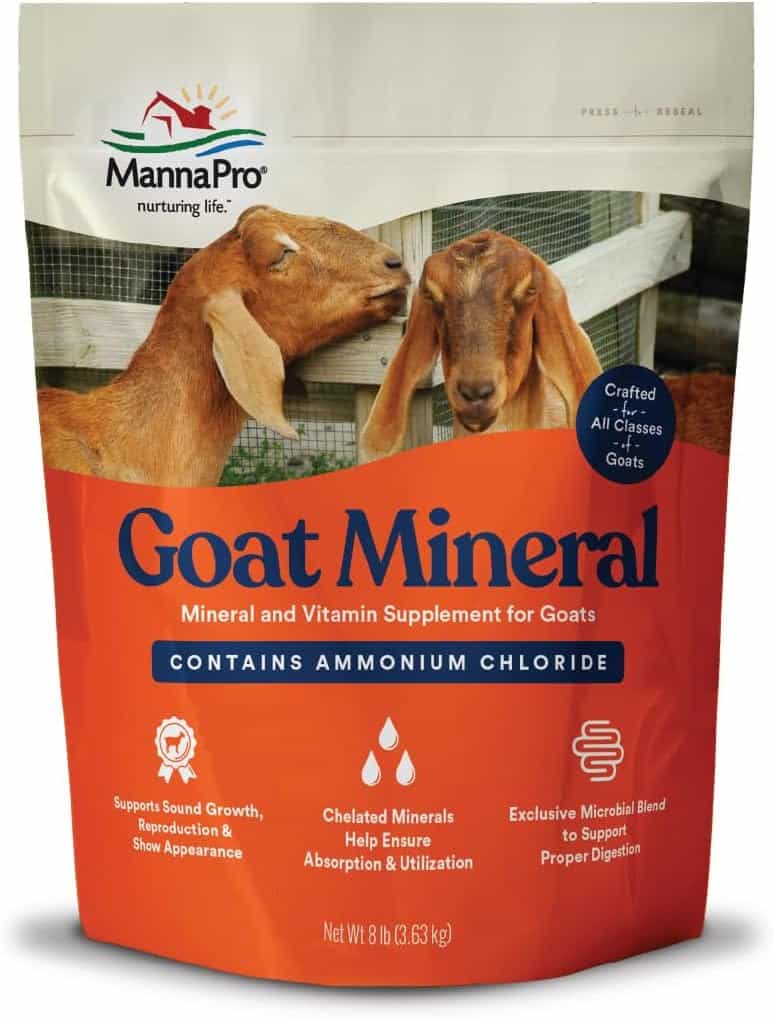
This is a mineral supplement formulated specifically for goats, with copper included at goat-appropriate levels, plus ammonium chloride to support urinary tract health — particularly useful for bucks and wethers prone to urinary calculi.
Offer it free-choice in a covered feeder rather than mixing it into feed, since goats will self-regulate their intake better than you can guess for them.
Sweetlix Meat Maker Goat 16-8 Mineral with RainBloc (18 lb)
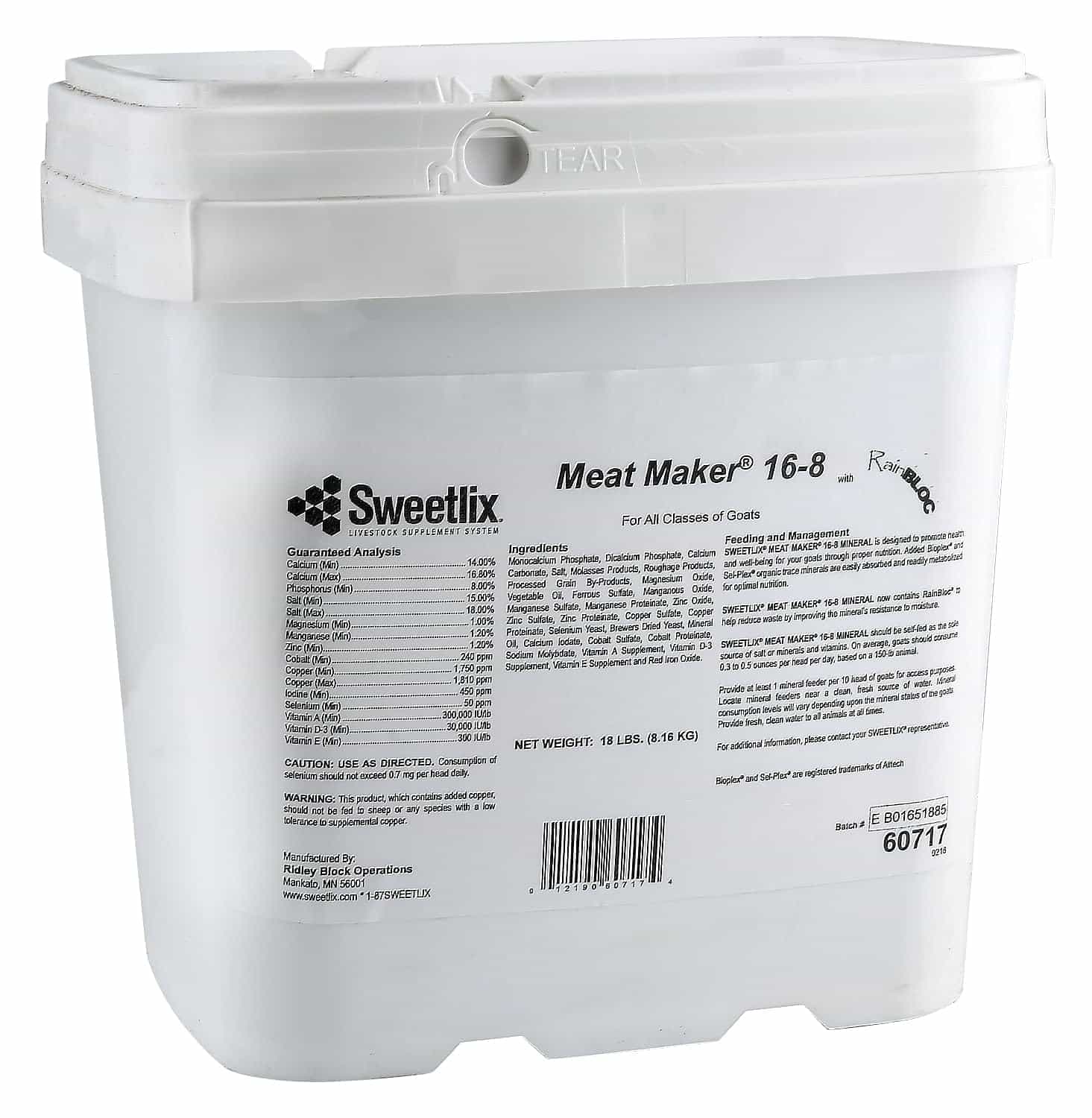
Sweetlix’s Meat Maker line is built for meat goats specifically, with a 16-8 calcium-to-phosphorus ratio designed to support growth without pushing bucks and wethers toward urinary issues. The RainBloc formula also crusts over after rain, which cuts down on waste in an outdoor mineral feeder.
Goats should consume roughly 0.3–0.5 ounces per head per day on a self-fed basis, so one 18 lb tub goes a reasonably long way for a small herd.
Wrapping Up
Good goat feed comes down to matching the diet to the life stage, leaning on browse and hay as the foundation, and getting the mineral program right — especially copper. Get those three things in order and most goat feed decisions from there are just fine-tuning.
FAQ — Goat Feed
For how goats feed naturally, why they browse rather than graze, and the plants that are toxic to them, see our guide to what goats eat.
No. Sheep mineral contains little to no copper because copper is toxic to sheep at the levels goats need, so feeding it to goats long-term can cause a copper deficiency. Always use a mineral labeled specifically for goats.
Grain or pelleted feed should be a supplement, not the base of the diet. Most goats only need it during pregnancy, lactation, or active growth — a dry, non-lactating adult can often get by on hay and browse alone.
Goats are natural browsers and prefer brush, leaves, and weeds over short grass. Hay is the practical stand-in when live browse or pasture isn’t available, particularly during winter months.