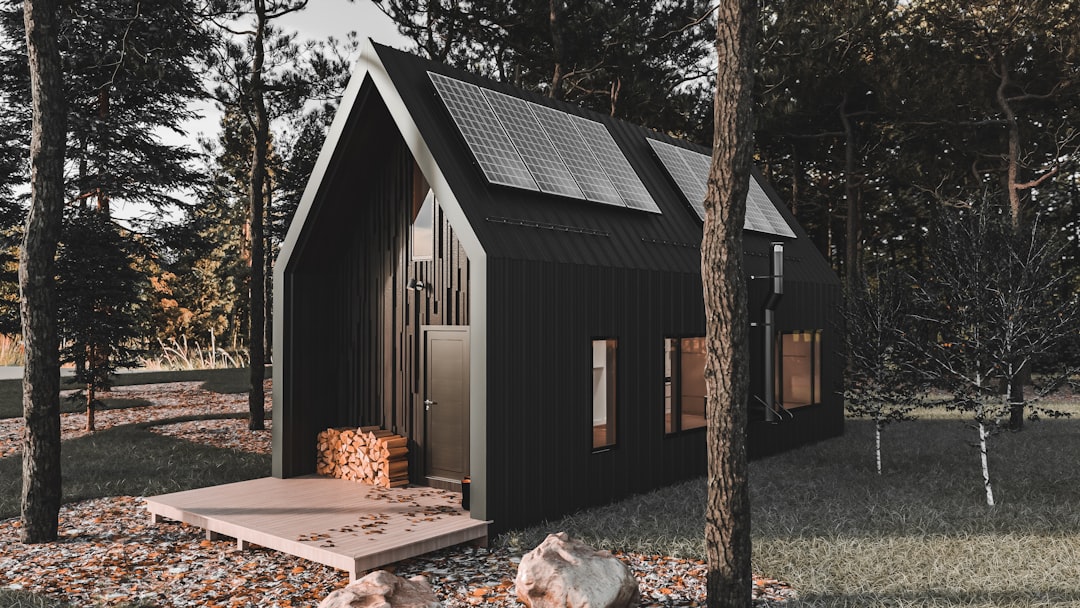
A composting toilet is one of the most practical upgrades you can make to an off-grid home, and it’s often one of the first questions people ask when they start planning a homestead without a septic or sewer connection. No water lines, no septic tank, and no black tank to pump out — just a system that turns waste into something you can eventually return to the soil.
This guide covers how composting toilets actually work, why off-grid households choose them, the difference between self-contained and central-system designs, and three real products worth considering.
How Composting Toilets Work
Composting toilets rely on two core principles: keeping waste dry enough to decompose aerobically instead of turning into sludge, and separating urine from solids so the mixture doesn’t become overly wet.
Urine Diversion
Most modern composting toilets use a front chamber or funnel that routes urine into a separate tank, away from the solids chamber. This single design choice does most of the heavy lifting — without it, solids stay wet and start to smell and putrefy rather than compost cleanly.
Aerobic Decomposition
With urine diverted away, solids mix with a dry cover material — usually coconut coir or peat moss — and a small fan pulls air through the chamber. That airflow keeps the decomposition process aerobic (oxygen-based) rather than anaerobic, which is the difference between an earthy, inoffensive smell and the rotten-egg smell anaerobic waste produces.
Why Off-Grid Homesteads Use Composting Toilets
If you’re living off grid, a composting toilet solves a problem a flush toilet simply can’t: you don’t need pressurized water, a septic system, or a leach field to use one. That makes them a natural fit for cabins, tiny homes, converted vans, and any homestead where running a full septic line would be expensive or impractical.
They also cut water use dramatically — a genuine benefit if you’re relying on a well, rainwater catchment, or hauled water rather than municipal supply. And because the end product, once fully composted and handled per local regulations, can be added back to non-edible landscaping, it fits neatly into a broader self-sufficient, closed-loop approach to homesteading.
Self-Contained vs Central-System Composting Toilets
Self-contained units hold the entire composting chamber inside the toilet itself, right where you sit. They’re compact, easier to install in tight spaces like tiny homes or vans, and don’t require running anything below the floor — but their smaller chamber size means more frequent emptying, and capacity is more limited for a large household.
Central-system units separate the toilet fixture from a larger composting chamber, typically installed below the floor or in a basement/crawl space, connected by a chute. They handle much higher usage volumes and need emptying far less often, but they require more installation space and planning, which makes them a better fit for a permanent home than a mobile or very small structure.
The 3 Best Composting Toilets for Off-Grid Homes
These three cover the main categories: a compact self-contained unit, a rugged marine/RV-proven option, and a higher-capacity choice for a permanent off-grid home.
1. Separett Villa Urine-Separating Composting Toilet
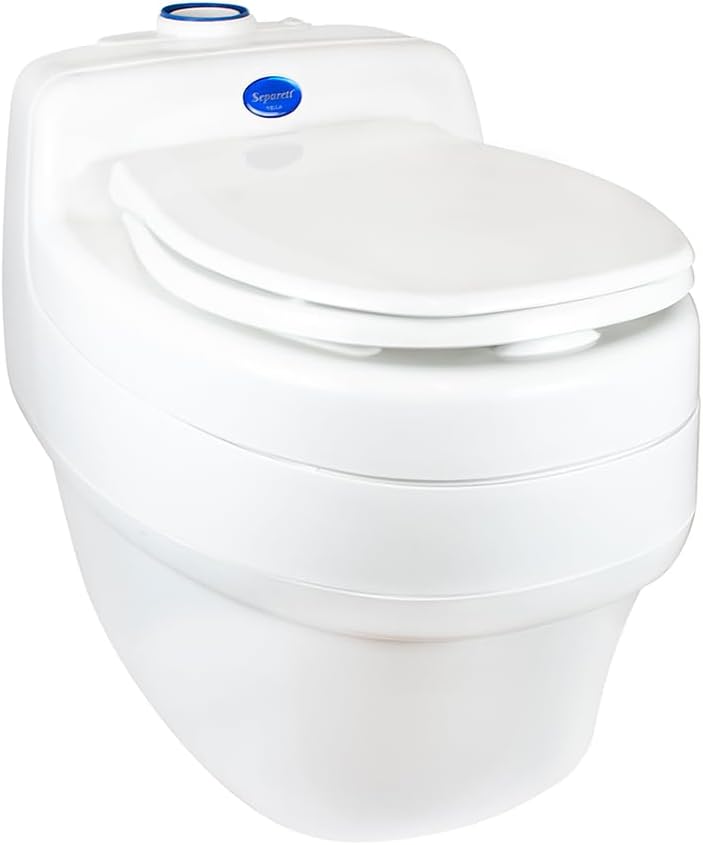
The Separett Villa is designed specifically around urine diversion, with no additives or mixing required to keep it running. It works on either 110-240V AC power or 12V DC solar/battery power, which makes it genuinely flexible for an off-grid setup that isn’t tied to grid electricity.
Its 6-gallon solids container handles continuous or alternating use well, and the fan draws very little power — a real consideration if you’re running on a modest solar setup.
Pros of Separett Villa
- Runs on 12V DC solar/battery or standard AC power
- No additives or mixing required
- Low-power fan suited to modest solar setups
Cons of Separett Villa
- Larger footprint than some self-contained units
- Vent run limited to about 20 feet with up to three elbows
2. Nature’s Head Dry Composting Toilet with Standard Crank Handle
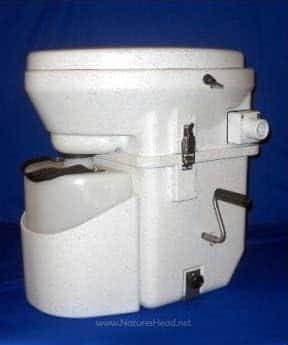
Nature’s Head is one of the most established names in composting toilets, originally built for boats, which tells you a lot about how well-sealed and vibration-tolerant it is. It’s fully self-contained, waterless, and lightweight, making it a favorite for tiny homes, vans, and cabins alike.
A hand crank agitates the solids chamber to help with even composting, and the separate urine bottle needs emptying every few days depending on usage — a normal part of the routine that’s worth planning around before you install one.
Pros of Nature’s Head
- Fully self-contained, no plumbing required
- Proven design from marine/RV use
- Lightweight and compact for tiny homes and vans
Cons of Nature’s Head
- Urine bottle needs emptying every 2-3 days for regular use
- Smaller solids capacity than a central-system unit
3. Sun-Mar Excel Non-Electric Self-Contained Composting Toilet
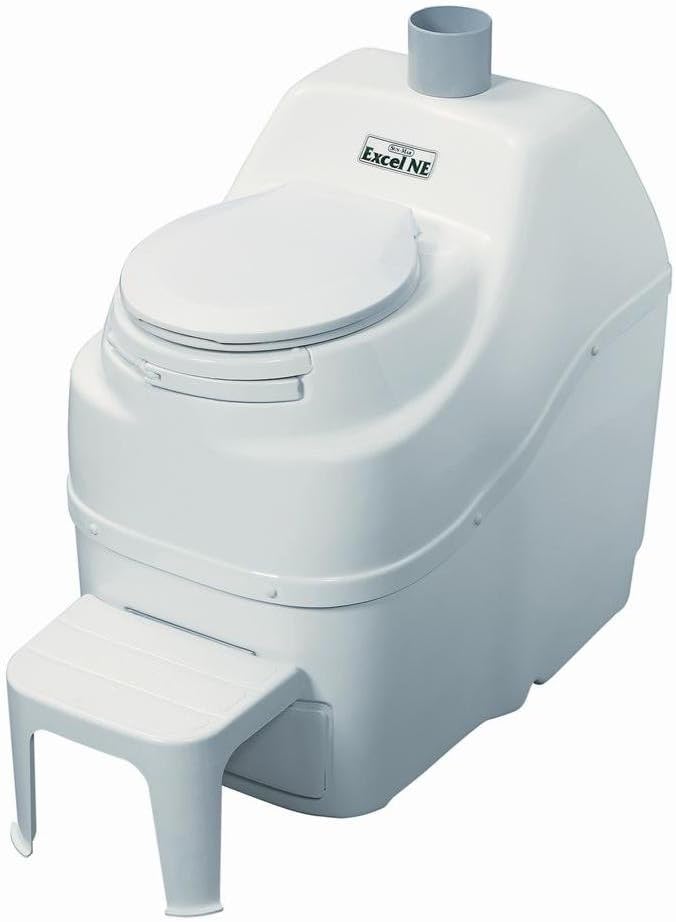
The Sun-Mar Excel-NE is a higher-capacity, self-contained unit built for 2–3 people using it as a full-time residence — a step up from a weekend cabin or van setup. Being non-electric, it’s a genuinely good fit for a homestead with no power at the bathroom location at all.
It’s NSF Standard 41 certified, which is worth knowing if your local permitting office asks about certification before approving a composting toilet installation.
Pros of Sun-Mar Excel-NE
- Higher capacity, suited for full-time residential use
- Fully non-electric operation
- NSF Standard 41 certified
Cons of Sun-Mar Excel-NE
- Larger and heavier than the self-contained competitors here
- Mixed customer reviews on long-term durability
Conclusion
A composting toilet is one of the more straightforward upgrades for going off-grid — no septic system, minimal water use, and a genuinely manageable maintenance routine once you’re used to it. Pick a self-contained unit for a smaller or mobile setup, or a higher-capacity model if you’re outfitting a permanent, full-time off-grid home.
FAQ — Composting Toilets
A properly installed and maintained composting toilet shouldn’t smell noticeably. Urine diversion and a small exhaust fan keep decomposition aerobic, which produces an earthy smell rather than the odor of anaerobic waste.
Self-contained units typically need the urine container emptied every 2-4 days for regular use, and the solids chamber emptied every few weeks to a couple of months depending on household size and usage.
Most benefit from a small fan for ventilation, but several models, including non-electric Sun-Mar units, run entirely without power, and others like the Separett Villa can run on 12V solar or battery power instead of standard AC.