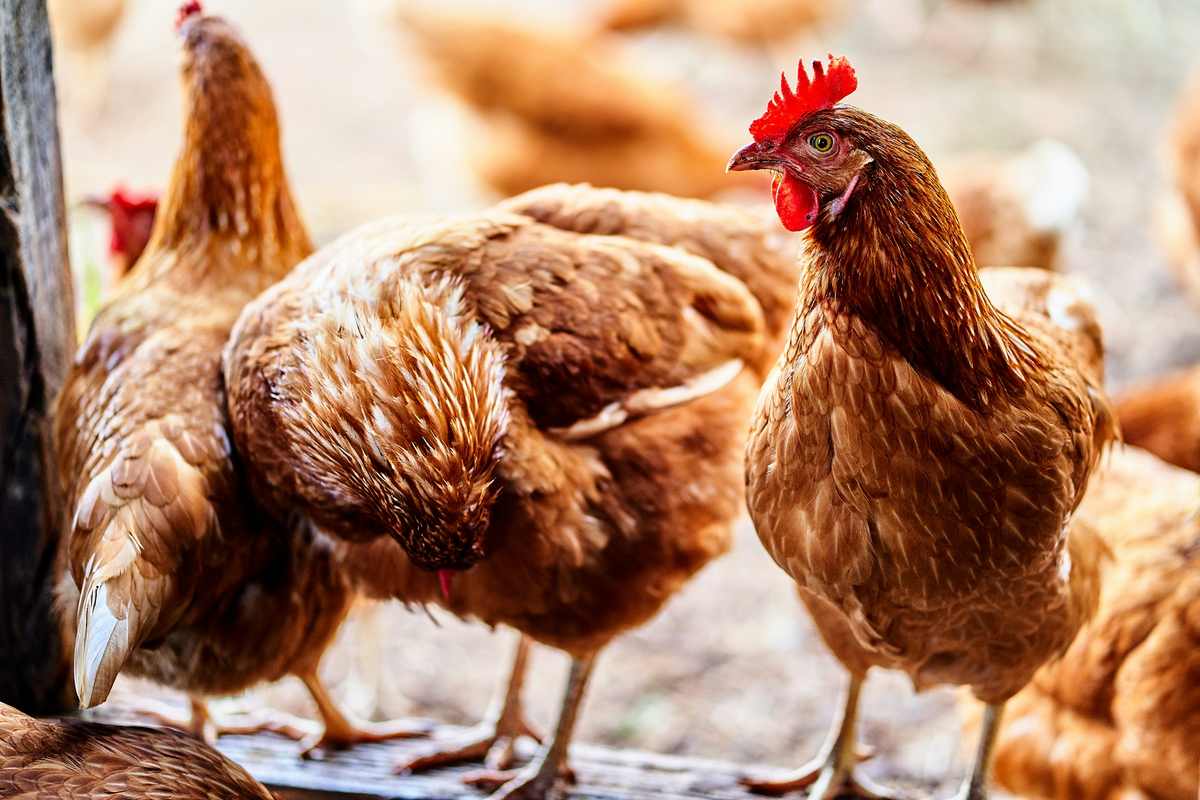
Chickens are omnivores, and a healthy flock diet is roughly 90% complete formulated feed plus whatever the birds forage themselves, with treats and kitchen scraps making up the small remainder. The feed does the nutritional work; everything else is enrichment.
That 90% figure is the part people tend to get wrong. Scraps and scratch feel generous, but they dilute a carefully balanced ration, and the first thing to suffer is usually eggshell quality.
What Chickens Eat Naturally
A foraging chicken spends most of its day scratching through leaf litter and topsoil hunting insects, worms, grubs, seeds and green shoots. They are genuinely opportunistic, a free-ranging hen will take small frogs, mice and just about any insect she can catch.
This is why chickens do so well on pasture, and why free-range birds often show deeper yolk colour: the carotenoids come from greens and insects, not from the pellets.
The Base: Complete Feed
Formulated feed is designed to supply everything a chicken needs in the right proportions, and which one you buy depends entirely on the bird’s stage of life.
| Feed type | For | Typical protein |
|---|---|---|
| Starter | Chicks, 0–6 weeks | 20–24% |
| Grower | Pullets, 6–16 weeks | 16–18% |
| Layer | Hens in lay, 16+ weeks | 16–18% plus added calcium |
| Broiler / meat bird | Birds raised for meat | 20–22% |
| All-flock / flock raiser | Mixed-age or mixed-species flocks | 18–20%, calcium offered separately |
The critical rule is that layer feed should not be fed to birds that are not laying. Its calcium level is set for eggshell production, and that much calcium is hard on the kidneys of chicks, growing pullets and roosters. In a mixed-age flock, feed all-flock and offer oyster shell separately so the laying hens can self-select.
For specific product picks, see our roundup of the best chicken feed for backyard flocks, and how to choose a chicken feeder for keeping it clean and off the ground.
Grit and Calcium: The Two Extras
Chickens have no teeth. They swallow food whole and grind it in the gizzard using small stones they have eaten deliberately, which is what grit is. Birds with access to bare ground usually find their own; birds kept on grass, in a run, or fed anything beyond pellets need it supplied.
Calcium is the other one. A laying hen puts a remarkable amount of calcium into shells, and layer feed alone is not always enough for a heavy layer. Crushed oyster shell offered free-choice in its own container lets each bird take what she needs. Thin, soft or shell-less eggs are the usual first sign that she is not getting enough.
Quick Facts: Grit vs Oyster Shell
- Grit is insoluble stone for grinding food in the gizzard
- Oyster shell is soluble calcium for eggshells, it is not grit
- They do different jobs and do not substitute for each other
- Offer both free-choice in separate dishes, never mixed into feed
- Birds on bare ground often find their own grit; penned birds need it supplied
Kitchen Scraps and Treats
Most vegetable and grain scraps are fine, and chickens are excellent at turning kitchen waste into eggs. Leafy greens, squash, cooked rice and pasta, oats, melon, berries and most cooked vegetables all go down well. Scratch grain is best thought of as a treat rather than a feed, it is largely carbohydrate and it will dilute the ration if it becomes a staple.
Keep the total from all treats to around 10% of intake. Beyond that you are meaningfully changing the nutritional balance of a ration that was designed as a complete diet.
What Not to Feed Chickens
| Avoid | Why |
|---|---|
| Avocado (skin and pit especially) | Persin is toxic to birds |
| Dried or raw beans | Contain lectins that are highly toxic until fully cooked |
| Anything mouldy or rotten | Mycotoxins cause illness and can be fatal |
| Chocolate and caffeine | Theobromine and caffeine are toxic to poultry |
| Very salty or heavily processed food | Chickens tolerate salt poorly |
| Raw potato peel, especially if green | Solanine is toxic |
| Onions in quantity | Can damage red blood cells and taint eggs |
There is also a legal point worth knowing: in many places it is illegal to feed meat or kitchen scraps that have been in contact with meat to poultry, under the same disease-control rules that apply to pigs. Check your state or national guidance before feeding anything from a meat-handling kitchen.
The Bottom Line
Buy the right feed for the birds’ life stage, offer grit and oyster shell free-choice, let them forage as much as your setup allows, and keep treats to roughly a tenth of the diet. That covers almost everything a backyard flock needs.
If you are just getting started, our guide to getting started with raising chickens covers the rest of the setup, and poultry farming for beginners goes wider. Browse the full farm feed hub.
Other feeding guides in this group (poultry and waterfowl): ducks eat, geese eat, turkeys eat. Or start from the overview of what most farm animals eat.
Foraging chickens eat insects, worms, grubs, seeds, green shoots and leaf litter, and will take small frogs or mice opportunistically. That natural diet is why pastured birds often have deeper-coloured yolks.
Most vegetable and grain scraps are fine, including greens, squash, cooked rice and pasta, oats and most cooked vegetables. Keep all treats to about 10% of total intake so they do not dilute the balanced feed, and check local rules about scraps from meat-handling kitchens.
Yes, unless they have free access to bare ground where they can find their own. Chickens have no teeth and grind food in the gizzard using swallowed stones. Birds kept on grass or in a run need grit supplied separately.
No, and they are not interchangeable. Grit is insoluble stone used to grind food. Oyster shell is soluble calcium used to build eggshells. Offer both free-choice in separate dishes.
Not if the flock includes chicks, growing pullets or roosters. Layer feed’s calcium level is set for laying hens and is hard on the kidneys of non-laying birds. Use an all-flock feed and offer oyster shell separately instead.
Avoid avocado, dried or raw beans, chocolate and caffeine, anything mouldy, green potato peel, very salty food, and large amounts of onion.