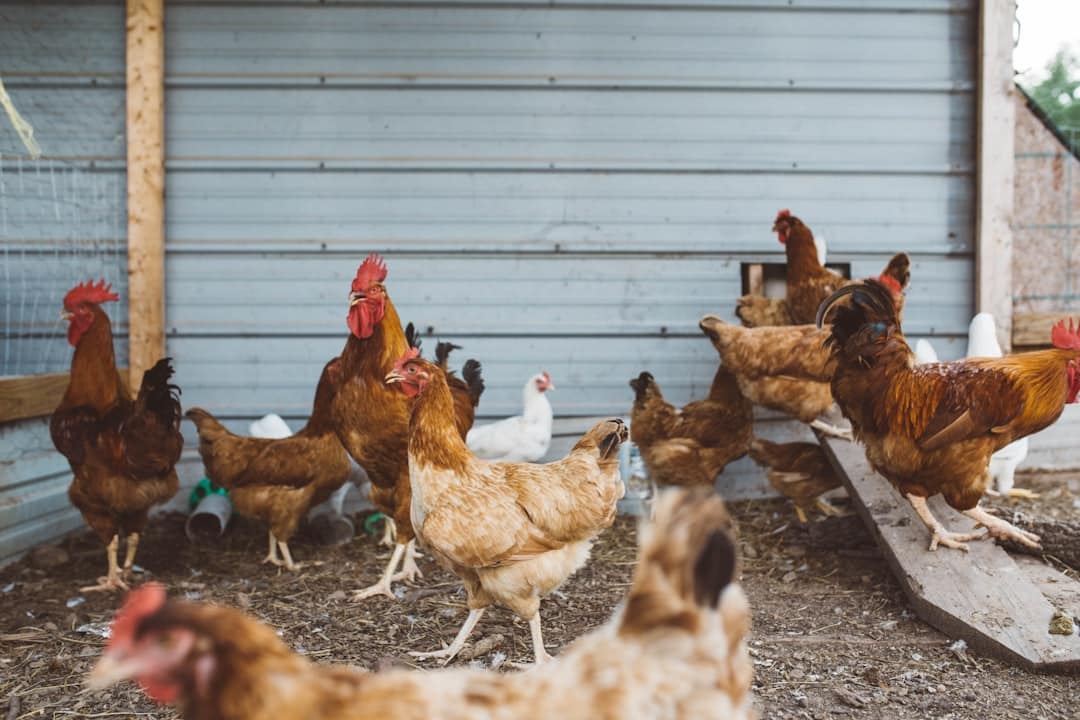
Walk into any feed store and you’ll find a wall of bags all claiming to be the best chicken feed for your flock. The truth is there isn’t one single best option — the right chicken feed depends on your birds’ age, whether they’re laying, and how much you want to spend.
What matters most is matching the feed to the life stage of your flock and making sure it delivers enough protein and calcium to keep hens laying well. This guide covers what to look for, the difference between layer feed and starter/grower feed, and three real chicken feed products worth putting in your coop.
If you want the bigger picture on feed categories across every animal on the farm, our guide to the different types of animal feed is a good starting point, and our breakdown of what most farm animals eat covers chickens alongside the rest of your livestock. This post is the specific, product-level deep dive neither of those covers.
What to Look for in Chicken Feed
Before comparing bags, it helps to know which specs actually matter.
Protein Content
Most layer feeds sit in the 16–18% protein range, which is enough to support steady egg production without pushing hens to put on excess weight. Meat birds and actively growing chicks need considerably more, which is why starter and grower feeds run higher.
Calcium for Eggshell Strength
Laying hens need significantly more calcium than other birds to keep eggshells from getting thin or soft. Good layer feed accounts for this directly in the formula, though many keepers still offer free-choice oyster shell on the side as backup.
Organic vs Conventional
Organic chicken feed is grown without synthetic pesticides or fertilizers and is usually non-GMO as well, which appeals to keepers who want an organic label on their eggs. It typically costs 30–50% more than conventional feed for a similar nutritional profile, so it’s worth deciding upfront whether that matters for your setup.
Layer Feed vs Starter/Grower Feed
One of the most common mistakes new chicken keepers make is feeding layer feed to chicks, or the reverse. The two are formulated very differently and matching them to the right age matters.
Starter feed (usually 18–20% protein) is for chicks from hatch to about 8 weeks old. Grower feed (16–18% protein) carries them from 8 weeks until they start laying, typically around 18–20 weeks. Only once hens actually begin laying should you switch to layer feed, which adds the extra calcium laying hens need.
Feeding layer feed to chicks too early can overload their kidneys with calcium they don’t need yet, so it’s worth keeping stages separate rather than feeding one bag to a mixed-age flock.
The 3 Best Chicken Feed Options for Backyard Flocks
These three options cover the main bases: a reliable conventional layer feed, a certified organic option, and a mid-range pick with added flock health support.
1. Purina Layena+ High Protein Layer Chicken Feed (40 lb)
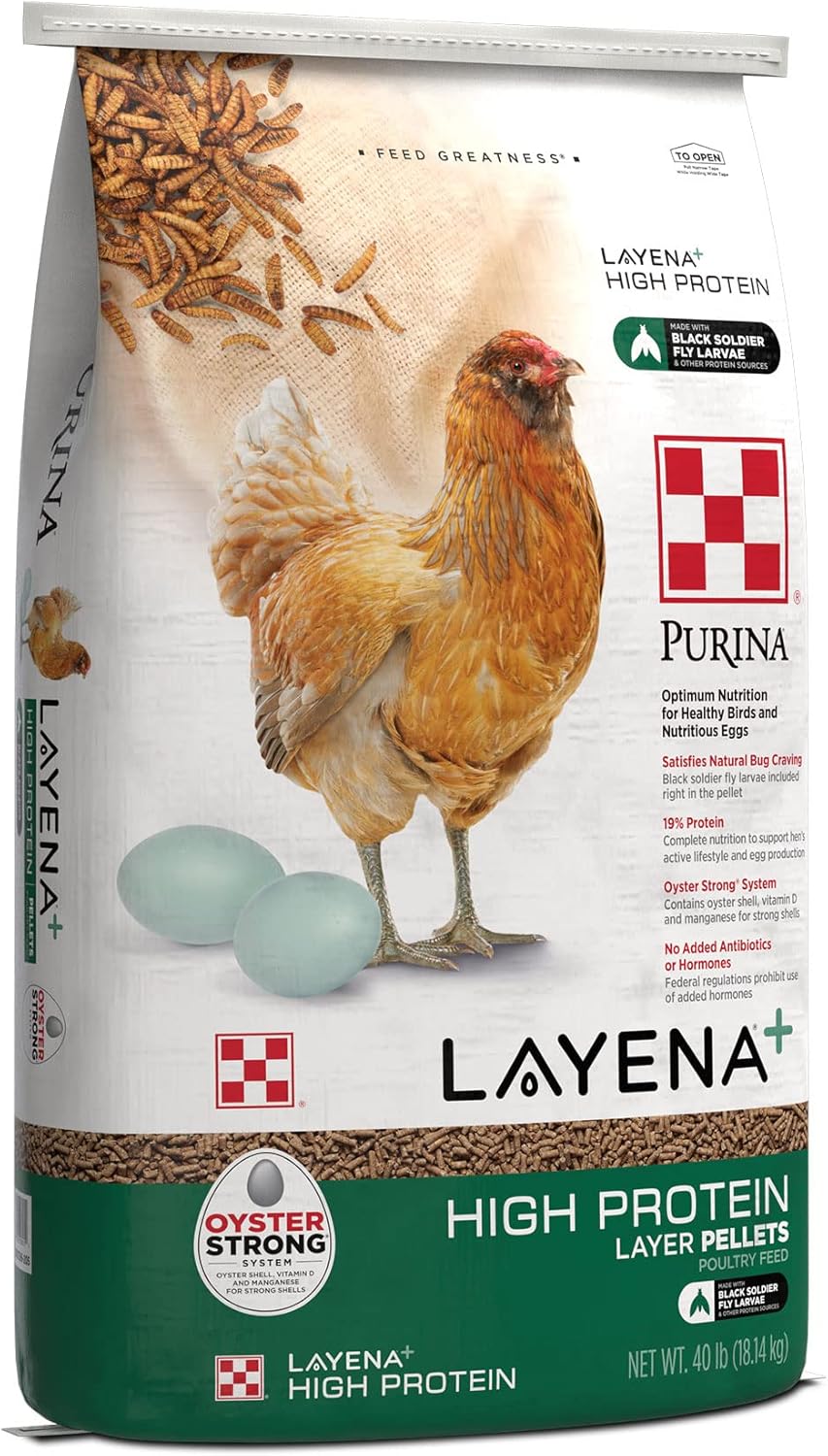
Purina Layena+ is the feed most backyard keepers cut their teeth on, and for good reason. It’s a nutritionally complete layer feed with the exclusive Oyster Strong System, which uses added calcium from oyster shell along with Vitamin D and manganese specifically to strengthen eggshells.
It comes in crumble form, which most hens take to immediately, and the 40 lb bag size is a good middle ground for flocks of 6–12 birds without the feed going stale before you use it up.
It’s a conventional (non-organic) feed, which keeps the price reasonable, and it’s widely available at most farm and feed stores if you’d rather not wait on shipping.
Pros of Purina Layena+
- Added calcium specifically for eggshell strength
- Widely available in stores, not just online
- Affordable relative to organic options
Cons of Purina Layena+
- Not organic or non-GMO certified
- Contains soy and corn, which some keepers try to avoid
2. Scratch and Peck Feeds Organic Layer Chicken Feed with Corn (25 lb)
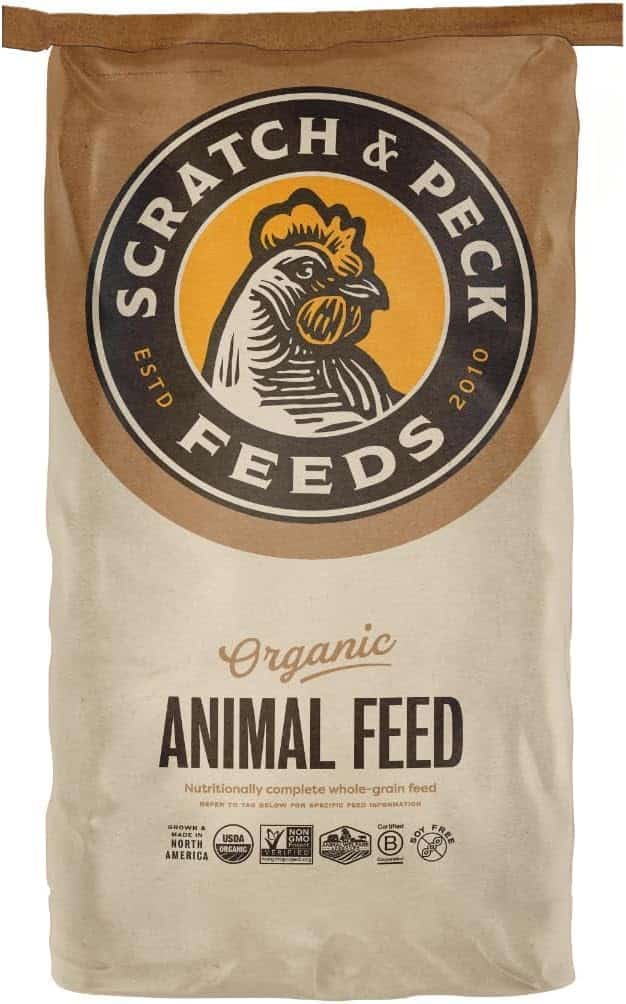
If organic chicken feed is the priority, Scratch and Peck is one of the most respected names in the space. It’s Non-GMO Project Verified, always soy-free, and made from whole grains rather than a heavily processed pellet.
Because it’s a whole-grain formula, hens tend to pick through it rather than eat it uniformly, which is normal for this style of feed but worth knowing going in.
It costs noticeably more per pound than conventional layer feed, but for keepers who want to avoid soy and synthetic inputs entirely, it’s one of the more trusted organic chicken feed options on the market.
Pros of Scratch and Peck Organic Layer Feed
- Certified organic and Non-GMO Project Verified
- Always soy-free
- Whole grains, not fillers
Cons of Scratch and Peck Organic Layer Feed
- Significantly more expensive than conventional feed
- Hens may sort through grains instead of eating evenly
3. Nutrena NatureWise 17% Protein Layer Pellet (40 lb)
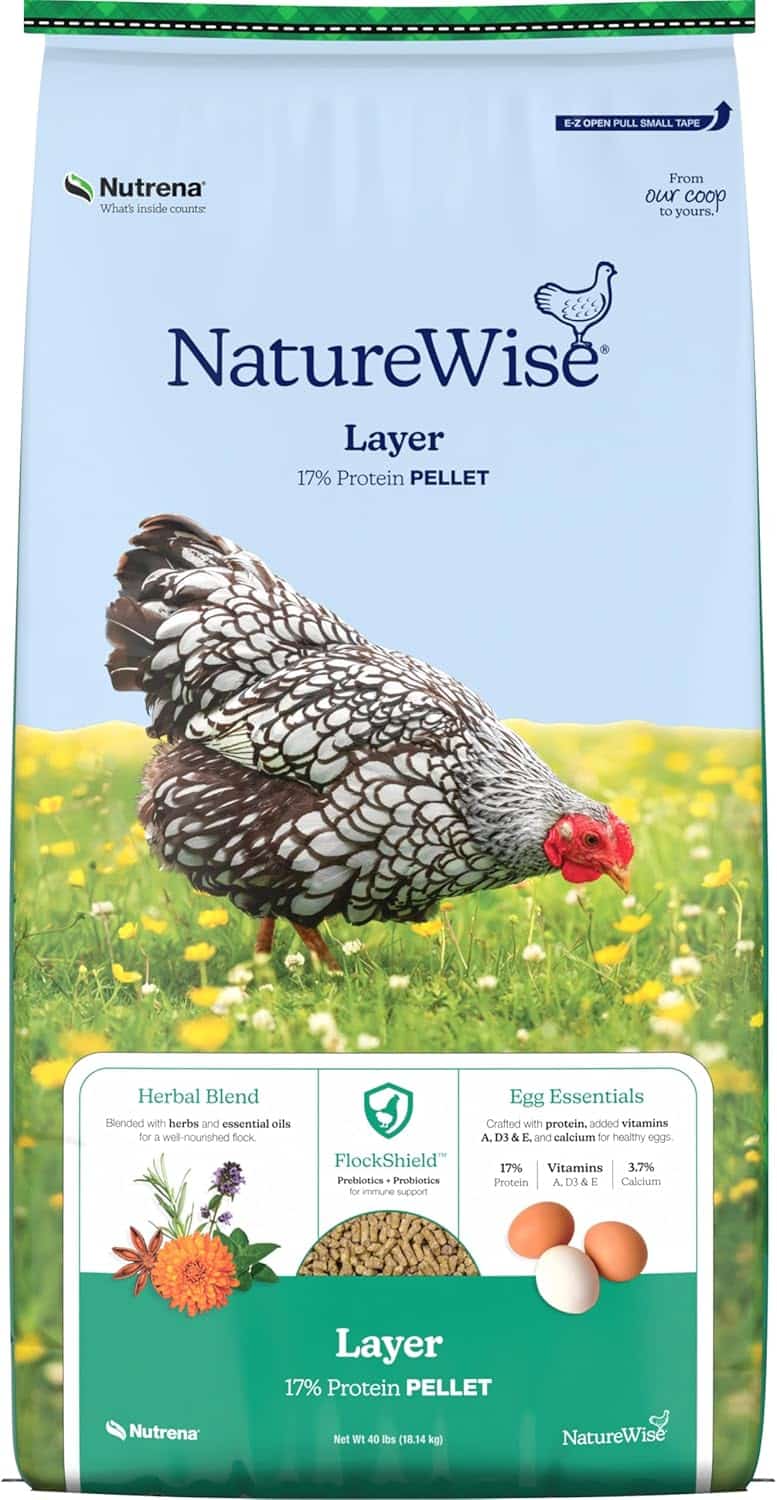
Nutrena NatureWise sits in between the other two on price and philosophy. It’s a conventional pellet feed at 17% protein with FlockShield, Nutrena’s proprietary blend meant to naturally support digestive and immune health.
The pellet form means less waste than crumble or mash, since hens can’t pick around it as easily, and the bag size works well for small-to-mid flocks.
It’s a solid middle-ground pick if you want more than a bare-bones layer feed but don’t want to pay the full organic premium.
Pros of Nutrena NatureWise Layer Pellet
- Pellet form means less waste and sorting
- FlockShield blend supports digestive/immune health
- Priced between budget and organic options
Cons of Nutrena NatureWise Layer Pellet
- Not organic or non-GMO
- Pellet form isn’t ideal for very young chicks if mixed flocks share feed
Conclusion
The best chicken feed for your flock comes down to life stage first, then budget and philosophy second. Get the layer-vs-starter/grower distinction right, make sure calcium needs are covered once hens start laying, and pick conventional or organic chicken feed based on what matters most to you.
Any of the three feeds above will keep a backyard flock healthy and laying well — the differences come down to price, ingredient philosophy, and how much waste you’re willing to tolerate.
FAQ — Chicken Feed
For the wider picture beyond bagged feed, including grit, oyster shell, safe kitchen scraps and the foods to avoid, see our guide to what chickens eat.
A typical laying hen eats about 1/4 pound (roughly 4 ounces) of feed per day, so a 40 lb bag lasts a flock of 6 hens around 25–30 days depending on how much they forage.
Switch to layer feed once your hens actually start laying, typically between 18 and 20 weeks old — not before, since the added calcium in layer feed isn’t needed until egg production begins.
It depends on your goals. Organic chicken feed avoids synthetic pesticides and GMOs and appeals to keepers who want that label on their eggs, but nutritionally, a good conventional layer feed will keep hens just as healthy.