Turkeys need more protein than chickens at every stage, and the gap is widest when they are young. Poults want a turkey or gamebird starter at around 28% protein, stepping down as they grow, where chick starter typically sits at 18 to 20%.
That single difference causes most of the trouble people have raising turkeys alongside chickens, and it is the reason chicken feed is not a straight substitute.
Turkey Feed by Stage
| Stage | Age | Protein |
|---|---|---|
| Starter | 0–8 weeks | ~28% |
| Grower | 8–14 weeks | ~24% |
| Finisher | 14 weeks to maturity | ~18–20% |
| Breeder / holding | Adults kept over | ~16%, restricted to avoid over-conditioning |
Turkeys grow fast and put on a lot of frame in a short time, so under-feeding protein early shows up as poor growth and leg problems that do not correct later. This is a stage where getting the right bag matters more than saving a few dollars.
Can Turkeys Eat Chicken Feed?
As a short-term stopgap for adult birds, yes. As a plan, no. Chicken starter does not carry enough protein for poults, and chicken layer feed is worse on two counts, too little protein and too much calcium for growing birds.
If you cannot get turkey starter, a gamebird starter is the closest equivalent and often easier to find. In a genuinely mixed flock, an all-flock or flock-raiser feed at 18 to 20% with oyster shell offered separately is the usual compromise, accepting that poults are better served by a dedicated starter for their first couple of months.
Quick Facts: Turkeys vs Chickens
- Poults need ~28% protein, chicks need ~18–20%
- Turkey starter or gamebird starter, not chick starter
- Never rely on chicken layer feed for growing turkeys
- Turkeys forage well and use pasture readily
- Keep turkeys separate from chickens where blackhead is a risk
Pasture and Foraging
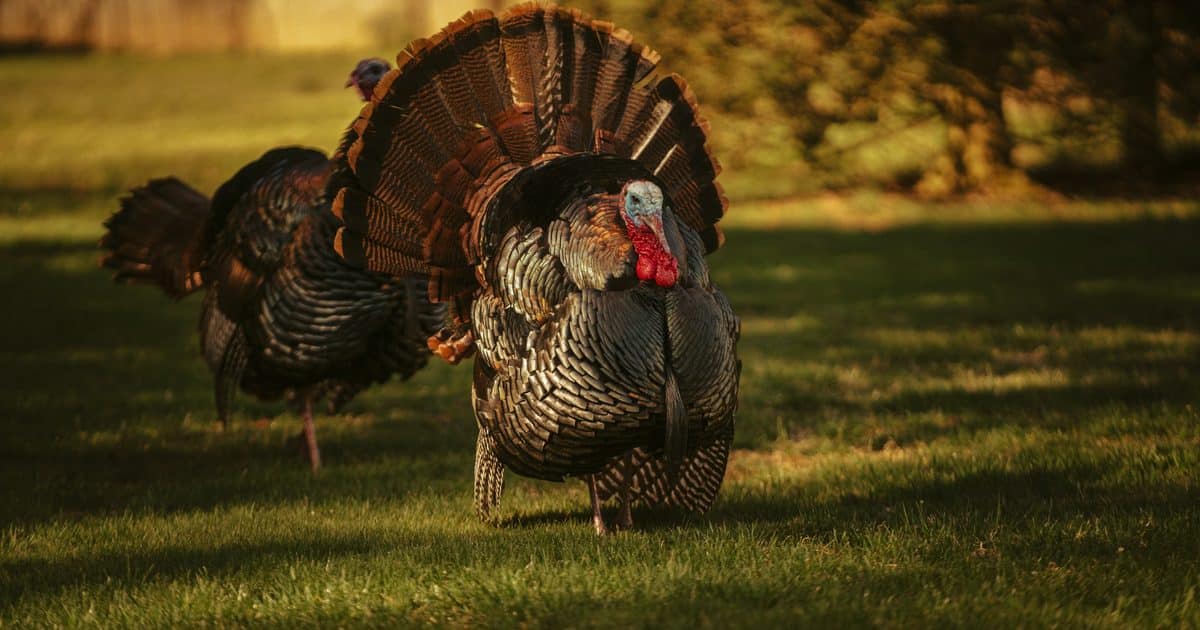
Turkeys are capable foragers and will take insects, seeds, greens and grass across a run or pasture. On good ground in summer, foraging supplies a real share of their intake and improves both growth and meat quality. Heritage breeds tend to forage more actively than the fast-growing commercial strains.
They also appreciate height. Turkeys roost readily and will use perches, low branches or a raised bar, and providing that reduces squabbling and keeps birds off damp ground.
The Blackhead Problem With Chickens
This is the reason experienced keepers often house turkeys away from chickens. Blackhead disease (histomoniasis) is caused by a protozoan carried by the caecal worm. Chickens frequently carry it with few symptoms, while turkeys are highly susceptible and it is often fatal in them.
It is not a certainty, and plenty of people keep mixed flocks without incident, but the risk is real and rises on ground that has carried chickens for a long time. If you are starting out and have a choice, separate ground for turkeys is the safer default. Our guide to common diseases of farm animals covers the wider picture.
What Do Baby Turkeys Eat?
Poults get turkey or gamebird starter crumble from day one, and they can be slow to work out where food and water are, slower than chicks. Shallow feed trays, bright feed and sometimes a few chicks to demonstrate all help. Poults that fail to start eating in the first day or two are the ones that get lost.
What Do Wild Turkeys Eat?
Wild turkeys are opportunistic omnivores. Acorns and other nuts are a major autumn and winter food, alongside seeds, berries, green shoots, insects and the occasional small amphibian or reptile. Poults in particular eat heavily on insects, which supply the protein they need to grow.
Their diet shifts sharply with season, and in hard winters they rely most on whatever mast crop, acorns, beech nuts, is available. Feeding wild turkeys is discouraged in many places because it concentrates birds and spreads disease, so check local guidance before putting anything out.
For the rest of the poultry side, see poultry farming for beginners and what chickens eat. For how this compares across the rest of the yard, see our overview of what most farm animals eat, or browse the full farm feed hub.
Other feeding guides in this group (poultry and waterfowl): chickens eat, ducks eat, geese eat. Or start from the overview of what most farm animals eat.
A turkey or gamebird ration matched to their stage, roughly 28% protein for poults stepping down to 18–20% at finishing, plus whatever they forage from pasture. Turkeys need more protein than chickens throughout.
As a short-term stopgap for adults, yes. As a plan, no. Chick starter is too low in protein for poults, and chicken layer feed is both too low in protein and too high in calcium for growing turkeys. Gamebird starter is the best substitute for turkey starter.
Turkey or gamebird starter crumble at around 28% protein from day one. Poults are slower than chicks to find feed and water, so shallow trays and visible feed help, and birds that fail to start eating early are the ones most often lost.
Acorns and nuts are the major autumn and winter foods, along with seeds, berries, green shoots and insects. Poults eat heavily on insects for the protein. Their diet shifts substantially with the season.
They can, but there is a genuine risk. Blackhead disease is carried by chickens with few symptoms and is often fatal in turkeys. Plenty of mixed flocks are fine, but separate ground is the safer default if you have the option.
Yes, readily. They take insects, seeds, greens and grass, and on good summer pasture foraging supplies a real share of their diet. Heritage breeds forage more actively than fast-growing commercial strains.