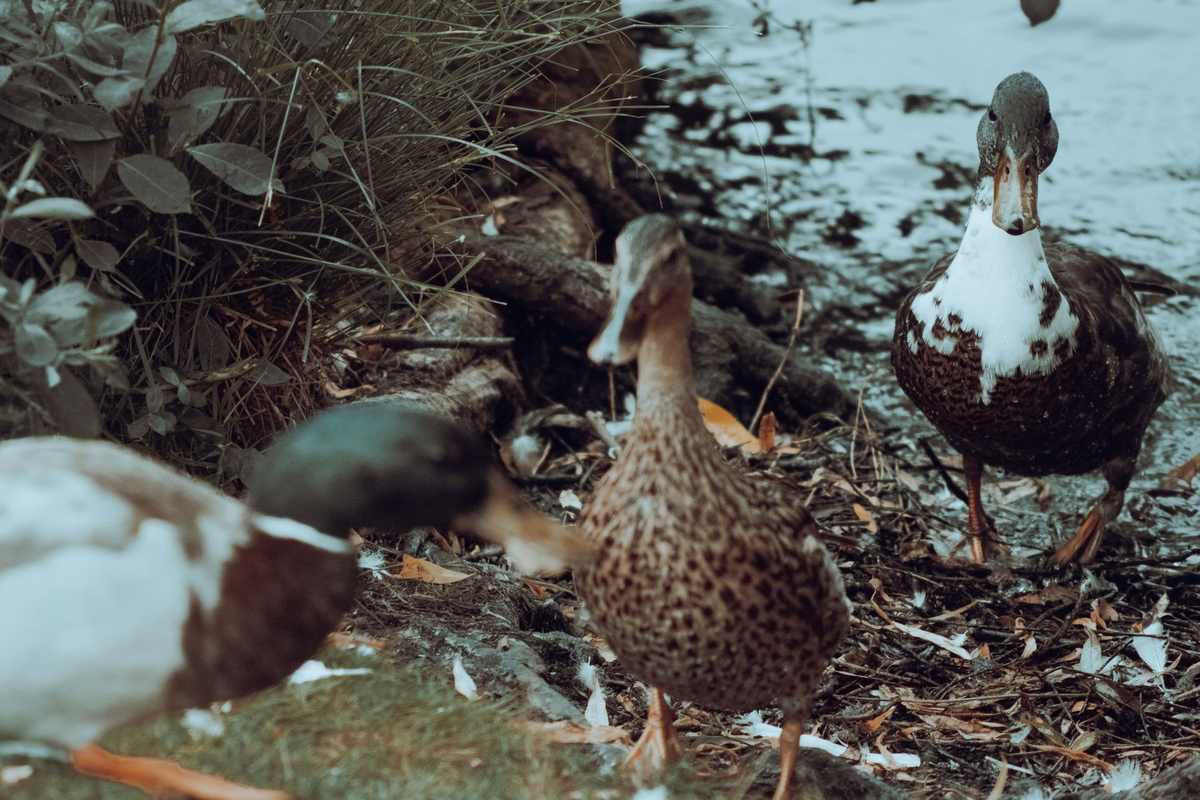
Ducks are omnivores. In practice that means a base of formulated waterfowl or poultry feed, topped up with leafy greens, peas, grains, and all the slugs, snails and worms they can find themselves. What they should not live on is bread, which is the single most common feeding mistake people make with ducks.
The other thing that separates ducks from chickens is niacin. Ducks need noticeably more of it, and ducklings that do not get enough develop leg and joint problems that are difficult to reverse. That one nutrient shapes most of the practical advice below.
What Ducks Eat Naturally
Left to themselves, ducks forage constantly. They dabble in shallow water for duckweed, algae and aquatic insects, strip seeds from grasses, and hunt slugs, snails, worms and beetle larvae across damp ground. A duck working a vegetable patch is doing genuine pest control, which is one of the better arguments for keeping them alongside a garden.
That foraging instinct is worth designing around rather than fighting. Ducks with access to grass and damp ground will supply a real share of their own protein in the warmer months, and they will eat slugs that would otherwise cost you seedlings.
What to Feed Ducks Day to Day
The base of the diet should be a formulated feed. Waterfowl feed is ideal; a general poultry or flock-raiser feed works too, with the niacin caveat below. Everything else is a supplement to that base, not a replacement for it.
- Leafy greens. Lettuce, kale, chard, cabbage and weeds from the yard, chopped so they are easy to swallow.
- Peas and corn. Frozen peas thawed in water are close to a universal duck favourite and a genuinely good treat.
- Grains. Cracked corn, wheat, barley and cooked oats, fed in moderation rather than as a staple.
- Protein. Slugs, snails, worms and insects, mostly self-collected. Mealworms are a useful supplement during moult.
- Vegetable scraps. Most non-toxic vegetable trimmings are fine, chopped small.
Ducks need water available whenever they are eating. They swallow by washing food down, and a duck with feed but no water can choke. A shallow, stable water source next to the feeder solves it, see our guide to choosing a water trough if you are setting up something more permanent.
Why You Should Not Feed Ducks Bread
Bread is not poisonous, which is why the myth survives. The problem is that it is nutritionally empty and extremely filling. Ducks that fill up on bread eat less of what they actually need, and the effect compounds fastest in growing birds.
In young waterfowl this shows up as angel wing, a deformity where the wing joint twists outward and the flight feathers splay sideways instead of lying flat. It is associated with diets too high in carbohydrate and too low in the nutrients growing birds need. Once the bone has set, it does not correct.
The same logic rules out crackers, chips, popcorn and most other bread-adjacent human snacks. If you want to feed ducks at a pond, thawed peas, chopped greens, oats or birdseed all do the job without the downside.
Niacin: The One Nutrient Ducks Need More Of
Ducks require more niacin (vitamin B3) than chickens do, and ducklings are the most vulnerable. A deficient duckling develops bowed legs, swollen hock joints, reluctance to walk and stunted growth. Caught early it is correctable; left too long it is not.
This matters most if you are raising ducklings on chick starter, which is formulated for chickens and is often short of niacin for waterfowl. The standard fix is brewer’s yeast, roughly a pound stirred through a 40-pound bag of chick starter. Feed stores also sell waterfowl-specific starter, which avoids the problem entirely and is the simpler option if you can get it.
Quick Facts: Feeding Ducklings
- Ducklings need more niacin than chicks do
- Use waterfowl starter where available
- On chick starter, supplement with brewer’s yeast (~1 lb per 40 lb feed)
- Deficiency signs: bowed legs, swollen hocks, difficulty walking
- Always provide water alongside feed, ducks need it to swallow
Foods That Are Toxic or Unsafe for Ducks
The list is short but worth knowing, because several items are common in gardens and kitchens.
| Avoid | Why |
|---|---|
| Bread, crackers, chips, popcorn | Nutritionally empty, linked to angel wing in growing birds |
| Citrus and mango | Can interfere with calcium absorption and cause digestive upset |
| Apple, cherry, peach and apricot pits | Contain compounds that release cyanide |
| Onions | Can damage red blood cells in quantity |
| Avocado | Persin is toxic to most birds |
| Tulips, lilies, irises, buttercups, poppies, sweet peas | Ornamental plants toxic to ducks |
| Anything mouldy | Mycotoxins are dangerous and sometimes fatal |
| Dried or raw beans | Contain lectins that are toxic until properly cooked |
Apple flesh is fine, it is only the seeds that are a problem, so core apples before sharing them. The same applies to stone fruit: the flesh is safe, the pit is not.
Feeding Ducks Through the Seasons
Duck appetite tracks the weather and the laying cycle. In summer, foraging supplies a real share of their intake and you may find feed consumption drops noticeably. Through winter, foraging all but disappears and they will need more feed, along with a reliable unfrozen water source.
Laying ducks need extra calcium, usually free-choice crushed oyster shell offered in a separate dish rather than mixed into feed, so birds can take what they need. During the autumn moult, protein requirements rise while laying stops, and a slightly higher-protein feed or a few extra mealworms helps them regrow feathers.
If you are raising ducks for the table as well as for eggs, our guide to raising ducks for eggs and meat covers how those goals change your feeding plan, and duck breeds for beginners covers which breeds suit which purpose.
The Bottom Line
Feed a proper waterfowl or poultry ration as the base, make sure ducklings get enough niacin, keep water beside the feed at all times, and let the birds forage for as much of their own protein as your setup allows. Treats are fine in moderation, as long as bread is not one of them.
For how duck nutrition compares with the rest of the yard, see our overview of what most farm animals eat, or browse the full farm feed hub.
Other feeding guides in this group (poultry and waterfowl): chickens eat, geese eat, turkeys eat. Or start from the overview of what most farm animals eat.
In the wild ducks eat duckweed, algae, aquatic insects, grass seeds, slugs, snails, worms and beetle larvae. Domestic ducks with access to grass and damp ground will still forage for a good share of their own protein in warmer months.
They can swallow it, but they should not be fed it. Bread is nutritionally empty and very filling, so ducks eat less of what they actually need. In growing birds it is associated with angel wing, a permanent wing deformity. Thawed peas, chopped greens or oats are far better pond treats.
Waterfowl starter feed is best. If you only have chick starter, supplement it with brewer’s yeast at roughly one pound per 40-pound bag, because ducklings need more niacin than chicks and deficiency causes bowed legs and swollen joints.
Yes. Ducks wash food down as they swallow, so feed should always be offered alongside a water source deep enough for them to dip their bills. A duck eating dry feed without water available can choke.
Avoid citrus, mango, avocado, onions, dried or raw beans, anything mouldy, and the pits of apples, cherries, peaches and apricots. Several common ornamentals are also toxic, including tulips, lilies, irises and buttercups.
Yes. Offer crushed oyster shell free-choice in a separate dish rather than mixing it into feed, so birds can take as much as they need and non-laying birds are not over-supplemented.