
If you’re adding ducks to your farm animals lineup, breed choice matters more than most beginners expect. A duck bred for fast meat production behaves and looks completely different from one bred to lay 300 eggs a year, and a purely ornamental breed won’t produce much of either.
Our guide to raising ducks for eggs and meat covers the day-to-day basics of housing, water, and feeding. This guide goes deeper on the breeds themselves — nine of the most common meat, egg-laying, and dual-purpose or ornamental duck breeds, plus what to weigh before picking one.
Why Duck Breed Matters
Chickens get most of the attention when people plan a backyard flock, but duck breeds vary just as widely — sometimes more. Some breeds like the Khaki Campbell out-lay all but the best chicken breeds, while others like the Call Duck barely lay at all and exist almost entirely as ornamental pets — the same logic applies across species, as our goat breeds guide shows.
Picking the wrong breed for your goal doesn’t ruin anything — ducks are forgiving animals overall — but it does mean a slower path to whatever you actually wanted out of your flock, whether that’s a steady supply of eggs, meat birds that reach weight quickly, or simply a few calm, attractive birds around the pond.
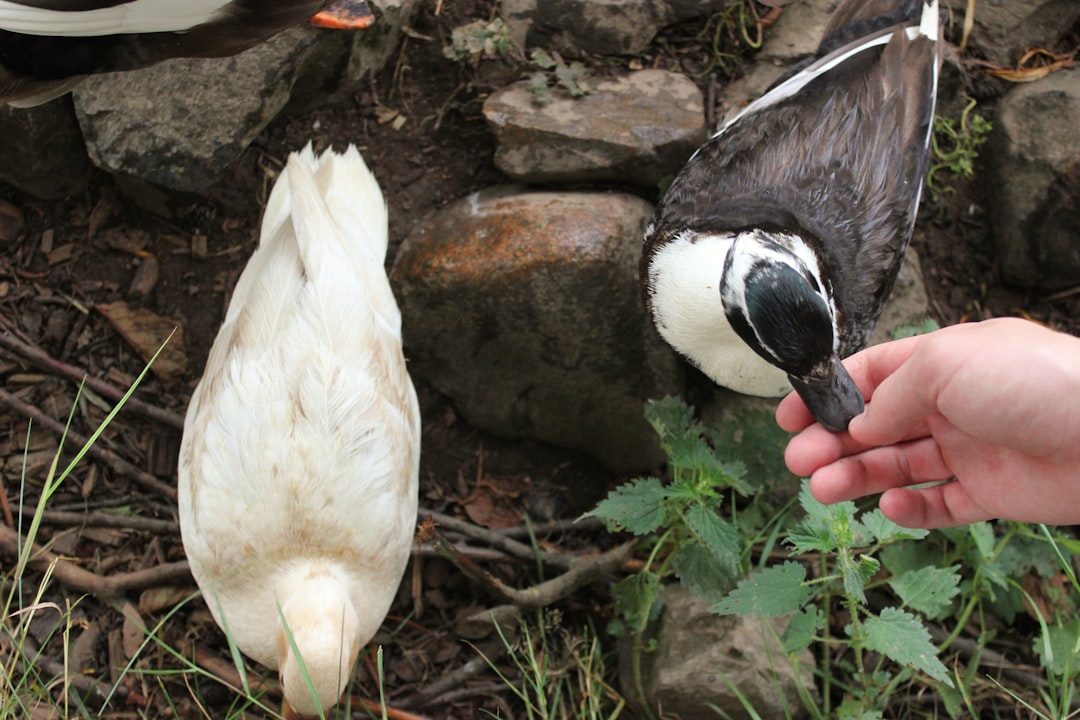
Meat Duck Breeds
If your goal is meat production, these three breeds are the ones most commonly raised in the US, each with a different tradeoff between growth speed and flavor.
Pekin
The Pekin is the breed behind nearly all commercially sold duck meat in the US, and for good reason: it reaches market weight of 6–7 lbs in just 7–8 weeks, faster than almost any other duck breed. Its calm, friendly temperament also makes it one of the easiest breeds for a first-time duck keeper to manage.
The tradeoff for that speed is egg production — Pekins are poor layers compared to dedicated egg breeds, typically producing well under 150 eggs a year.
Rouen
Rouens look almost identical to wild Mallards, just considerably larger, and they’re prized by keepers who want richer-flavored meat than a Pekin produces. Growth is much slower — closer to 18–20 weeks to reach full size — which is the main reason Pekins dominate commercial production while Rouens stay mostly a homestead and heritage-breed choice.
Egg production is modest at best, so Rouens are really a meat-and-appearance breed rather than a dual-purpose one.
Muscovy
Muscovies are technically a different species from other domestic ducks, and it shows in both looks and behavior — a distinctive red caruncled face, leaner meat often compared to roast beef rather than typical duck, and a near-silent temperament that communicates through hisses instead of quacking.
They’re also strong fliers unless a wing is clipped, and hens go broody readily and make attentive mothers if you want to hatch your own ducklings rather than buying them each season.
Egg-Laying Duck Breeds
These three breeds are bred specifically for high egg output, and all three noticeably out-lay a Pekin or Rouen.
Khaki Campbell
Developed in England in the early 1900s specifically for egg production, the Khaki Campbell remains the benchmark egg-laying duck breed, capable of 300 or more eggs a year — rivaling the best chicken breeds. They’re active foragers and relatively low-maintenance once established, with a practical khaki-brown coloring that hides dirt well.
Indian Runner
Indian Runners stand nearly upright, giving them an unmistakable bowling-pin silhouette, and they’re excellent layers at 280–300 eggs a year. They’re also outstanding foragers, covering ground quickly on their long legs to hunt slugs and garden pests.
They can’t fly and carry very little meat, so they’re strictly an egg breed — but their upright stance and quirky, skittish energy also make them one of the more entertaining breeds to simply watch move around a yard.
Welsh Harlequin
Developed in Wales in the late 1940s from a color mutation in Khaki Campbells, the Welsh Harlequin lays nearly as well — typically 240–330 eggs a year — while carrying noticeably more meat on the frame than its parent breed. That combination makes it one of the better genuinely dual-purpose duck breeds on this list, not just an egg breed with decent meat as an afterthought.
They’re calm, friendly, and considered one of the more beginner-friendly breeds overall, with attractive cream-and-fawn plumage as a bonus.
Dual-Purpose and Ornamental Duck Breeds
Not every duck breed needs to specialize. These three range from genuinely dual-purpose to almost entirely ornamental.
Ancona
Anconas are a solid dual-purpose choice, laying 210–280 eggs a year without giving up much on meat quality. Their mottled black-and-white (sometimes blue or lavender) plumage is unique to each bird, so no two Anconas look quite the same. They’re calm, friendly, and currently listed as a heritage breed on conservation watch lists, which appeals to keepers who want to support a rarer bloodline.
Cayuga
Cayugas are striking birds — solid black with an iridescent green sheen in good light — and genuinely dual-purpose, though egg production is modest at 100–150 a year. Their most distinctive trait is egg color: Cayuga eggs start out nearly black or dark gray and gradually fade lighter as the laying season goes on.
They’re quiet, cold-hardy, and considered a heritage breed, making them a favorite for keepers who want a duck that’s as much a garden centerpiece as a working animal.
Call Duck
Call Ducks are a bantam breed, weighing only 1–2 lbs, and they exist almost entirely for show, pets, and ornamental ponds rather than eggs or meat. True to their name, they’re remarkably loud for their size — the opposite of a quiet Muscovy — which is worth knowing if you have close neighbors.
Unlike most heavier breeds on this list, Call Ducks can still fly reasonably well, and their small size makes them more vulnerable to predators, so secure housing matters even more than usual.
Duck Breed Comparison Table
Here’s a quick side-by-side look at how these nine duck breeds stack up.
| Breed | Primary Purpose | Egg Production | Notes |
|---|---|---|---|
| Pekin | Meat | Low (under 150/yr) | Fastest growth, calm, most common meat duck |
| Rouen | Meat (heritage) | Low | Mallard coloring, slow-growing, rich flavor |
| Muscovy | Meat | Low–moderate | Lean meat, silent, strong flier, broody |
| Khaki Campbell | Eggs | Very high (300+/yr) | Top layer, active forager |
| Indian Runner | Eggs | High (280–300/yr) | Upright stance, can’t fly, great forager |
| Welsh Harlequin | Eggs & meat | High (240–330/yr) | Calm, genuinely dual-purpose |
| Ancona | Eggs & meat | Moderate–high (210–280/yr) | Mottled pattern, heritage breed |
| Cayuga | Eggs & meat | Low (100–150/yr) | Black iridescent, unique dark eggs |
| Call Duck | Ornamental | Very low | Bantam size, very vocal, show/pet only |
What to Consider When Choosing a Duck Breed
Your Primary Goal: Eggs, Meat, or Both
Be honest about what you actually want before picking a breed. A Pekin raised for eggs will disappoint you, just as a Khaki Campbell raised for meat will leave you with a smaller bird than expected. If you genuinely want both without keeping two flocks, Welsh Harlequins or Anconas are the better starting point.
Climate and Hardiness
Most duck breeds handle cold reasonably well thanks to waterproof feathers and a thick fat layer, but heritage breeds like Cayugas and Rouens tend to be a bit hardier in harsh winters than fast-growing commercial lines like the Pekin.
Noise Level
If you have close neighbors, this matters more than most beginners expect. Muscovies are the quietest breed by a wide margin, while Call Ducks are famously the loudest despite their small size. Most other breeds, including Khaki Campbells and Pekins, fall somewhere in the middle.
Water Access and Space
Every breed on this list needs reliable open water for cleaning their eyes, nostrils, and bills — that requirement doesn’t change with breed, and a sturdy water trough built for the job holds up far better than a shallow dish. What does change is space: larger breeds like Rouens and Muscovies need more room to roam and forage comfortably than a Call Duck or Indian Runner does.
Wrapping Up
There’s no single “best” duck breed — only the one that matches what you actually want. Pekins, Rouens, and Muscovies for meat; Khaki Campbells, Indian Runners, and Welsh Harlequins for eggs; and Anconas, Cayugas, or Call Ducks if you want something more dual-purpose or ornamental.
Whichever breed you choose, the housing and water basics stay the same — get those right first, and breed choice becomes mostly a question of what you want more of at the end of the season.
Frequently Asked Questions about Duck Breeds
For the feeding side in full, see our guide to what ducks eat.
Pekins and Khaki Campbells are both considered beginner-friendly thanks to their calm temperaments and predictable output, whether you want a meat bird that grows fast or a duck that lays reliably.
Khaki Campbells are the top egg-laying duck breed, capable of 300 or more eggs a year, which rivals many chicken breeds. Indian Runners and Welsh Harlequins are close behind.
Pekins are the most widely raised meat duck breed thanks to their fast growth, reaching market weight in about 7-8 weeks. Rouens grow slower but are prized for richer flavor, and Muscovies produce leaner meat with a distinct taste.
Welsh Harlequins and Anconas are the two best genuinely dual-purpose duck breeds, both laying well over 200 eggs a year while still carrying a reasonable amount of meat compared to dedicated egg breeds.
Related: Already settled on a breed and ready for the day-to-day details? See our guide to raising ducks for eggs and meat for housing, water setup, and feeding basics.