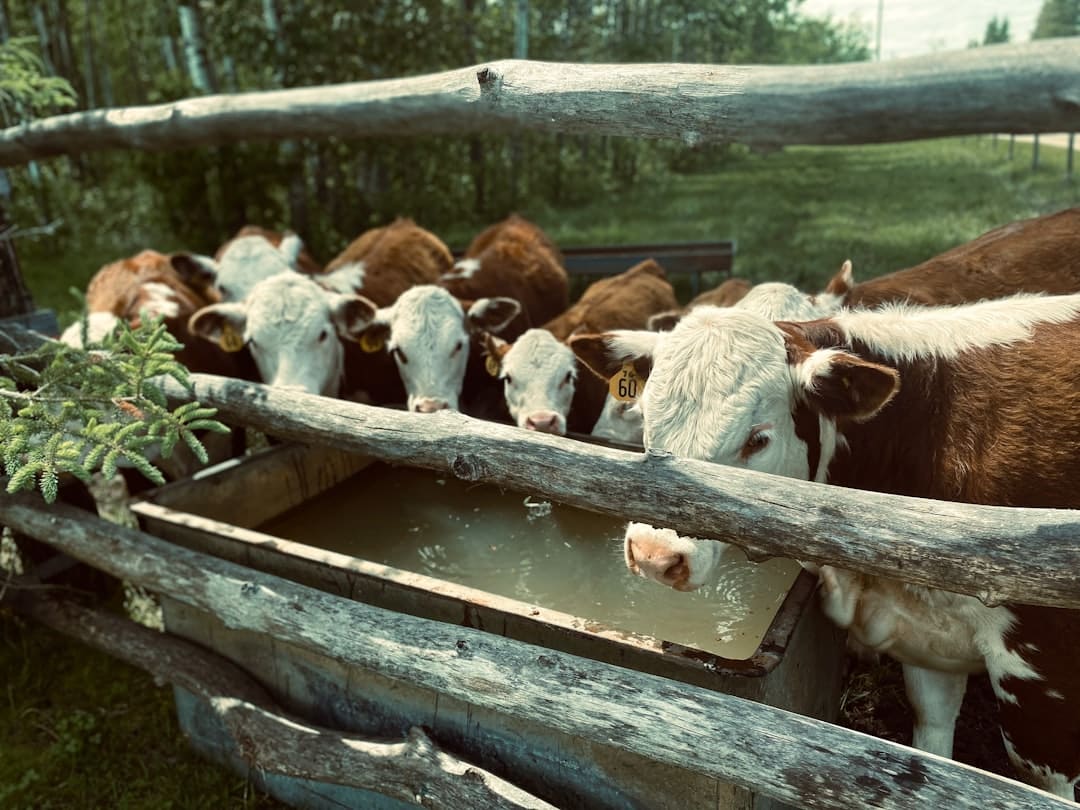
Every animal on a homestead needs reliable access to clean water, and the trough you choose has more impact on that than most first-time owners expect. The right farm supplies setup means fewer refills, less algae, and water that doesn’t freeze solid the first cold snap of the year.
The tricky part is that “water trough” covers a huge range of products — an 8-quart rubber tub for a handful of goats has nothing in common with a 100-gallon poly tank for a small cattle herd. Material, capacity, and freeze resistance all matter, and getting any one of them wrong means more chores, not fewer.
This guide covers what actually matters when picking a trough — material, sizing by herd type, and freeze-proofing for winter — plus four real products worth considering across different budgets and animal types.
What to Look for in a Water Trough
Before comparing specific products, it helps to understand the three variables that actually determine whether a trough works well for your setup.
Material: Poly, Rubber, or Galvanized Steel
Galvanized steel is the traditional choice for a reason — it’s rigid, holds its shape under a full load of water, and stands up to hooves and horns without cracking. It’s heavier and pricier than plastic, and if the zinc coating gets scratched down to bare metal, it will eventually rust.
Poly (polyethylene) tanks are lighter, immune to rust entirely, and noticeably cheaper per gallon of capacity at larger sizes. The tradeoff is that poly can crack in extreme cold if it’s ever fully frozen and expands, and thinner-walled models can flex or bow when completely full.
Rubber tubs and pans are the most forgiving material of the three. They flex instead of cracking when water freezes solid, they’re quiet (no hoof-on-metal clanging), and they’re light enough to dump, scrub, and flip over for cleaning without much effort. They’re mostly limited to smaller capacities, though, so they’re a better fit for a handful of animals than a full herd.
Sizing by Herd Type
A dairy cow can drink 20-plus gallons a day in hot weather, while a couple of goats or a small poultry flock might get by on a few gallons total. Sizing a trough too small means multiple refills a day; sizing it too large for a small herd just means more standing water to keep clean and more weight to move if you ever need to reposition it.
As a rough guide: cattle and horses generally need 50–150 gallon tanks depending on herd size, sheep and pigs do well with 20–50 gallon troughs, and goats, poultry, or a couple of pet farm animals are usually covered by anything from an 8-quart rubber tub up to a 15–20 gallon poly tank. Ducks are the exception worth planning around — see our duck breeds guide for how much open water they actually need. If you’re still working out what animals fit your farm animals lineup and how they’ll be housed, it’s worth deciding on fencing and pen layout — our overview of the best types of farm gates covers how paddock design affects where a trough needs to sit for easy filling and cleaning.
Smaller breeds change the math too — if you’re weighing which goat breed to bring home, a couple of Nigerian Dwarfs will need far less trough capacity than a pair of full-size Boers or Alpines.
Freeze-Proofing for Winter
In any climate that sees regular freezing temperatures, a trough that ices over is a daily chore, and one that freezes solid can crack or split the tank itself. A submersible or drain-plug stock tank heater is the most reliable fix — it keeps water from icing over without you having to break ice by hand every morning.
Dark-colored tanks placed in a sunny spot also stay a few degrees warmer than tanks in full shade, and a floating ball (even a cheap basketball) can help slow surface freezing on tanks without a heater. Whatever setup you use, this is a good time to double-check the rest of your winter routine — our guide to farm equipment maintenance covers the broader seasonal checklist for keeping gear from failing when temperatures drop.
The 4 Best Water Troughs for Livestock
These four picks cover the main bases: a rugged galvanized tank, a large-capacity poly option, a small rubber tub for goats or poultry, and a heater to keep any of them from freezing over.
1. Behlen Country ST214 Shallow Galvanized Steel Round End Stock Tank (49 Gallons)
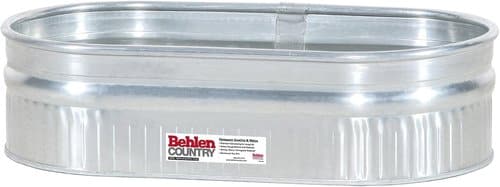
This shallow round-end tank is a solid middle-ground choice for sheep, goats, pigs, or a couple of horses. The galvanized steel construction has rigid sidewalls with corrugated ribbing for strength, and the shallow depth makes it easy for smaller animals to drink without climbing in.
At 49 gallons, it holds enough for a small-to-mid-size herd between fill-ups without being so large that it’s a hassle to scrub out and flip over for cleaning.
Steel means it won’t crack the way poly can in a hard freeze, though you’ll want a stock tank heater or regular ice-breaking if you’re in a cold climate.
Pros of the Behlen Country Galvanized Tank
- Rigid steel won’t bow or flex when full
- Shallow profile is easy for smaller animals to reach
- Won’t crack in a hard freeze the way plastic can
Cons of the Behlen Country Galvanized Tank
- Heavier than a poly tank of the same size
- Can rust over time if the zinc coating gets scratched
2. Little Giant Poly Oval Stock Tank (100 Gallons)
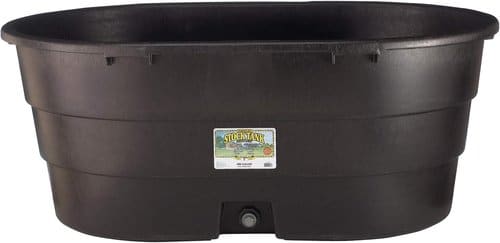
Little Giant’s oval design eliminates the corner stress points that cause square poly tanks to crack, and the 100-gallon capacity is a good fit for a small cattle herd, several horses, or a mixed pen of larger livestock that goes through water quickly.
Being poly, it’s dramatically lighter than a steel tank of the same size — one person can move it empty without help — and it will never rust, no matter how many years it sits outside.
It comes with a standard 3/4-inch drain fitting for hooking up to a garden hose or float valve, which is worth having if you’re filling it daily rather than hauling water by bucket.
Pros of the Little Giant Poly Stock Tank
- Large 100-gallon capacity for bigger herds
- Lightweight and never rusts
- Built-in drain fitting for hose hookup
Cons of the Little Giant Poly Stock Tank
- Can crack if water is left to freeze solid
- Bulky to store empty given its size
3. Little Giant Heavy Duty Rubber Tub (8 Quarts)
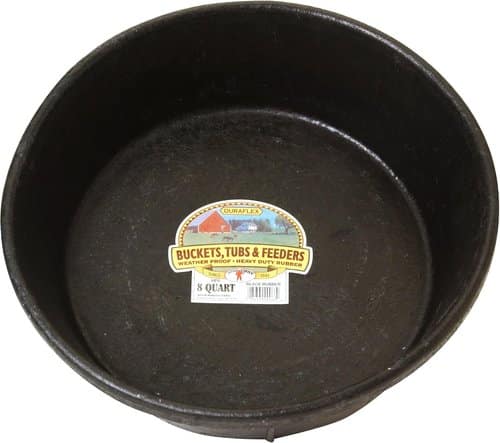
For a couple of goats, sheep, or a poultry flock, an 8-quart rubber tub is often all the capacity you need. The rubber material flexes instead of cracking if it ever freezes solid, and it’s light enough to dump, hose out, and flip over to dry in seconds.
It’s also quiet — no metal clanging when hooves or beaks bump the side — and cheap enough that keeping two or three around for different pens isn’t a big expense.
The obvious tradeoff is capacity: this isn’t a tub for cattle or horses, and in hot weather it may need refilling more than once a day for a thirstier flock.
Pros of the Little Giant Rubber Tub
- Flexes instead of cracking when frozen
- Light enough to dump and clean in seconds
- Affordable enough to keep several on hand
Cons of the Little Giant Rubber Tub
- Too small for cattle, horses, or large herds
- May need multiple refills a day in summer
4. Farm Innovators H-429 Submergible Stock Tank Heater (1500 Watt)
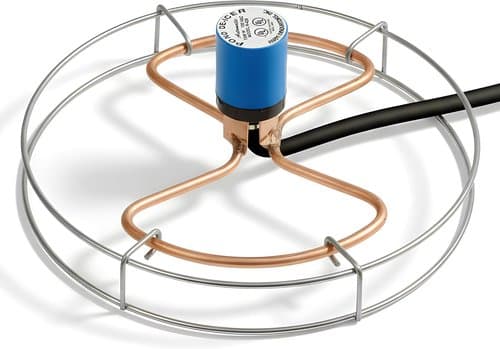
This isn’t a trough itself, but if you’re in a climate with real winters, it may matter more than which tank you buy. This cast aluminum heater submerges directly in a poly or galvanized tank and uses a self-regulating thermostat to keep water from icing over without running constantly.
At 1500 watts, it’s sized for most single-tank setups up to around 100 gallons, and the thermostat means it only draws power when the water actually needs it, rather than running full-time all winter.
It does require a nearby outdoor-rated outlet, so factor that into your setup before ordering one.
Pros of the Farm Innovators Tank Heater
- Self-regulating thermostat saves electricity
- Works with most poly or galvanized tanks
- Ends the daily chore of breaking ice by hand
Cons of the Farm Innovators Tank Heater
- Requires access to an outdoor power outlet
- Adds an ongoing electricity cost in cold months
Conclusion
The right water trough comes down to matching material and capacity to your actual herd, then planning for winter before the first freeze hits, not after. Galvanized steel holds up best under heavy use, poly wins on price and weight at larger sizes, and rubber is hard to beat for a handful of smaller animals.
Whichever tank you choose, pair it with a heater if you’re anywhere that sees regular freezes — it’s a small cost against the daily hassle of breaking ice by hand all winter.
FAQ — Water Troughs
Most small cattle herds do well with a 100-plus gallon poly or galvanized tank, since a single cow can drink 20 or more gallons a day in hot weather. Larger herds may need multiple tanks or a continuous-flow float valve setup.
Galvanized steel and rubber both handle freezing better than rigid poly, which can crack if water inside freezes and expands. Whatever material you choose, a stock tank heater is the most reliable way to prevent ice buildup in a real winter.
Most keepers scrub troughs weekly to prevent algae and biofilm buildup, and more often in hot weather when algae grows faster. Rubber and poly tubs are easiest to dump and clean; galvanized tanks generally need scrubbing in place.