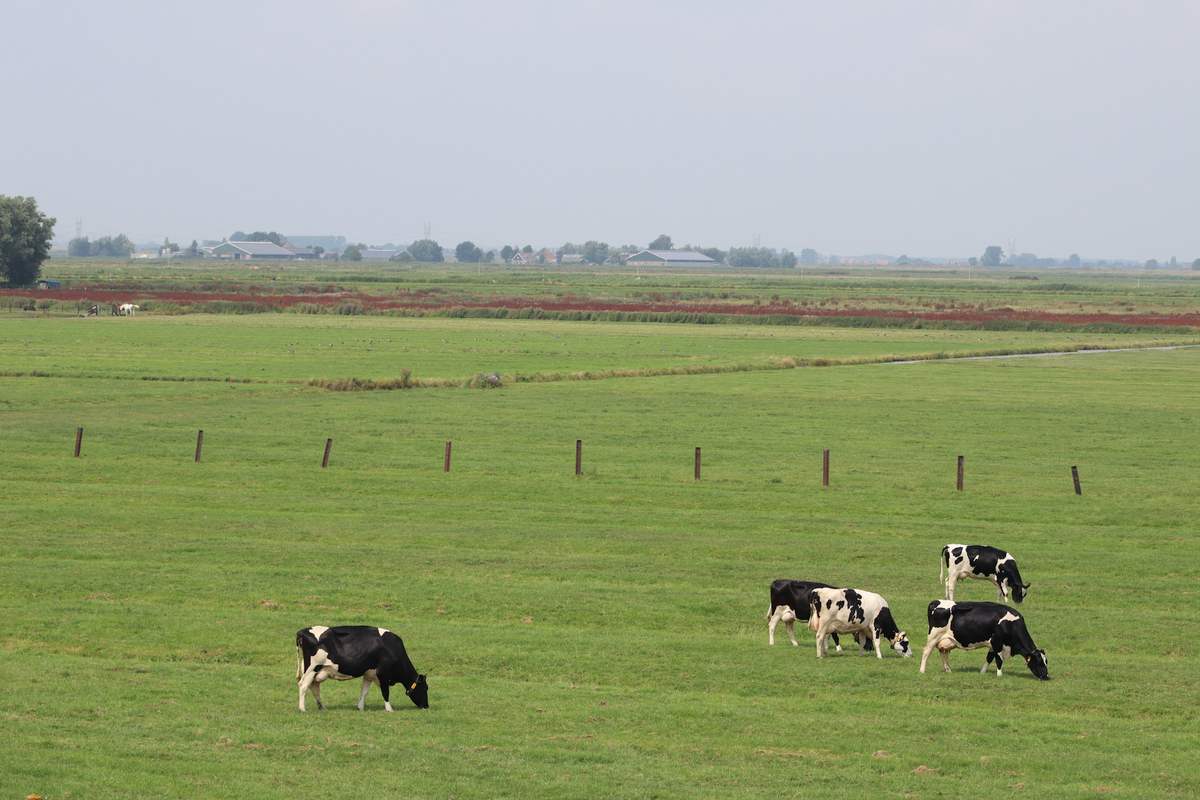
Cows are ruminants, and almost everything about feeding them follows from that. Their four-compartment stomach lets them convert grass and other fibrous forage, which humans cannot digest at all, into meat and milk. A cow’s diet is therefore built on forage: pasture in the growing season, hay or silage out of it.
Grain has a role, but a smaller and more careful one than people assume, because the rumen that makes cattle so useful is also easy to upset.
How a Cow’s Digestion Shapes Its Diet
A cow does not digest grass so much as host the microbes that do. The rumen is a large fermentation vat where bacteria and protozoa break down cellulose, and the cow lives largely on the products of that fermentation. Chewing the cud, regurgitating and re-chewing forage, is part of the same process.
The practical implication is that you are feeding the rumen microbes as much as the animal. That population adapts slowly to change, which is why any shift in ration has to be gradual, and why a sudden load of grain causes real trouble.
Forage: The Foundation
| Forage | What it is | When used |
|---|---|---|
| Pasture | Live growing grass and legumes | Main feed through the growing season |
| Hay | Grass or legume cut and dried | Winter staple, and whenever pasture is short |
| Silage | Forage fermented at high moisture | Stored winter feed, common on larger farms |
| Haylage | Wilted forage, baled and wrapped | Between hay and silage, popular at small scale |
| Crop residues | Corn stalks, straw | Low-quality filler, needs supplementing |
Quality matters more than quantity. Hay cut early is far higher in protein and energy than hay cut late and stemmy, and the difference is enough to determine whether a cow holds condition through winter without supplementation. Our guide to fodder types covers the distinctions in more detail, and feed storage covers keeping it in good condition once it is baled.
Grain and Concentrates
Grain, usually corn, barley or a formulated concentrate, raises energy density for animals that need it: dairy cows in peak lactation, cattle being finished for beef, and animals in poor condition. A dry cow on decent pasture typically needs none.
The risk is acidosis. Grain ferments much faster than forage, and a sudden large intake drops rumen pH sharply, which harms the microbial population and in serious cases the animal. Introduce grain gradually, feed it in divided portions rather than one large meal, and always keep effective fibre in the ration.
Quick Facts: Feeding Grain Safely
- Introduce grain gradually over one to two weeks
- Split larger amounts across more than one feeding
- Never let cattle break into a grain store, acute acidosis can be fatal
- Keep long-fibre forage in the diet alongside any grain
- Most cows on good pasture need no grain at all
Water, Minerals and Salt
Water is the most underrated input. A lactating dairy cow can drink 30 to 50 gallons a day, and intake rises sharply in hot weather. Restricted water cuts feed intake and milk yield before any other sign appears, so a reliable supply matters more than almost any refinement to the ration. See our guide to choosing a water trough for sizing.
Cattle also need salt and trace minerals, usually offered free-choice as a block or loose mix. Requirements vary regionally because soils vary, selenium deficiency in particular is a known problem in parts of the US, so local advice beats generic advice here.
What Not to Feed Cattle
| Avoid | Why |
|---|---|
| Ruminant-derived protein (meat and bone meal) | Banned in most countries under BSE control rules |
| Mouldy hay or spoiled silage | Mycotoxins, listeria risk from poorly fermented silage |
| Sudden large amounts of grain | Acidosis, potentially fatal |
| Lush legume pasture without care | Bloat risk, introduce gradually and never turn out hungry cattle |
| Wilted cherry leaves | Cyanide compounds, same hazard as for goats |
| Frosted or wilted sorghum | Prussic acid risk |
Bloat deserves particular attention. Turning hungry cattle onto lush clover or alfalfa is a classic and avoidable cause. Fill them on hay first, and introduce rich legume pasture gradually.
The Bottom Line
Build the diet on good forage, treat grain as a supplement for animals that genuinely need the energy, never let the rumen face a sudden change, and keep clean water in front of them at all times.
For how cattle compare with the rest of the yard, see what most farm animals eat. For what goes into formulated rations generally, see the different types of animal feed, or browse the full farm feed hub.
Other feeding guides in this group (ruminants): sheep eat, goats eat. Or start from the overview of what most farm animals eat.
Grass and other forage. As ruminants, cows host microbes that ferment cellulose, letting them convert pasture, hay and silage, which humans cannot digest, into meat and milk.
As a rule of thumb, cattle eat roughly 2 to 3% of their body weight in dry matter daily, so a 1,200 lb cow eats something like 24 to 36 lb of dry matter. Lactating and growing animals sit at the higher end.
Not usually. Grain raises energy density for dairy cows in peak lactation, cattle being finished for beef, and animals in poor condition. A dry cow on decent pasture typically needs none at all.
Grain ferments far faster than forage, and a sudden large intake drops rumen pH sharply. That causes acidosis, which damages the microbial population the cow depends on and can be fatal. Introduce grain gradually and split larger amounts across feedings.
A lactating dairy cow can drink 30 to 50 gallons a day, and more in hot weather. Restricted water reduces feed intake and milk yield before other symptoms show, so supply matters more than most ration refinements.
Most commonly, turning hungry cattle onto lush legume pasture such as clover or alfalfa. Fill them on hay first and introduce rich pasture gradually. Frothy bloat can be an emergency.