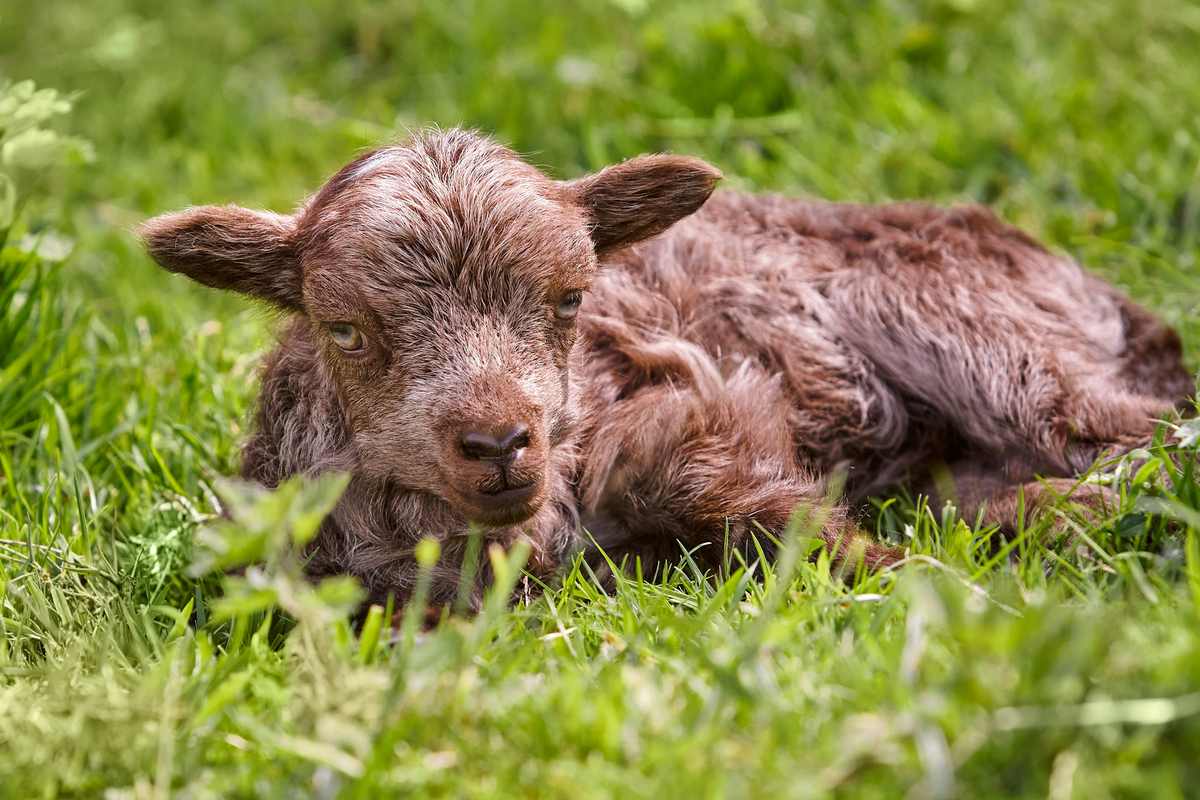
The Nigerian Dwarf is a miniature dairy goat: about the size of a large dog, but built and bred to milk. They stand roughly 17 to 21 inches at the withers and produce milk with a butterfat content around 6 to 10%, considerably richer than any full-size dairy breed.
That combination, small enough for a backyard and productive enough to be worth milking, is why they have become the default first dairy goat for smallholders in the US.
Nigerian Dwarf at a Glance
| Nigerian Dwarf | |
|---|---|
| Type | Miniature dairy goat |
| Height | ~17–21 inches at the withers |
| Weight | ~60–80 lb |
| Build | Lean and refined, longer-legged, a scaled-down dairy goat |
| Milk | Roughly 1–2 quarts a day at peak |
| Butterfat | ~6–10%, higher than standard dairy breeds |
| Lactation | Long, often around 10 months |
| Best for | Small-acreage milk, cheese and soap making |
Nigerian Dwarf vs Pygmy Goat
This is the single most common point of confusion, and it matters because buying the wrong one for your purpose is an expensive mistake. The two breeds are close in height, so people assume they are interchangeable. They are not.
Nigerian Dwarfs are dairy goats. Pygmy goats are meat and companion goats. A Pygmy will lactate, but for a much shorter period, typically around 120 to 180 days against the Nigerian Dwarf’s roughly 10 months. If milk is the goal, the breed choice is already made.
Build tells them apart on sight once you know what to look for. Nigerian Dwarfs are lean and refined with longer legs, essentially a full-size dairy goat scaled down. Pygmies are stocky, heavy-set and short-legged, which makes them look bigger despite similar height. Our guide to pygmy goats covers that side in full.
Quick Facts: Telling Them Apart
- Nigerian Dwarf = dairy breed, Pygmy = meat and companion breed
- Similar height, very different build: Dwarf lean, Pygmy stocky
- Nigerian Dwarf lactates ~10 months, Pygmy roughly 120–180 days
- Nigerian Dwarf milk is exceptionally high in butterfat
- Buy for purpose, not for size, they are not interchangeable
Milk Production and What It Is Good For
A good Nigerian Dwarf doe gives somewhere around one to two quarts a day at peak lactation. That is modest next to a Nubian or Saanen, but it comes from an animal eating far less and needing far less space, and the milk itself is unusually rich.
That butterfat percentage is the real selling point. It makes the milk noticeably sweet and creamy to drink, and it makes it excellent for cheese, where yield tracks butterfat, and for soap making. If you have ever been told goat milk tastes strong, that is usually a management or breed issue rather than an inherent one, and Nigerian Dwarf milk tends to surprise people.
Keeping Nigerian Dwarfs
They need what all goats need, with the caveat that small goats are harder to fence, not easier. Anything a Nigerian Dwarf kid can get its head through, it will eventually get its whole body through.
- Space. Far less than full-size goats, but they still need room to move and browse.
- Fencing. Woven wire with small openings. Small goats exploit gaps larger breeds cannot.
- Company. Never keep one alone. Goats are herd animals and a solitary goat is a stressed goat.
- Browse. They are browsers like any goat, see what goats eat for the detail.
- Minerals. Goat-specific loose minerals with adequate copper, never sheep minerals.
- Shelter. Draught-free and dry. Small goats lose heat faster than large ones.
For feeding a doe in milk specifically, our goat feed guide covers rations by life stage.
Registries and Buying
Nigerian Dwarfs can be registered with the American Goat Society, the American Dairy Goat Association, and the International Dairy Goat Registry, among others. Registration matters if you intend to sell breeding stock or show, and matters much less if you simply want milk for the house.
What matters more when buying is the doe’s udder attachment, her dam’s milking record if available, and general health. Buy from someone who milks their own animals and will let you see them milked.
Are Nigerian Dwarfs a Good First Goat?
For most smallholders wanting milk, yes. They are manageable in size, genuinely productive, and easier to handle than a full-size dairy breed for anyone who has not kept goats before. The main caveats are that you need at least two, and that small goats test fencing harder than people expect.
If you are still deciding between breeds, see our guide to goat breeds for beginners, or browse the full farm animals hub.
Purpose and build. Nigerian Dwarfs are dairy goats, lean and longer-legged, lactating around 10 months. Pygmy goats are meat and companion goats, stocky and short-legged, with a much shorter lactation of roughly 120 to 180 days. They are similar in height but are not interchangeable.
Roughly one to two quarts a day at peak lactation. That is less than a full-size dairy breed, but from a much smaller animal, and the milk is far richer, with butterfat around 6 to 10%.
About 17 to 21 inches at the withers and roughly 60 to 80 lb, so a large-dog sized animal.
Yes, unusually so. Cheese yield tracks butterfat, and Nigerian Dwarf milk is among the highest-butterfat goat milk available, which also makes it popular for soap making.
No. Goats are herd animals and a single goat becomes stressed and vocal. Keep at least two, and plan fencing carefully, small goats escape through gaps that hold larger breeds.
Generally yes, for anyone wanting milk on small acreage. They are easier to handle than full-size dairy breeds and genuinely productive. The main challenges are needing a companion and requiring tighter fencing than people expect.