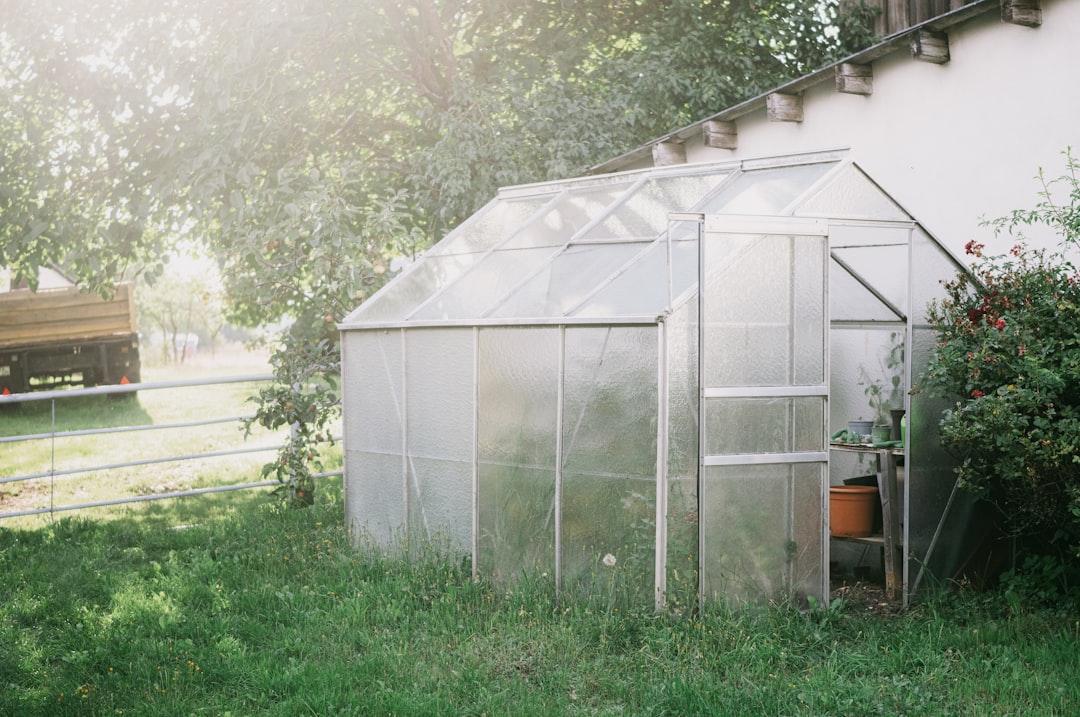
Not everyone wants to spend a weekend framing lumber and cutting panels. If you just want a working greenhouse up and growing plants this weekend, a ready-made kit gets you there a lot faster than building one from scratch. This guide rounds up solid greenhouse kits across a range of sizes and budgets, from compact starter setups to full walk-in structures, so you can pick the one that actually fits your yard and your growing goals.
If you’re not sure yet whether buying or building is the better fit for you, our guide to setting up your own greenhouse walks through the trade-offs and covers the DIY build process in detail.
What to Look for in a Greenhouse Kit
Greenhouse kits vary a lot more than the photos suggest, and the differences matter once you’re the one setting it up and using it through a full growing season. Here’s what to check before you buy.
Cover material
Most budget and mid-range kits use a PE (polyethylene) or PVC fabric cover over a steel or aluminum frame. It’s light, cheap, and easy to replace, but it degrades under UV exposure over a few years and won’t hold up to heavy snow load. Step up to twin-wall polycarbonate panels and you get a rigid, insulating, much more durable structure that holds heat better in winter — at a noticeably higher price.
Size and headroom
Tabletop and mini kits are fine for hardening off seedlings or overwintering a few potted plants, but you can’t stand up in them. If you want to actually work inside — potting, pruning, harvesting — you need a walk-in kit with enough peak height to stand comfortably, generally 6 feet or more.
Ventilation
A greenhouse with no airflow turns into an oven on a sunny day, even in cool weather. Look for roll-up or zippered doors and side vents at minimum; better kits include roof vents that let hot air escape from the top, where it collects.
Anchoring and wind resistance
Lightweight fabric-cover kits are the most likely to blow around or tip in strong wind. Check what anchoring hardware is included — ground stakes, sandbag pockets, or anchor points — and don’t skip using them, even if the kit is tucked against a fence or wall.
The 4 Best Greenhouse Kits
We’ve picked four kits that cover the range most home growers actually need — a small portable option, two mid-size walk-in kits at different price points, and a premium hard-panel structure for anyone ready to commit to a permanent setup.
1. Quictent Portable Mini Greenhouse
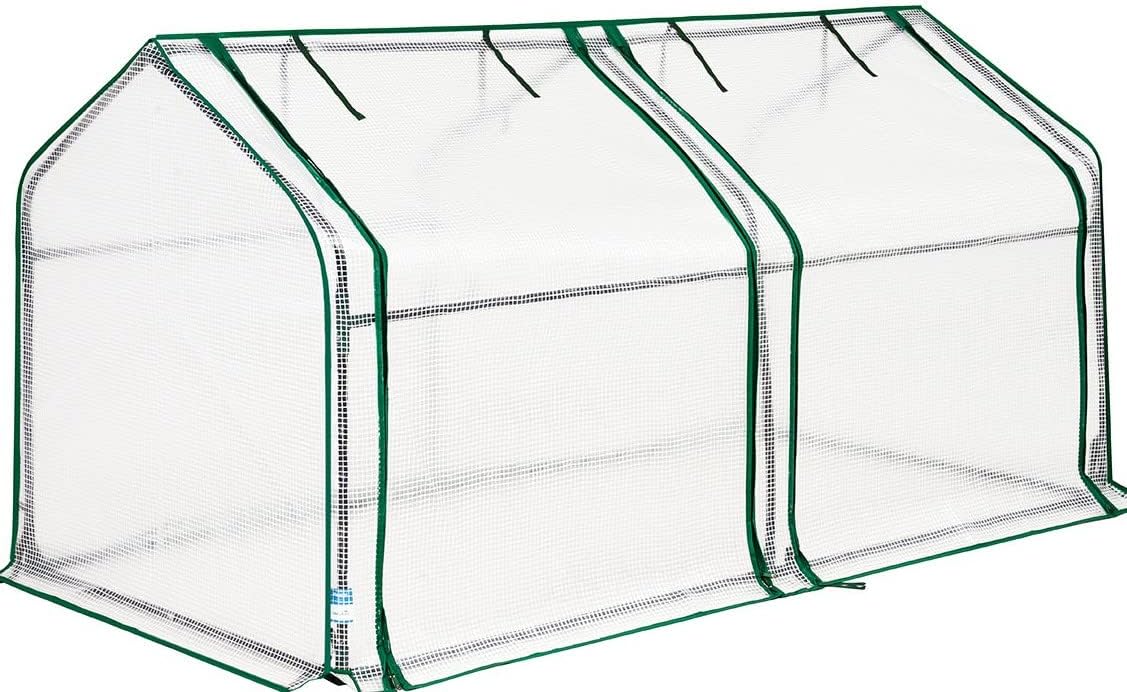
This is the smallest, most affordable way to get a real outdoor greenhouse structure rather than just a seed tray. The powder-coated steel frame goes up in well under an hour with no tools, and the zippered PE cover rolls up fully for ventilation on warm days or full access when you’re working inside. At roughly 6 feet by 3 feet, it’s sized for hardening off seedlings, overwintering a handful of potted plants, or extending the season on a raised bed you already have.
It won’t survive a heavy storm without help — stake it down and don’t expect it to double as a year-round structure in a harsh winter climate. But for the price and the setup time, it’s the easiest way to try out greenhouse growing before committing to something bigger.
Pros of the Quictent Mini Greenhouse
- Cheapest way to get a real freestanding greenhouse
- Tool-free setup in under an hour
- Fully rolls open for ventilation or access
Cons of the Quictent Mini Greenhouse
- Too small to stand up or work comfortably inside
- PE cover needs staking in wind and won’t survive heavy snow
- Cover will need replacing after a few seasons of sun exposure
2. Homewell Walk-In Greenhouse Kit
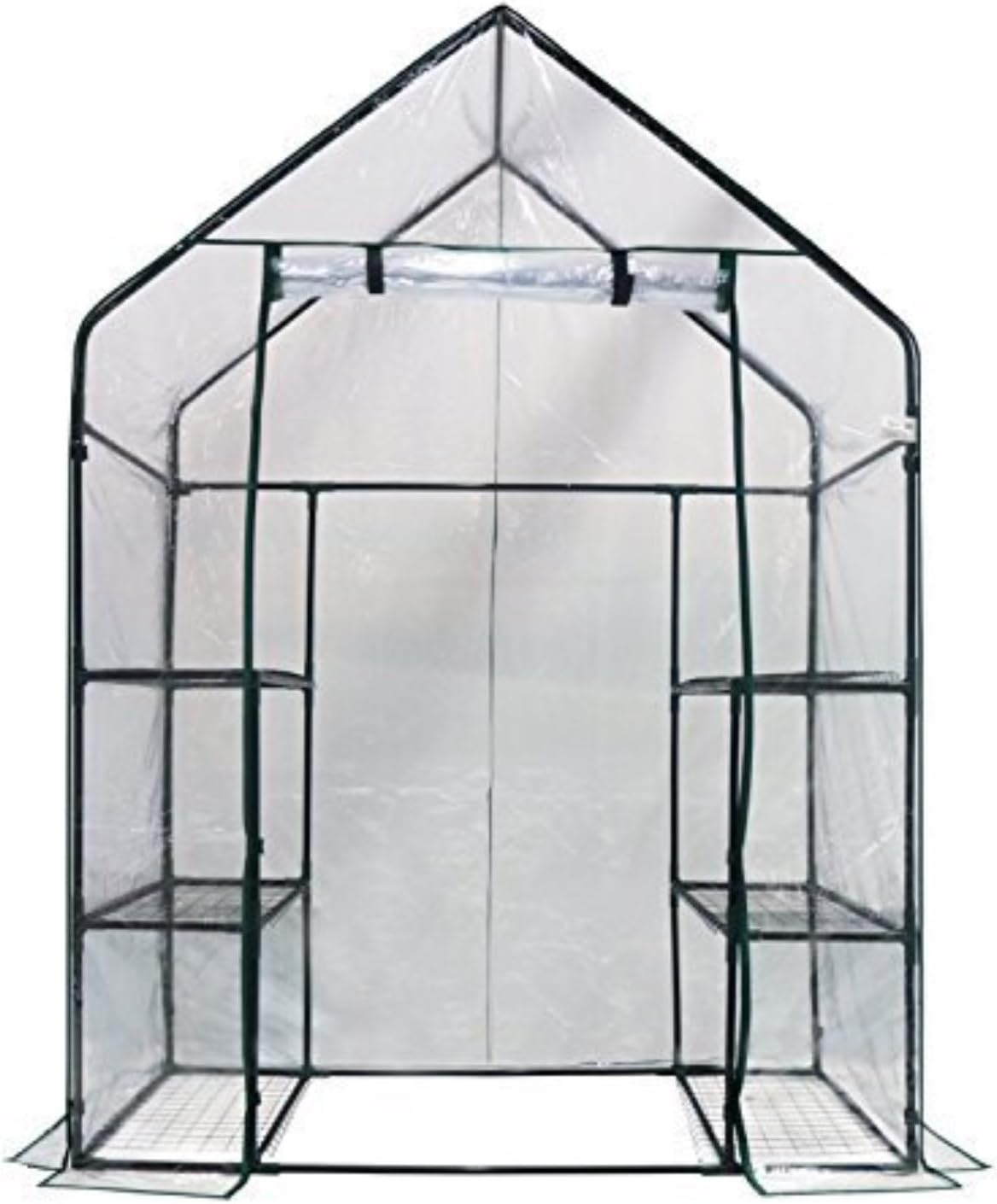
At 77 inches tall with a roll-up door, this is the entry point into walk-in territory — most adults can stand inside comfortably. It ships with three tiers of shelving built into the steel frame, so you get organized growing space for trays and pots straight out of the box instead of having to buy or build shelving separately. The clear PVC cover lets in plenty of light while still giving some frost protection on cool nights.
It’s still a fabric-and-frame structure, not a hard-panel greenhouse, so treat it as a three-season tool in most climates rather than a year-round growing space, and stake it down well since the footprint is narrow relative to its height. For anyone who wants real shelving and standing headroom without jumping to a polycarbonate structure, it hits a good middle ground.
Pros of the Homewell Walk-In Kit
- Walk-in height most adults can stand in
- Shelving included, no extra assembly needed
- Compact footprint fits small yards and patios
Cons of the Homewell Walk-In Kit
- Narrow footprint needs careful staking in wind
- PVC cover isn’t rated for heavy snow load
- Best suited to three-season use rather than winter growing
3. Pure Garden Walk-In Greenhouse
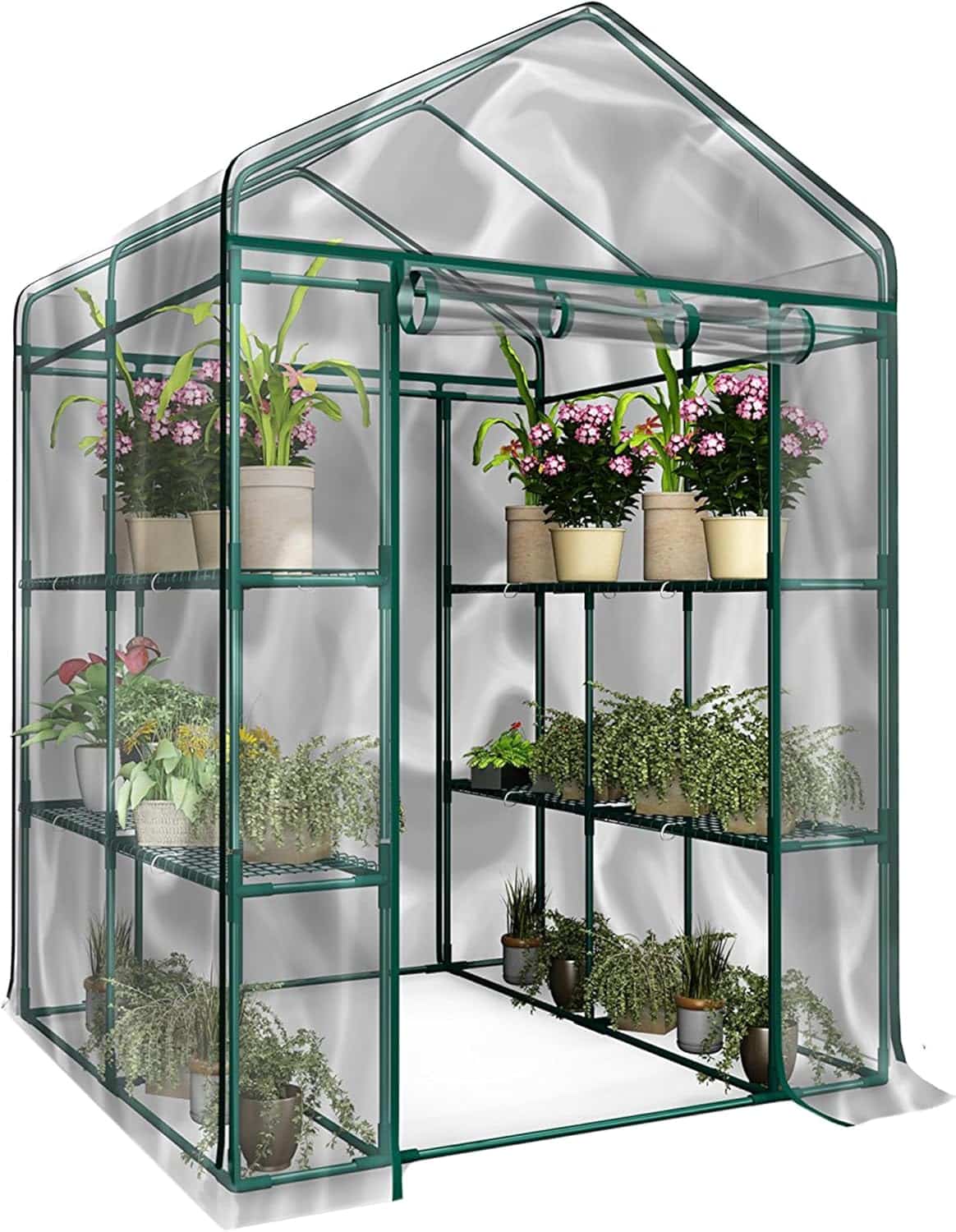
This is the budget pick if you want a genuinely walk-in structure without paying walk-in prices. At 56 x 56 x 76 inches with eight shelves across both sides, it packs a lot of growing space into a square footprint that fits against a fence or wall better than a long, narrow kit. The PVC cover and steel frame keep the price down while still giving you enough headroom to move around and tend plants without stooping.
Build quality is where the savings show — the frame is lighter-gauge than the premium options here, so it’s not the pick for a windy, exposed site or heavy snow country. Anchor it well and it’ll do a solid job as a three-season growing space for someone easing into greenhouse gardening on a tight budget.
Pros of the Pure Garden Walk-In Greenhouse
- Cheapest genuinely walk-in option in this roundup
- Eight shelves included for trays and pots
- Compact square footprint fits tight yards
Cons of the Pure Garden Walk-In Greenhouse
- Lighter-gauge frame than premium hard-panel kits
- Not the choice for exposed, windy sites
- PVC cover will need replacing over time
4. Mythos Polycarbonate Greenhouse Kit
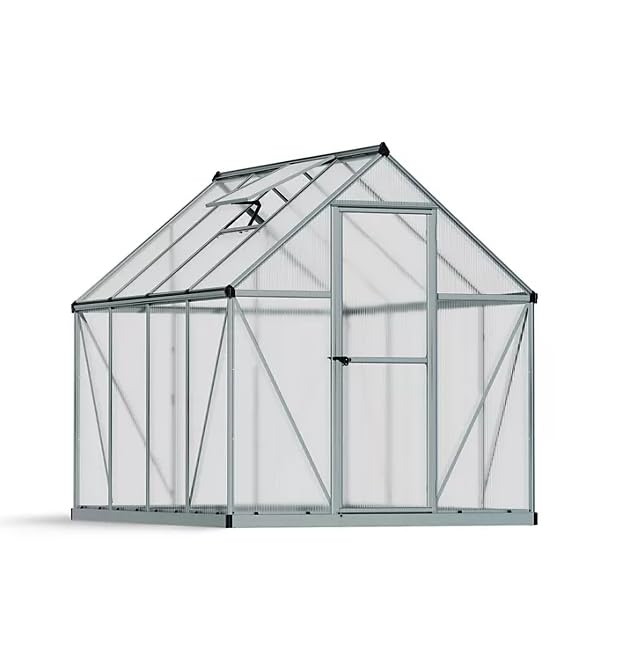
This is the premium pick, and the step up in materials is obvious the moment you open the box. A powder-coated aluminum frame holds twin-wall polycarbonate panels instead of fabric, at 6 x 8 feet with a lockable door and a roof vent. Polycarbonate insulates far better than PE or PVC, holds up to years of UV exposure without yellowing or tearing, and is sturdy enough to double as secure storage for tools between growing seasons — hence the lock.
It costs several times what the fabric-cover kits run, and assembly takes longer since you’re fitting rigid panels rather than pulling a cover over a frame. But for anyone treating a greenhouse as a permanent fixture rather than a seasonal experiment, the durability and insulation more than justify the price over the life of the structure.
Pros of the Mythos Polycarbonate Kit
- Rigid polycarbonate panels far outlast fabric covers
- Better insulation for cold-season growing
- Lockable door doubles as secure tool storage
Cons of the Mythos Polycarbonate Kit
- Highest price point of the four
- Longer assembly time fitting rigid panels
- Smallest footprint among the walk-in options here
Greenhouse Kits Compared
All four kits do the same basic job, but they suit very different situations. This is the quickest way to see which one fits yours.
| Kit | Type | Best for | Cover | Watch out for |
|---|---|---|---|---|
| Quictent Portable Mini | Mini / shelved | Seed starting, overwintering pots | PE fabric | Too small to work inside |
| Homewell Walk-In | Walk-in tunnel | A first proper greenhouse on a budget | PE fabric | Cover degrades after a few seasons |
| Pure Garden Walk-In | Walk-in shelved | Small patios and balconies | PE fabric | Light frame, must be anchored |
| Mythos Polycarbonate | Rigid panel | Year-round, permanent use | Twin-wall polycarbonate | Needs a level, prepared base |
The honest split: the three fabric-cover kits are seasonal tools that will need replacing or re-covering, and the polycarbonate kit is a structure you build once. Price tracks that difference almost exactly.
Where Should You Put a Greenhouse Kit?
Siting does more for a greenhouse than the kit you choose, and it is the part most people get wrong. Aim for the spot that gets the most winter sun rather than the most summer sun, because summer light is rarely the limiting factor. In the northern hemisphere that usually means an open south-facing position.
Three other things matter more than they sound. Keep it away from the north side of buildings and evergreen trees, which cast shade exactly when you need light most. Put it somewhere with a level, free-draining base, standing water under a greenhouse causes far more trouble than it seems like it should. And site it within reach of a hose or water source, because carrying water to a greenhouse every day gets old within a fortnight.
If you are building beds nearby, it is worth planning both at once, our guide to building raised garden beds covers laying out growing space that works alongside a greenhouse rather than fighting it for light.
Can You Use a Greenhouse Kit Through Winter?
Partly, and the honest answer depends on which kit you bought. An unheated greenhouse typically runs only a few degrees warmer than outside on a cold night, that is enough to extend your season by several weeks at each end and to overwinter hardy plants, but it is not enough to grow tender crops through a hard freeze.
A twin-wall polycarbonate kit holds heat noticeably better than a single-layer fabric cover, which is the main practical reason to pay for one. If you want to grow through a genuine winter you will need a heat source, and at that point running costs matter more than the kit price. Ventilation still matters in winter too, sealing a greenhouse completely traps humidity and invites mould.
How Long Do Greenhouse Kits Last?
PE fabric covers are the wear item. Expect roughly two to four seasons of UV exposure before a cover goes brittle and starts tearing at the seams, sooner in a hot, high-UV climate. Most manufacturers sell replacement covers, and buying one is far cheaper than replacing the whole kit, so check that replacements exist for your model before you buy.
Polycarbonate panels and aluminium frames last far longer, often a decade or more, but they are less forgiving of a poor base. A frame that racks because the ground settled will pop panels out of their channels.
Conclusion
If you just want to get growing without a construction project, any of these four kits will get you there — pick based on how much headroom you need and whether you’re after a seasonal tool or a permanent structure. And if you decide down the line that you’d rather build something custom-sized for your own garden, our guide to building your own greenhouse covers that whole process. Once your greenhouse is up, pairing it with a few raised garden beds outside or an indoor herb garden inside is a natural next step for extending your growing space even further.
FAQ — Best Greenhouse Kits
A compact walk-in kit with a fabric or PVC cover, like the Homewell or Pure Garden kits, is a good starting point — it’s affordable, sets up in an afternoon, and gives you standing headroom to actually work in without committing to a permanent structure.
Small portable kits start around $50-$100. Mid-size fabric-cover walk-in kits typically run $150-$300. Premium polycarbonate walk-in kits with aluminum frames usually cost $400 and up depending on size.
Kits save time and guarantee a predictable result, which is usually worth the cost if you want to be growing quickly. Building your own is cheaper and fully customizable if you’re comfortable with basic construction and have a specific size or spot in mind.
If you just want to start seeds or overwinter a few pots, a small portable kit is plenty. If you plan to grow a real range of vegetables or work comfortably inside, look for a walk-in kit with at least 6 feet of peak height.
Yes, especially fabric and PE-cover kits, which are light enough to shift or tip in wind. Use the stakes, sandbag pockets, or anchor points included with the kit rather than skipping this step.