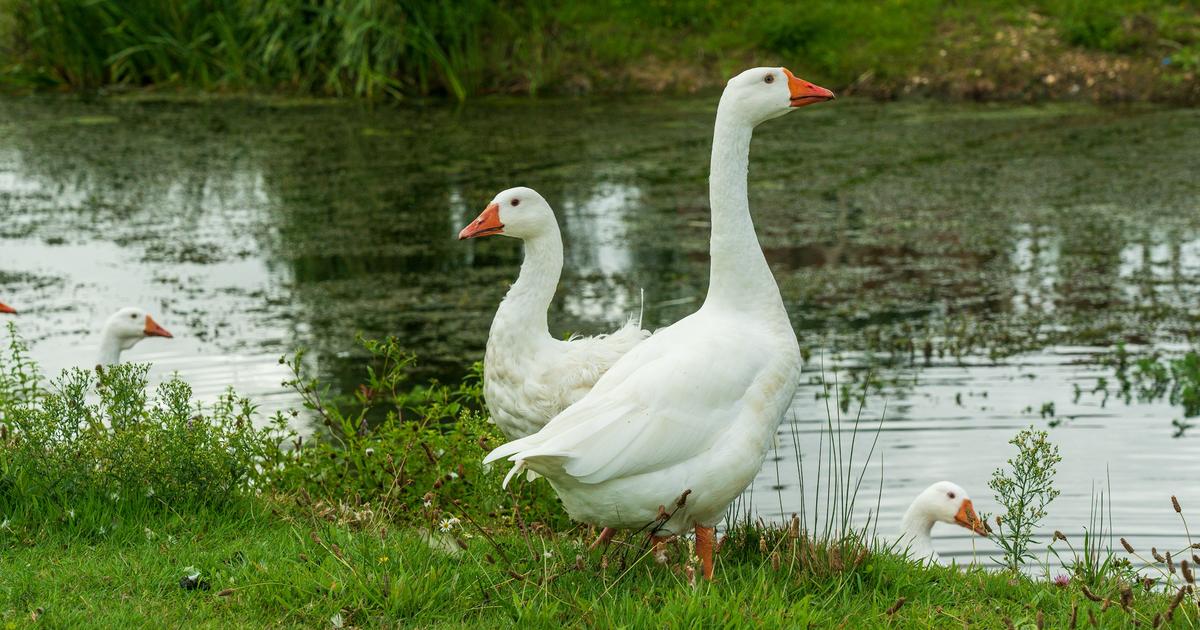
Geese are grazers, and that makes them unusual among poultry. Good pasture can supply the bulk of an adult goose’s diet through the growing season, supplemented with grain or waterfowl pellets. No other common farmyard bird gets as much of its living from grass.
If you arrived here about the wild geese on your local pond, skip to the section below, the answer is different, and it is mostly “please not bread”.
Geese Are Grazers
A goose has a serrated bill and a digestive system suited to stripping and processing grass, and a flock on good pasture will spend most of the day doing exactly that. Given enough decent grazing, adult geese can get through summer on very little supplementary feed, which is why they have historically been kept as low-input meat birds on smallholdings.
That grazing habit has a practical consequence: geese need grass, not just outdoor space. A bare dirt run does not work for geese the way it can for chickens, and short, young, actively growing grass is far better for them than long rank growth.
Quick Facts: Feeding Geese
- Pasture is the foundation, geese are true grazers
- Supplement with grain or waterfowl pellets, more in winter
- Like ducks, geese need extra niacin compared with chickens
- Never feed layer pellets to goslings, the calcium is harmful
- Water deep enough to dip the whole bill must be available with feed
What to Feed Domestic Geese
- Pasture. Short, growing grass. The main feed from spring through autumn.
- Waterfowl or poultry pellets. A maintenance ration, increased as grazing declines.
- Grain. Wheat, barley and cracked corn, useful for finishing and for winter energy.
- Greens and vegetables. Lettuce, cabbage, chard and most garden surplus.
- Grit. Needed to grind fibrous grass, especially for birds without access to soil.
Geese eat a surprising amount in winter, when grazing disappears and their energy needs rise. Plan on feeding considerably more from late autumn, and do not assume last summer’s intake is a guide.
Niacin and Goslings
Like ducklings, goslings need more niacin than chicks do, and a deficiency shows up as leg weakness and joint problems in fast-growing birds. Waterfowl starter is the straightforward answer. If you can only get chick starter, supplement it with brewer’s yeast, as covered in our guide to what ducks eat.
One firm rule: never feed layer pellets to goslings. The calcium level is set for laying birds and damages the kidneys of growing ones. Goslings also grow extremely fast, faster than almost any other poultry, so getting the starter ration right matters more here than with chicks.
What Do Canada Geese and Other Wild Geese Eat?
Wild geese graze grasses, sedges and aquatic plants, and in agricultural areas they feed heavily on waste grain and young cereal crops, which is exactly why farmers find them a nuisance. They are entirely capable of feeding themselves year-round without help.
If you want to feed the geese at your local pond, the important thing is what not to use. Bread, crackers and chips are nutritionally empty and very filling, and in growing birds a carbohydrate-heavy diet is associated with angel wing, a permanent deformity where the wing joint twists outward. Cracked corn, oats, chopped lettuce, peas and birdseed are all better options.
Worth knowing too: heavy feeding concentrates birds in one place, which increases disease transmission and can stop flocks migrating normally. Feeding sparingly, or not at all, is genuinely kinder.
Foods to Avoid
| Avoid | Why |
|---|---|
| Bread, crackers, chips, popcorn | Nutritionally empty, linked to angel wing in growing birds |
| Layer feed for goslings | Calcium level damages growing kidneys |
| Anything mouldy | Mycotoxins, geese are as vulnerable as other poultry |
| Avocado | Toxic to birds |
| Onions in quantity | Can damage red blood cells |
| Dried or raw beans | Lectins are toxic until fully cooked |
| Long, rank grass | Not toxic, but poorly digested compared with short growth |
Geese pair well with other waterfowl on a smallholding, see our guide to raising ducks for the closest comparison. For how this compares across the rest of the yard, see our overview of what most farm animals eat, or browse the full farm feed hub.
Other feeding guides in this group (poultry and waterfowl): chickens eat, ducks eat, turkeys eat. Or start from the overview of what most farm animals eat.
Mostly grass. Geese are true grazers and good pasture can supply the bulk of an adult goose’s diet in the growing season, topped up with grain or waterfowl pellets and increased substantially in winter.
Yes, more than any other common farmyard bird. Their serrated bill and digestive system are built for stripping and processing grass, so they need actual grazing rather than just outdoor space.
Grasses, sedges and aquatic plants, plus waste grain and young cereal crops where farmland is available. They feed themselves perfectly well year-round and do not need supplementary feeding.
You shouldn’t. Bread is nutritionally empty and very filling, so birds eat less of what they need, and in growing birds a carbohydrate-heavy diet is linked to angel wing, a permanent wing deformity. Cracked corn, oats, peas or chopped lettuce are far better.
Waterfowl starter feed. Goslings need more niacin than chicks and grow extremely fast, so the starter ration matters. Never give them layer pellets, the calcium harms growing kidneys.
Considerably more than in summer, because grazing disappears just as their energy requirement rises. Expect to supply most of their intake as pellets and grain from late autumn onward.