Pigs are true omnivores with a digestive system much like ours, which is exactly why feeding them is more regulated than feeding any other farm animal. The base of a domestic pig’s diet is a formulated grain-based ration, supplemented with vegetables, pasture and forage.
The part that surprises most first-time keepers is the law. Feeding food waste to pigs is restricted or banned in most of the developed world, and the rules are stricter than people expect.
What Pigs Eat Naturally
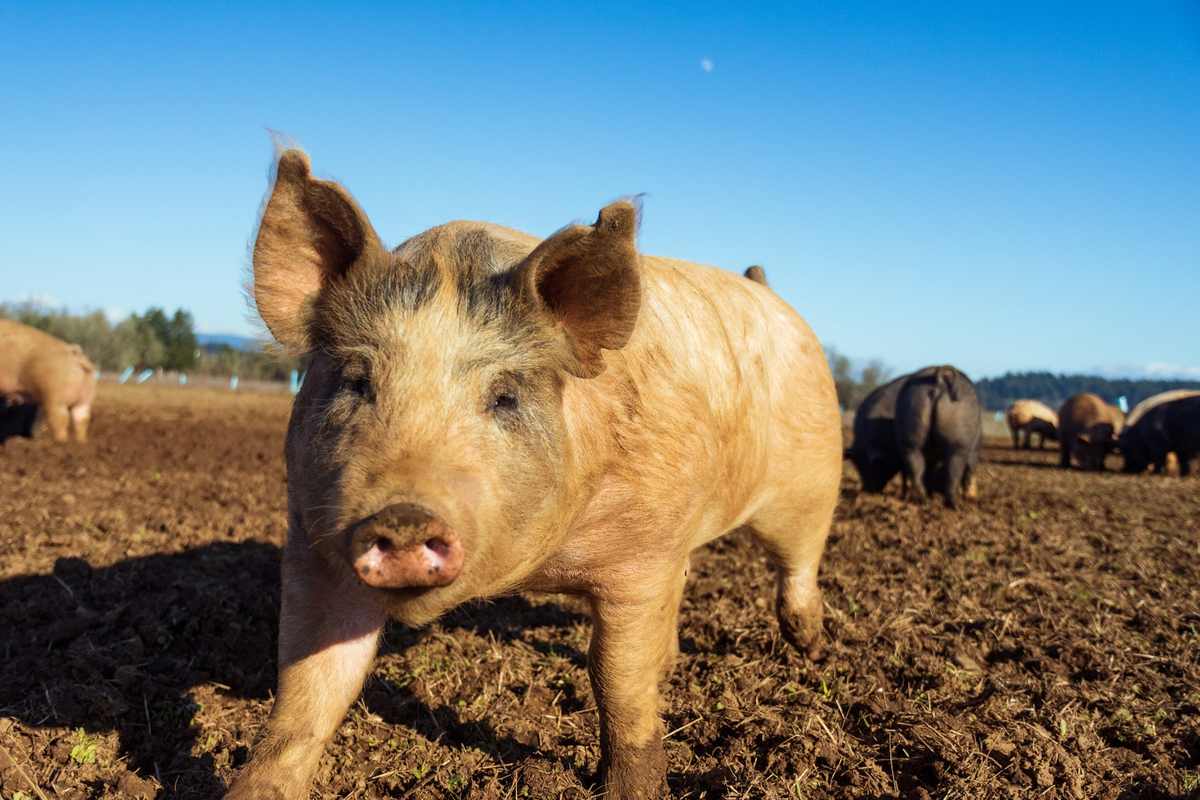
Wild and feral pigs root through soil for tubers, roots, fungi and invertebrates, and eat fallen fruit, nuts, acorns, eggs and carrion opportunistically. That rooting instinct is powerful and does not disappear in domestic pigs, which is why a pig on pasture will turn over ground with remarkable speed.
Used deliberately, that is a feature. Pigs are genuinely effective at clearing rough ground and breaking up compacted soil before cultivation.
The Base: Formulated Pig Feed
Commercial pig rations are corn and soybean based, balanced with vitamins and minerals, and sold by growth stage. Protein needs fall as the animal grows, which is the opposite of what many people assume.
| Stage | Approx. weight | Typical protein |
|---|---|---|
| Creep / starter | Piglets to ~25 lb | 20–22% |
| Grower | ~25–125 lb | 16–18% |
| Finisher | ~125 lb to market | 13–15% |
| Gestation | Pregnant sows | 12–14%, fed restricted |
| Lactation | Nursing sows | 16–18%, fed generously |
Gestating sows are the one class that is normally fed a restricted amount rather than free-choice. A sow allowed to eat freely through pregnancy will over-condition, which makes farrowing harder.
The Food Waste Rules You Need to Know
This is the single most important thing to understand before feeding a pig anything from a kitchen. Feeding food waste, sometimes called swill, is the historic route by which serious livestock diseases including foot-and-mouth and African swine fever have entered national herds.
In the United States, the Swine Health Protection Act prohibits feeding food waste containing meat to pigs unless it has been heat-treated at a licensed facility, and a number of states ban feeding food waste to pigs outright. In the United Kingdom and across the European Union, feeding catering waste of any kind to pigs is banned, including waste from vegetarian kitchens, because of the cross-contamination risk.
Quick Facts: Feeding Scraps to Pigs
- US: meat-containing food waste requires licensed heat treatment
- Several US states ban feeding food waste to pigs entirely
- UK and EU: feeding any catering waste to pigs is banned outright
- The risk is disease transmission, not nutrition
- Check your own state or national rules before feeding any kitchen waste
Garden produce that has never entered a kitchen, surplus vegetables, windfall fruit, spent crops, is treated differently from catering waste in most jurisdictions, but the specifics vary. Confirm locally rather than assuming.
Safe Supplements and Forage
- Pasture. Pigs graze as well as root, and good pasture can supply a useful share of a grower’s diet.
- Vegetables. Squash, pumpkins, root vegetables, brassicas and surplus garden produce.
- Fruit. Windfall apples and pears, in moderation given the sugar.
- Acorns and nuts. Traditional autumn feed, though heavy acorn intake affects fat quality.
- Dairy. Surplus milk or whey, where local rules permit it.
Growing your own supplementary feed is a genuine cost saver at small scale, our guide to growing your own livestock feed covers which crops are worth the ground.
What Not to Feed Pigs
| Avoid | Why |
|---|---|
| Any meat or meat-contaminated waste | Illegal in most places, serious disease risk |
| Mouldy grain or spoiled silage | Mycotoxins, pigs are notably sensitive to them |
| Raw or dried beans | Lectins are toxic until fully cooked |
| Large amounts of raw brassicas | Goitrogens affect thyroid function in quantity |
| Green or sprouted potatoes | Solanine is toxic |
| Excess acorns | Tannins cause digestive upset in large amounts |
The Bottom Line
Feed a stage-appropriate commercial ration as the base, supplement with garden produce and pasture, and be scrupulous about food waste rules. Pigs will eat almost anything, which makes it entirely your responsibility to decide what they should.
If you are choosing a breed, see our guide to the best pig breeds for a homestead, and compare with what most farm animals eat across the rest of the yard. Browse the full farm feed hub.
Other feeding guides in this group (other livestock): horses eat, rabbits eat, llamas eat. Or start from the overview of what most farm animals eat.
Wild and feral pigs root for tubers, roots, fungi and invertebrates, and eat fallen fruit, nuts, acorns, eggs and carrion opportunistically. Domestic pigs keep that rooting instinct, which is why they turn over pasture so quickly.
In most places, no, or only under strict conditions. The US Swine Health Protection Act requires licensed heat treatment for meat-containing food waste and several states ban food waste entirely, while the UK and EU ban all catering waste. The reason is disease transmission. Check your local rules first.
A commercial grain-based ration matched to the animal’s growth stage: around 20–22% protein for piglets, 16–18% for growers, and 13–15% for finishers. Protein requirements fall as the pig grows.
Not efficiently. Pasture and forage can supply a meaningful share of a grower’s diet and improve welfare, but pigs are not ruminants and cannot extract enough from grass alone to grow well. A concentrate ration is still needed.
Avoid mouldy grain, raw or dried beans, green or sprouted potatoes, large quantities of raw brassicas, and excess acorns. Any meat or meat-contaminated waste should be avoided on legal as well as health grounds.
Yes, pigs graze as well as root, and good pasture is a genuine part of a small-scale pig diet. They just cannot digest fibrous forage as efficiently as cattle or sheep can.