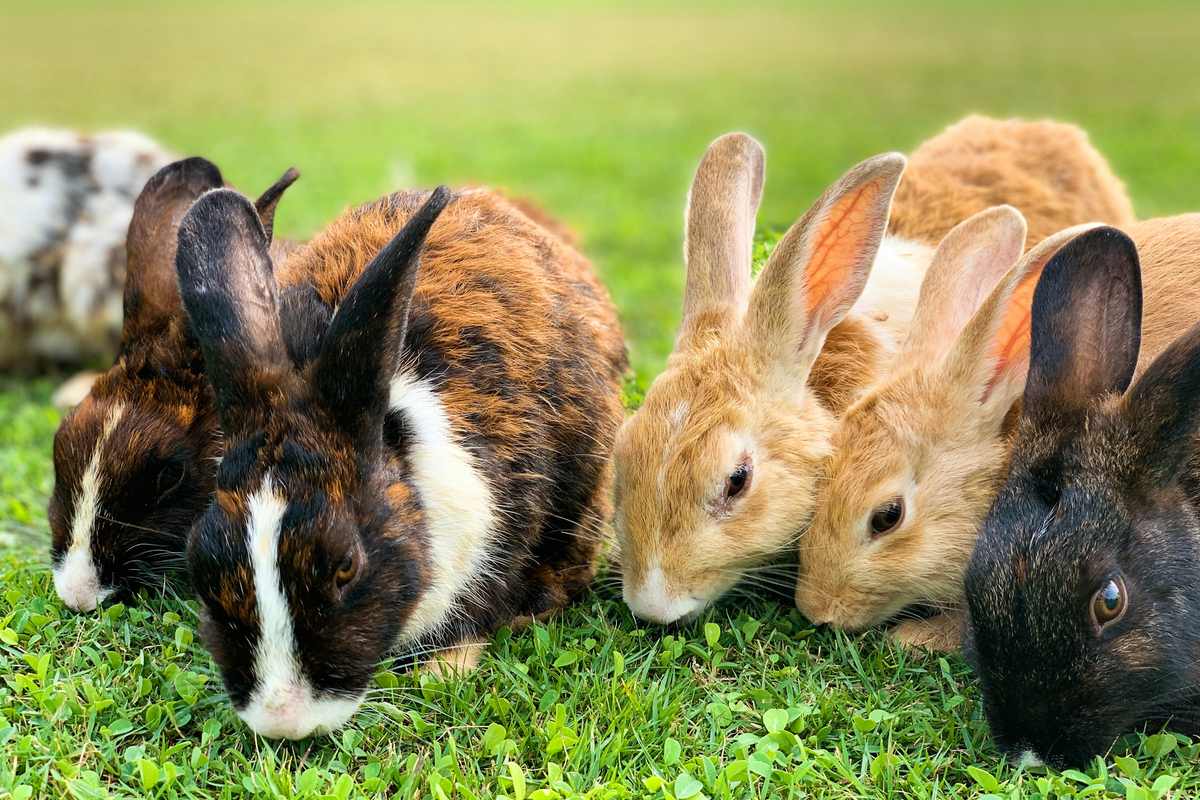
Rabbits are the most space-efficient meat livestock available to a smallholder. A trio of one buck and two does can produce a steady supply of meat from a footprint smaller than a garden shed, on feed you can partly grow yourself, with no need for a tractor, pasture or slaughterhouse booking.
They are also the livestock people are most likely to underestimate, both in the work involved and in how quickly the numbers compound.
Why Rabbits Work on Small Acreage
- Space. A breeding trio needs a few hutches, not a paddock.
- Speed. Kits reach processing weight at around 8 to 12 weeks depending on breed.
- Feed conversion. Rabbits convert feed to meat efficiently, and can use forage and garden surplus.
- Quiet. Effectively silent, which matters where neighbours or ordinances do.
- Manure. Rabbit manure is a cold manure, it can go straight onto beds without composting first.
That last point is genuinely useful if you garden. Unlike chicken manure, which will burn plants unless composted, rabbit droppings can be applied directly. Our guide to making your own fertilizer covers where it fits.
Meat Breeds Worth Considering
| Breed | Mature weight | Notes |
|---|---|---|
| New Zealand White | ~9–12 lb | The commercial standard. Fast growing, good carcass, widely available. |
| Californian | ~8–10 lb | Similar performance, slightly smaller. Often crossed with New Zealands. |
| Silver Fox | ~9–12 lb | Heritage American breed, calm temperament, good mothers. |
| Rex | ~7–10 lb | Dual purpose, the pelt has real value alongside the meat. |
| Flemish Giant | ~15 lb+ | Large but slower growing and less feed-efficient. Often crossed rather than kept pure. |
New Zealand Whites and Californians dominate for a reason: they hit weight quickly and predictably. Heritage breeds are worth considering if temperament and self-sufficiency matter more to you than pure conversion rates.
Housing
Rabbits need shelter from weather, from predators, and above all from heat. Cold is survivable for a healthy adult rabbit; heat is not. Rabbits struggle above roughly 85°F and heat stress kills quickly, so shade and airflow matter more than insulation in most US climates.
Wire-floored hutches with a resting board keep animals out of their own waste and simplify collecting manure, though they need to be well made to avoid sore hocks. Colony housing on the ground is possible and more natural, but complicates disease and breeding management. Whichever you choose, build for predators, dogs, raccoons and mink all take rabbits.
Quick Facts: Rabbit Meat Production
- Gestation is roughly 31 days
- Litters typically 6–10 kits
- Processing weight reached at about 8–12 weeks
- A doe can raise several litters per year
- Heat above ~85°F is the biggest single risk to adult rabbits
Feeding
Commercial rabbit pellets are the reliable base, supplemented with good grass hay, which rabbits need constantly for gut health and dental wear. Beyond that, rabbits use a lot of what a garden produces: leafy greens, carrot tops, brassica leaves, dandelion, plantain and comfrey.
Introduce fresh greens gradually, particularly to young rabbits, because sudden changes cause digestive upset. Avoid anything wet, mouldy, or from the nightshade family, and never feed lawn clippings, which ferment fast. Growing your own forage is very achievable at this scale, see growing your own livestock feed.
The Realistic Downsides
Two things put people off, and both are worth knowing before you start rather than after. The first is that you will be processing the animals yourself. There is essentially no commercial slaughter infrastructure for rabbits at smallholder scale, so this is a skill you have to acquire and be comfortable with.
The second is that rabbits breed exactly as fast as the cliché suggests, and the maths compounds quickly. Without a plan for every animal produced, a trio becomes an unmanageable population within a season. Decide your processing schedule before you breed, not after.
There is also a legal dimension in some places: check local ordinances on keeping and processing rabbits, and on selling meat, which is usually far more restricted than producing it for your own household.
The Bottom Line
For anyone with limited space who wants to produce a real share of their own meat, rabbits are arguably the most practical option available, provided you are prepared to do the processing. Start with a trio, plan for heat, and know your numbers before the first litter arrives.
For a wider look at what suits a starting smallholding, see easy animals to raise for beginners, or browse the full farm animals hub.
For the feeding side in full, see our guide to what rabbits eat.
For small acreage, often yes. Rabbits need very little space, convert feed efficiently, reach processing weight in 8 to 12 weeks and are silent. The main barrier is that you must process them yourself, as there is little commercial infrastructure at smallholder scale.
New Zealand White and Californian are the commercial standards, reaching good weight quickly and predictably. Silver Fox is a calm heritage alternative, and Rex adds pelt value alongside the meat.
Roughly 8 to 12 weeks to processing weight, depending on breed and feeding. Gestation is about 31 days and litters are commonly 6 to 10 kits, so production compounds fast.
A trio of one buck and two does is the standard starting point. That is enough to produce a steady supply without immediately creating more animals than you can manage.
Commercial pellets as the base, plus constant access to grass hay for gut health and dental wear. They also use garden surplus well, leafy greens, carrot tops, dandelion and comfrey. Introduce fresh greens gradually and never feed lawn clippings.
Heat is the bigger risk than cold. Rabbits begin to struggle above about 85°F and heat stress can kill quickly, so shade, ventilation and airflow matter more than insulation in most climates.