A livestock guardian dog is not a herding dog. It does not move stock, it lives with them and drives predators off. These are large, independent breeds selectively bred over centuries to have almost none of the prey drive that makes a normal dog dangerous around sheep, goats or poultry.
Understanding that distinction is the difference between a working guardian and an expensive, frustrated pet that chases your livestock.
Guardian vs Herding: Not the Same Job
Herding breeds like Border Collies work with a handler, using a modified prey drive to gather and move animals. They are intense, biddable and constantly taking direction.
Guardian breeds work alone, often at night, and make their own decisions. Independence is a feature, not a training failure. They bond to the stock rather than to a handler, patrol territory, and escalate from watching to barking to physical confrontation as a threat gets closer. A guardian that ignores your recall while standing between a coyote and your goats is doing exactly what it was bred to do.
The Main Breeds Compared
| Breed | Temperament | Notes |
|---|---|---|
| Great Pyrenees | Calm, attentive, very trustworthy with stock | The most popular LGD in the US. Barks a lot at night, which is the job. Heavy coat. |
| Maremma Sheepdog | Closely bonded, less prone to wandering | Italian breed, similar to the Pyrenees but somewhat smaller. Strongly stock-focused. |
| Anatolian Shepherd | Highly territorial, fast to respond | More reactive and escalates quicker. Needs experienced handling and solid fencing. |
| Akbash | Independent, agile, watchful | Turkish breed, leaner and faster than the Pyrenees. |
| Komondor | Protective, distinctive corded coat | Effective but the coat is a genuine maintenance commitment. |
For most smallholders in the US, the Great Pyrenees or the Maremma are the sensible starting point: both are noted for being attentive to stock and reliable around them. Anatolians and Komondors are highly capable but less forgiving of inexperienced handling.
Bonding a Guardian to Stock
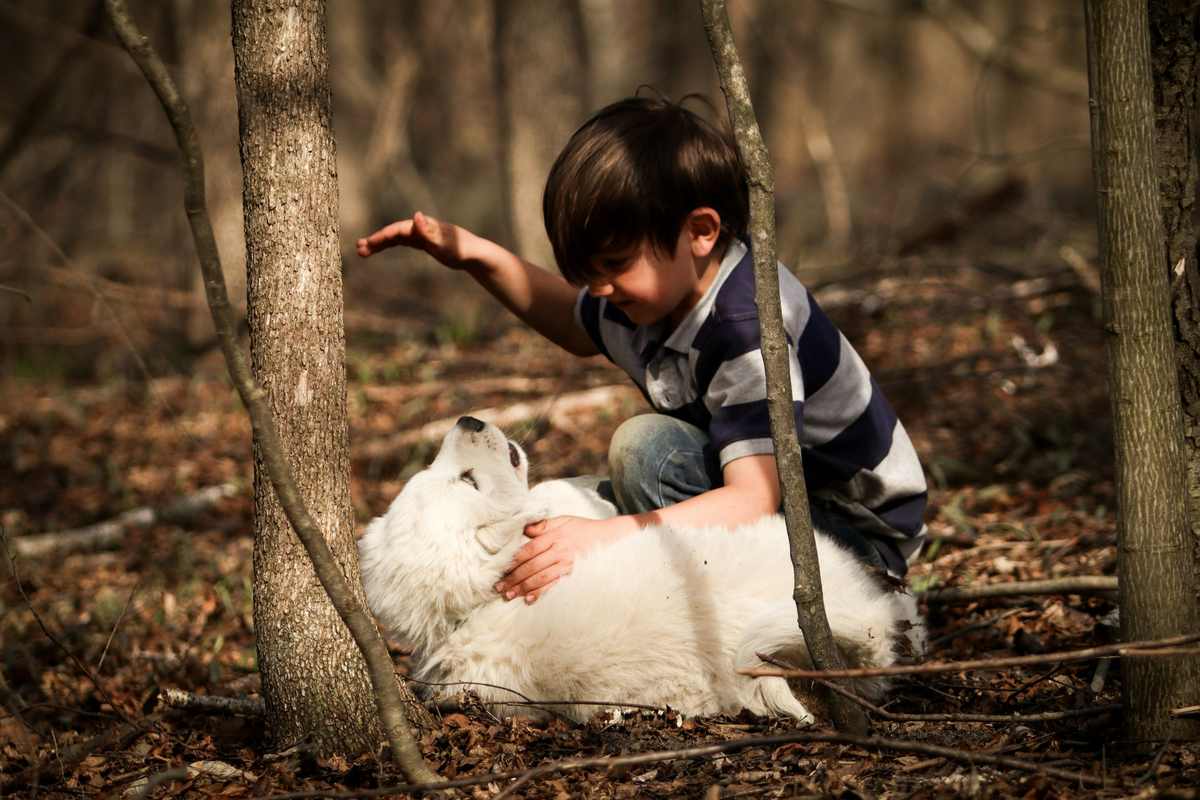
There is an old piece of advice that guardian pups must be raised with no human contact so they bond only to livestock. It is outdated and it is wrong. These breeds have historically lived alongside pastoralist families, and modern practice recognises that human socialisation is an important part of raising a working dog, you still need to catch it, treat it, and move it.
What matters is that the dog grows up with stock, in their space, from a young age, and that its correct behaviours are supported and its incorrect ones interrupted. Puppies play, and a playful pup can injure lambs or poultry without meaning to, so early supervision is essential rather than optional.
Quick Facts: Raising a Working LGD
- Raise the pup with the stock it will guard, in their space
- Human socialisation is necessary, the no-contact advice is outdated
- Supervise early, playful pups can injure young stock accidentally
- Expect real maturity at around two years, not six months
- Two dogs often work better than one on larger or more exposed ground
What They Need From You
- Serious fencing. These dogs expand their territory if allowed. Roaming is the single most common complaint, and it is usually a fencing problem.
- Tolerant neighbours. Guardians bark at night on purpose. It is the primary deterrent and it carries.
- Space. They are not suited to small suburban lots regardless of temperament.
- Patience. An LGD is not reliable at six months. Most mature into the job around two years old.
- Routine care. Large breeds, heavy coats, and outdoor lives mean parasite control and coat management matter.
Are They Worth It?
If you are losing stock to coyotes, foxes, raccoons or dogs, a well-raised guardian is one of the few genuinely effective non-lethal answers, and it works around the clock without you. If your losses are occasional and your ground is small and well fenced, the cost, noise and commitment may not be justified.
They pair particularly well with goats and sheep, and with poultry given careful early training. If you are building a flock, see our guides to easy animals to raise for beginners and poultry farming for beginners, or browse the full farm animals hub.
A large breed raised to live permanently with livestock and deter predators. Unlike herding dogs, guardians do not move stock, they bond to it, patrol territory and confront threats independently, usually without a handler present.
The Great Pyrenees or the Maremma Sheepdog. Both are noted for being attentive to stock and trustworthy around it. Anatolian Shepherds and Komondors are highly capable but more reactive and better suited to experienced handlers.
They need raising rather than obedience training. The guarding behaviour is largely genetic. What you provide is early exposure to the stock they will guard, supervision while they are young enough to play roughly, and correction of unwanted behaviour.
No, that advice is outdated. These breeds have always lived alongside people, and you need to be able to handle, treat and move the dog. Socialise it with humans while raising it with the stock.
Barking is the primary deterrent, and most predator activity is nocturnal. A guardian that barks through the night is working. It is also the most common source of neighbour complaints, so consider your setting before getting one.
Usually around two years. They mature slowly, and a six-month-old pup is still likely to play with stock. Expect a long runway before the dog is fully trustworthy unsupervised.