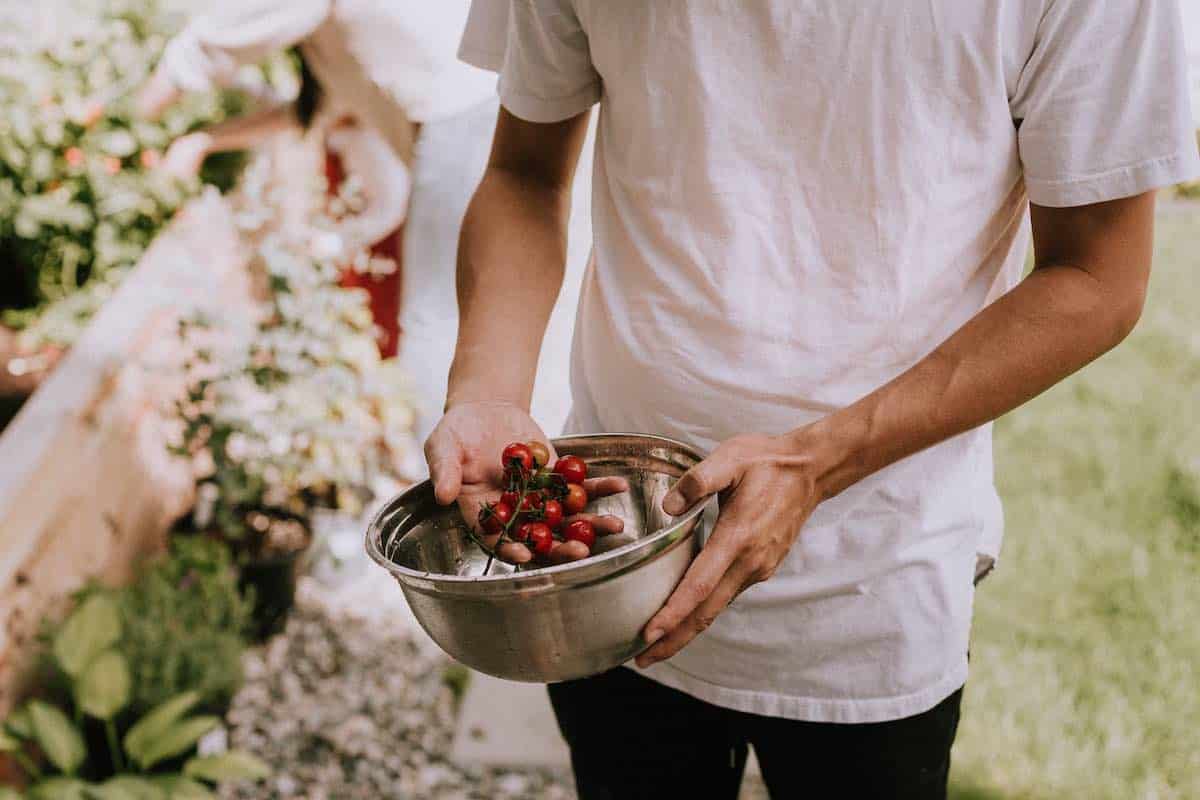
Cherry tomatoes are one of the most rewarding crops you can grow — and you don’t need a garden to do it. A single well-managed pot on a sunny balcony, patio, or deck can yield hundreds of sweet, bite-sized tomatoes from early summer right through to fall. Growing cherry tomatoes in pots is beginner-friendly, surprisingly productive, and genuinely fun once you know the right variety to choose and the handful of care habits that make the difference between a thriving plant and a struggling one.
This complete guide covers everything — from picking the right container and soil mix, to the best cherry tomato varieties for pots, watering schedules, support structures, and how to troubleshoot common problems. Whether you’re working with a fire escape, a small backyard, or just a sunny kitchen window, you can grow excellent cherry tomatoes in containers.
Why Cherry Tomatoes Are Ideal for Containers
Not all tomatoes thrive in pots — but cherry tomatoes do. Here’s why they’re the best choice for container growing, especially compared to larger beefsteak or slicing varieties.
Cherry tomatoes produce fruit much faster than large varieties, typically 55–70 days from transplanting versus 75–90+ days for beefsteaks. That faster cycle means more harvests per season in a container setup. The smaller fruit size also means the plant can support a heavy crop load without the structural strain that causes large-fruited varieties to struggle in restricted root space.
Container growing also brings some specific advantages over in-ground gardening:
- Mobility: You can move pots to follow sun, bring plants indoors before frost, and protect them during extreme weather.
- Soil control: You choose exactly what goes in the pot — no dealing with heavy clay, poor drainage, or soil-borne diseases from previous crops.
- Pest management: Isolated containers make it easier to spot and treat pests before they spread to other plants. Our guide on dealing with garden pests has useful tips for container gardeners too.
- Accessibility: Raised pots are easier on your back and can be positioned at table height for gardeners with mobility limitations.
If you’re new to growing vegetables and wondering whether it’s worth the effort, our piece on why you should grow your own vegetables makes a compelling case.
Best Cherry Tomato Varieties for Pots
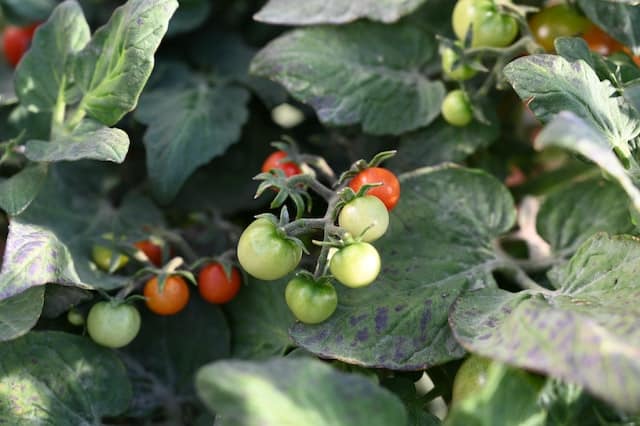
Variety selection is the single most important decision you’ll make for container cherry tomatoes. Choose a variety matched to your pot size and growing conditions, and everything else becomes easier.
| Variety | Type | Flavor | Best For |
|---|---|---|---|
| Sun Gold | Indeterminate | Exceptionally sweet, tropical | Large pots (10+ gal), caged |
| Sungella | Indeterminate | Sweet, golden, crack-resistant | Large pots, staked |
| Black Cherry | Indeterminate | Rich, complex, slightly smoky | Large pots, full sun |
| Sweet Million | Indeterminate | Classic sweet cherry flavor | Large pots, heavy producer |
| Tumbling Tom | Determinate | Sweet, mild | Hanging baskets, small pots |
Sun Gold
Sun Gold is consistently ranked as one of the best-tasting tomatoes of any kind. The small, orange-yellow fruits have an exceptional sweetness with a hint of tropical flavor that’s genuinely hard to beat straight off the vine. It’s an indeterminate variety, meaning it will keep growing and producing all season — expect a vigorous plant that needs a 10-gallon or larger container and a sturdy cage or stake. Worth every bit of space it takes up.
Sungella
Similar in color and flavor profile to Sun Gold but with one practical advantage: Sungella is significantly more crack-resistant. Cherry tomatoes crack when they take up water rapidly after a dry period — a common problem with container growing. If your watering schedule is inconsistent, Sungella is the smarter pick.
Black Cherry
For gardeners who want something a little different, Black Cherry delivers a deep, complex flavor — richer and less one-dimensionally sweet than orange varieties. The dark red-purple fruits are striking in a salad. Like Sun Gold, it’s an indeterminate variety that benefits from staking and a large container. Needs good sun to develop its full flavor profile.
Sweet Million
True to its name, Sweet Million is a prolific producer — expect long trusses loaded with small red fruits through the whole summer. It’s a reliable, disease-resistant variety that handles the confined conditions of container growing well. Good choice for beginners who want a heavy harvest without finicky care requirements.
Tumbling Tom
Tumbling Tom is the go-to choice for hanging baskets and small pots. It’s a determinate variety with a naturally cascading, bushy growth habit — the vines spill over the edges of the container attractively, and it produces a concentrated flush of small red tomatoes. It doesn’t need staking, which makes it ideal for balconies and small spaces. The flavor is sweet and mild, if not as complex as the indeterminate varieties above.
Choosing the Right Container
Container size is not something to cut corners on with tomatoes. Their roots run deep and they drink heavily — a pot that’s too small will stunt growth, stress the plant, and reduce your harvest significantly.
Minimum size requirements
For most indeterminate cherry tomato varieties, the minimum is a 5-gallon container (roughly 12 inches in diameter and 12 inches deep). But bigger is always better — a 10-gallon or 15-gallon pot holds more soil, retains moisture longer, and gives roots more room to develop. Tumbling Tom and other compact determinate varieties can manage in a 3–5 gallon hanging basket.
Container materials compared
- Terracotta: Beautiful, breathable, and excellent for drainage — but heavy, fragile, and dries out fast. Requires more frequent watering than other materials.
- Fabric pots: Increasingly popular among container gardeners. Fabric pots air-prune roots (preventing root-binding), drain extremely well, and are lightweight. They do dry out quickly in hot weather — plan on daily watering in summer.
- Plastic: Lightweight, affordable, and retains moisture better than terracotta or fabric. Less attractive, but perfectly functional. Look for dark-colored plastic if you’re in a cooler climate (it absorbs heat to warm the root zone) or light-colored if you’re in a hot one.
- Self-watering containers: These have a built-in reservoir at the base that wicks water up to the roots as needed. Excellent for cherry tomatoes because they smooth out the wet-dry cycles that cause fruit cracking. Well worth the extra cost if you tend to have an irregular watering schedule.
Drainage is non-negotiable
Whatever container you choose, it must have drainage holes. Tomatoes hate sitting in wet soil — root rot will kill a plant faster than almost anything else. If your decorative outer pot doesn’t have drainage, use it as a cachepot and keep your tomato in a plain nursery pot with holes inside it. Empty saucers after heavy rain or watering.
Soil Mix and Fertilizing
What you put in the pot matters as much as the pot itself. Never use garden soil in containers — it compacts, drains poorly, and often introduces pests and diseases (our garden soil guide covers what to use instead).
The right soil mix
Start with a quality potting mix (not “potting soil” — the former is lighter and better-draining). Add perlite at a ratio of about 20–25% by volume to improve aeration and drainage. If you have access to compost, work in a few handfuls to boost organic matter and microbial life. A good container mix for tomatoes is loose, well-draining, moisture-retentive without being waterlogged, and rich in organic matter.
Slow-release fertilizer at planting
Work a slow-release granular fertilizer (look for one formulated for vegetables or tomatoes) into the top few inches of potting mix at planting time. This provides baseline nutrition for the first 6–8 weeks without any further effort. You can also make your own nutrient-rich amendments — our guide on making your own fertilizer covers practical DIY options including compost tea and worm castings.
Liquid feeding through the season
Once plants start flowering, switch to a liquid tomato fertilizer applied every 1–2 weeks. At this stage, tomatoes need more potassium and phosphorus relative to nitrogen — high-nitrogen feeds promote leafy growth over fruit production. Look for a product labeled for fruiting crops with an NPK ratio like 4-6-8 or 5-7-10. Water the fertilizer in thoroughly after application.
Sunlight and Positioning
Tomatoes are sun-lovers. No amount of careful watering and fertilizing will compensate for insufficient light. This is the factor that most often determines success or failure for container cherry tomatoes.
How much sun do cherry tomatoes need?
Cherry tomatoes need a minimum of 6 hours of direct sunlight per day, with 8 hours being ideal. In practice, the more sun they get, the more fruit they’ll produce and the sweeter that fruit will taste. Plants in partial shade will grow but produce significantly less and are more prone to disease.
Best placement
South-facing patios, balconies, and decks receive the most sun throughout the day in the Northern Hemisphere — this is your first choice. West-facing spots get strong afternoon sun and work well. East-facing positions only get morning sun and typically provide 4–5 hours — marginal for tomatoes. North-facing spots are generally not viable for outdoor tomatoes.
One of the great advantages of container growing is flexibility. If a spot that looks sunny in April turns out to be shaded by a fence or neighboring building by July, you can simply move the pot. Check your intended growing spot at different times of day before committing, and watch for shadows from walls, overhangs, or nearby trees.
Watering Container Cherry Tomatoes
Watering is where most container tomato growers go wrong — and it’s almost always under-watering rather than over-watering. Container plants dry out far faster than in-ground plants because they have a limited volume of soil and no connection to groundwater.
How often to water
During hot summer weather, most container cherry tomatoes need watering once or even twice daily. In cooler weather or in self-watering containers, every 2–3 days may suffice. The only reliable way to know is to check the soil directly: push your finger 2 inches into the potting mix. If it’s dry at that depth, water thoroughly until it drains from the bottom. Never let the mix dry out completely — tomato plants experiencing repeated severe drought stress are prone to blossom end rot and fruit cracking.
How to water properly
Water at the base of the plant, not on the foliage. Wet leaves promote fungal diseases like early blight. Apply water slowly until it runs freely from the drainage holes — this ensures the entire root zone is moistened, not just the top layer. For a consistent, automated approach, look into drip irrigation for containers. Our guide to farm irrigation systems covers the principles that apply at any scale.
Self-watering pots
If you travel, have an irregular schedule, or simply want to reduce maintenance, a self-watering container is one of the best investments you can make for container tomatoes. The built-in reservoir can supply a plant for 2–4 days depending on weather and plant size, dramatically reducing the risk of drought stress and the cracking it causes.
Staking and Support
Most cherry tomato varieties need some form of support as they grow — unsupported plants sprawl across the pot, break under the weight of fruit, and become difficult to manage.
Tomato cages
Round wire tomato cages are the most common and straightforward support method. Push them into the pot at planting time so they’re secure before the plant gets large. Standard cages (around 18 inches in diameter) work well for compact indeterminate varieties. For vigorous growers like Sun Gold, consider a heavier-gauge or taller cage — standard lightweight cages often bend under a productive plant’s weight by midsummer.
Stakes
A single 4–6 foot bamboo or wooden stake pushed to the bottom of the pot and tied to the main stem every 8–10 inches as the plant grows works well for upright indeterminate varieties. Use soft plant ties or strips of fabric — wire or string can cut into stems. The advantage over cages is that staked plants take up less lateral space, useful on narrow balconies.
No support needed
Determinate varieties like Tumbling Tom are bred to be naturally bushy and compact. They don’t need staking — their trailing growth habit is the point. Place them in hanging baskets or at the edge of a pot where their vines can cascade naturally.
Common Problems and How to Fix Them
Even well-tended container tomatoes encounter problems. Here are the most common issues and what to do about them.
Yellowing leaves
Yellow leaves on the lower portion of the plant are normal as the plant matures — simply remove them. Yellowing throughout the plant usually indicates a nutrient deficiency (most commonly nitrogen or magnesium) or overwatering. Pale yellow leaves across the whole plant: add a liquid feed. Yellow leaves with green veins: suspect magnesium deficiency, treat with a diluted Epsom salt solution (1 tablespoon per gallon of water).
Blossom drop
Flowers appear but fall off before setting fruit. Common causes: temperatures above 95°F or below 55°F (pollination fails at temperature extremes), inconsistent watering, or excessive nitrogen. Move plants to a shadier spot during extreme heat, and ease off nitrogen-heavy feeds once flowering begins.
Fruit cracking
Tomatoes split when they take up water rapidly after a dry period — the fruit expands faster than the skin can stretch. The fix is consistent watering — never let the soil dry completely between waterings. Self-watering pots help enormously. Crack-resistant varieties like Sungella are also worth considering if this is a persistent problem.
Blossom end rot
Dark, sunken, leathery patches on the bottom of fruit. Caused by calcium deficiency, usually triggered by irregular watering preventing calcium uptake. The calcium is typically present in the soil — the plant just can’t absorb it. Consistent watering resolves most cases. Calcium sprays are available but inconsistent watering is usually the root cause.
Pests
Aphids (soft, clustered insects on new growth), whitefly, and spider mites are the most common container tomato pests. Inspect plants regularly — early detection makes management much easier. A strong spray of water dislodges aphids and mites. Insecticidal soap spray is effective for persistent infestations and safe for edible crops. Check new growth each time you water. For a broader look at managing garden pests, see our guide on getting rid of garden pests.
Harvesting and Storing Cherry Tomatoes
Cherry tomatoes are ready to harvest 55–70 days after transplanting, depending on variety and conditions. The best indicator of ripeness is color — fruit should be fully and evenly colored (deep red, golden yellow, or dark purple depending on variety) with a slight give when gently squeezed. Tomatoes that are still firm and pale will ripen on the vine if given a few more days.
Harvest regularly — leaving ripe fruit on the plant signals it to slow production. Once a plant is producing well, check it every 1–2 days. Ripe cherry tomatoes left on the vine in hot weather quickly become overripe, split, or attract insects.
Storage tips
Store fresh cherry tomatoes at room temperature, never in the refrigerator. Cold temperatures below 55°F damage the cellular structure and kill flavor within 24 hours. At room temperature, ripe cherry tomatoes keep for 3–5 days. For longer storage, freeze them whole (they’re excellent for sauces and soups), dry them in a dehydrator, or cook and preserve them via canning.
Frequently Asked Questions About Growing Cherry Tomatoes in Pots
How many cherry tomatoes can I expect from one pot?
A healthy indeterminate cherry tomato plant in a 10-gallon container will typically produce 2–4 pounds of fruit per week at peak season. Over a full growing season (4–5 months for most US climates), that’s 15–25 pounds of tomatoes per plant. Compact determinate varieties like Tumbling Tom produce a shorter, heavier flush — expect 3–5 pounds total rather than continuous harvest through the season.
Do I need to stake cherry tomatoes in pots?
For indeterminate varieties like Sun Gold, Black Cherry, and Sweet Million — yes. Without support, the main stem will collapse under the plant’s own weight as it grows. Install a cage or stake at planting time, before the plant gets large enough to disturb when you push supports into the soil. Determinate and trailing varieties like Tumbling Tom don’t need staking.
How often should I water container cherry tomatoes?
In warm summer weather, check daily and water whenever the soil is dry 2 inches below the surface. Many container tomatoes in hot climates need watering once or twice a day at peak summer. A self-watering container significantly reduces this frequency. The goal is consistent moisture — never completely dry, never waterlogged.
Can I grow cherry tomatoes indoors?
Yes, with the right setup. You’ll need a south-facing window with 6+ hours of direct sun, or a grow light setup providing 14–16 hours of artificial light per day. Indoor tomatoes also need hand-pollination since there are no bees — gently shake the flowering plant daily, or use a small paintbrush to transfer pollen between flowers. Choose compact varieties like Tumbling Tom or a micro-dwarf variety specifically bred for indoor growing. Temperature should stay between 65–80°F. It’s doable but requires more active management than outdoor growing.
What’s the best fertilizer for container cherry tomatoes?
A two-phase approach works best. At planting: mix a slow-release granular fertilizer into the potting mix for baseline nutrition over the first 6–8 weeks. Once flowering begins: switch to a liquid tomato fertilizer (higher in potassium and phosphorus, lower in nitrogen) applied every 1–2 weeks. A balanced organic option like fish emulsion or compost tea also works well. See our guide to making your own fertilizer for DIY options that cost almost nothing.
How long does a container cherry tomato plant produce?
Indeterminate varieties will continue producing until frost kills them — typically 4–6 months in most US climates. In frost-free climates or if you bring plants indoors before the first frost, they can produce year-round. Determinate varieties have a concentrated fruiting season of 4–6 weeks before slowing down significantly. If you want the longest possible harvest season, choose an indeterminate variety and protect the plant from early frosts in fall.
Start Growing This Season
Cherry tomatoes in containers are one of the most rewarding food crops you can grow — fast, productive, and genuinely delicious. With the right variety, a big enough pot, quality potting mix, consistent watering, and a sunny spot, you’ll be harvesting handfuls of sweet tomatoes within two months of planting. If you’re building out your growing setup, the home and garden supplies hub has everything you need to get started.
4 replies on “Growing Cherry Tomatoes in Pots: Delicious Tomatoes from a Container”
[…] best summer seeds to plant. Many vegetables do well when planted during summer as well, including tomatoes, peppers, eggplant, and […]
[…] tomato is a high-value crop that can be harvested in any place and time of the year. You can even grow cherry tomatoes in pots at home! These bite-sized tomatoes are perfect for snacking or adding to salads. Thus, people have […]
[…] hedge and lawn shear, weed eater, weedeater, hand trowel for planting small plants or seeds like tomatoes or other […]
[…] like tomatoes and some varieties of beans, carrots and beets will do well in a greenhouse. These plants need warm […]