Water-hungry crops are bound to thrive when they have access to a constant water supply. Fail to provide it, and your crops are destined to struggle. That’s why farm irrigation systems have become one of the most important investments a small farm can make.
Farm irrigation systems distribute water reliably to plant roots, reducing manual labor and conserving water. Unlike the old days when farmers had to wait for rain, today’s irrigation options range from simple drip lines to solar-powered pump setups that run themselves.
This guide covers every major type of farm irrigation system, how to choose the right one for your land, water sources to consider, scheduling tips, and common mistakes to avoid.
Why Irrigation Matters on a Small Farm
Rainfall alone is rarely enough. Even in regions with moderate annual precipitation, dry spells arrive at the worst possible time — right when crops are establishing roots or filling out fruit. Water stress during critical growth windows can cut yields by 20–50%, and in severe drought years the damage can be total.
The numbers reinforce why this matters. According to the USDA, irrigated farmland in the US produces roughly 54% of the total value of crop sales while accounting for only about 20% of harvested acres. Put simply, irrigated farms are dramatically more productive per acre than rain-fed operations. That productivity gap is exactly why choosing the most profitable crops for your small farm starts with getting water right first.
Drought is also a growing concern. The US Drought Monitor regularly shows 30–40% of the contiguous US under some level of drought conditions, and western states increasingly face multi-year water deficits. Even in the traditionally wetter Southeast and Midwest, summer dry spells have become more frequent and severe.
The difference between irrigated and rain-fed farming goes beyond yield. Irrigated crops can be planted on a reliable schedule, allowing for better market timing. Consistent soil moisture also means more uniform fruit and vegetable sizing — which matters for direct sales and farmers’ market presentation. And with the right system, water can be delivered with precision, reducing disease pressure from wet foliage and lowering the risk of runoff and soil erosion.
The Different Types of Farm Irrigation Systems
Choosing the right system starts with understanding what each one does best. Here’s a detailed look at the main options available to small farm operators.
Drip / Trickle Irrigation
A drip or trickle irrigation system delivers water to plants in a slow, steady stream directly to the root zone. This type of system is often used in areas where water is scarce because it supplies water precisely where it’s needed, minimizing evaporation and surface runoff.
Drip systems can achieve water use efficiency of up to 90%, compared to 60–75% for most sprinkler systems. They work exceptionally well for vegetables, fruit trees, berry crops, and orchards — essentially any crop where you can run a dedicated line to each plant or row.
You can set up drip irrigation to run automatically via a timer, or operate it manually. For small farms and market gardens, it’s often the most practical and cost-effective long-term choice. Our full guide to how drip irrigation works and how to set it up covers the pressure regulator, filtration and emitter spacing that most first installations get wrong. For a single bed or a short row, a soaker hose does a similar job with far less setup.
Quick Facts: Drip / Trickle Irrigation
- Water efficiency up to 90%
- Best for vegetables, orchards, and row crops
- Both automatic and manual operation available
- Reduces weed pressure between rows
- Emitters can clog — requires filtered water and periodic maintenance
Hand-Moved Sprinkler Irrigation
The hand-moved sprinkler irrigation system uses aluminum pipe sections that can be repositioned manually. Water is drawn from a source — river, pond, or well — and distributed through sprinkler heads that cover a set radius. It’s far more effective than a hose and covers ground quickly once you get a rhythm going.
Quick Facts: Hand-Moved Sprinkler Irrigation
- Great for drought-affected areas
- Easily maneuverable and low cost to start
- Conserves more water than flood methods
- Cannot supply water directly to plant roots
- Requires manual labor for repositioning
Whichever system you choose, the supporting kit matters as much as the pipework. Our roundups of the best rain barrels and livestock water troughs cover storing and distributing water once you have it, and our essential gardening tools list covers the hand tools you will want when laying line.
Solid Set Sprinkler Systems
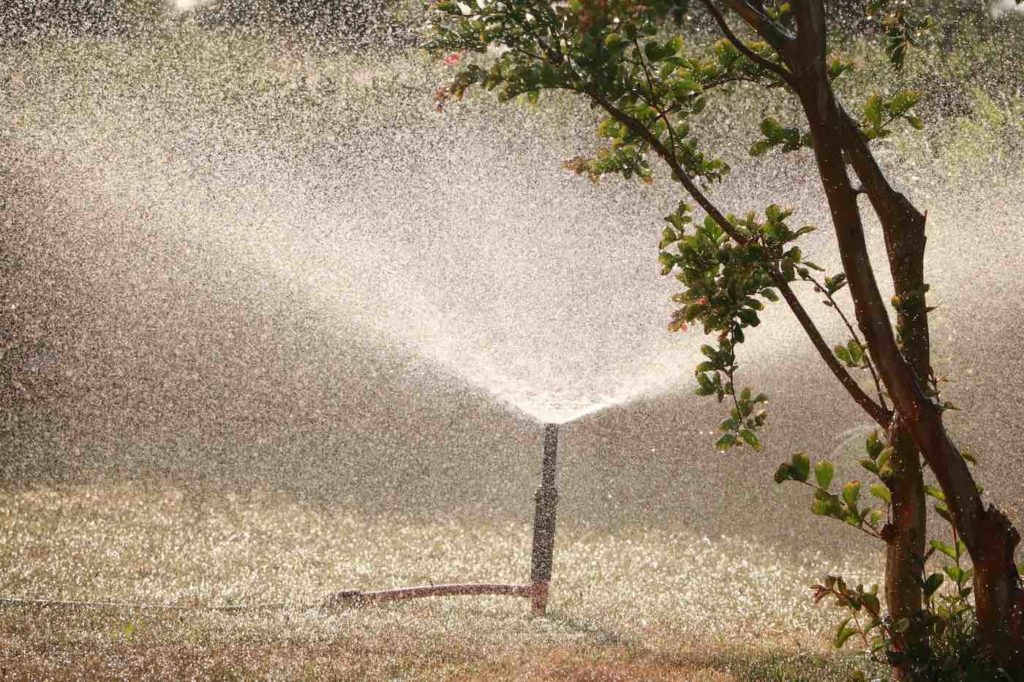
A solid set sprinkler irrigation system is designed to function throughout the entire crop season without being moved. Farmers set this up once — either with portable aluminum pipe above ground or permanent underground PVC — and it stays in place, irrigating vegetable crops reliably from transplant to harvest.
Quick Facts: Solid Set Sprinkler Systems
- Provides years of trouble-free operation once installed
- Coverage across a wide area with no daily labor
- Suitable for a wide range of agricultural crops
- Higher upfront and operating costs
- Requires a stable, adequate water supply
Big Gun Irrigation Systems
A big gun irrigation system uses a large-nozzle sprinkler that throws water over a wide radius — often 100 feet or more per pass. It’s popular for medium to large fields where consistent water delivery matters, especially during dry periods. Affordable to install and relatively simple to operate, big gun systems are a practical step up from hand-moved pipes for farms scaling up.
Quick Facts: Big Gun Irrigation Systems
- Improves crop yields during dry spells
- Covers large areas efficiently
- Affordable entry point for medium farms
- Requires manual repositioning or a traveling reel unit
Traveling Big Gun Sprinklers
A traveling big gun sprinkler attaches to a large water tank on wheels and self-propels across the field as it irrigates. This makes it ideal for farmers who need to cover large acreage quickly without repositioning equipment by hand. Once set at one end of the field, the machine works its way across while you focus on other tasks.
Quick Facts: Traveling Big Gun Sprinklers
- Self-propelled — minimal labor once set up
- Waters large areas evenly in a single pass
- Maneuverable between fields
- Higher capital cost than static systems
- Best suited to open, rectangular fields
Center Pivot Irrigation Systems
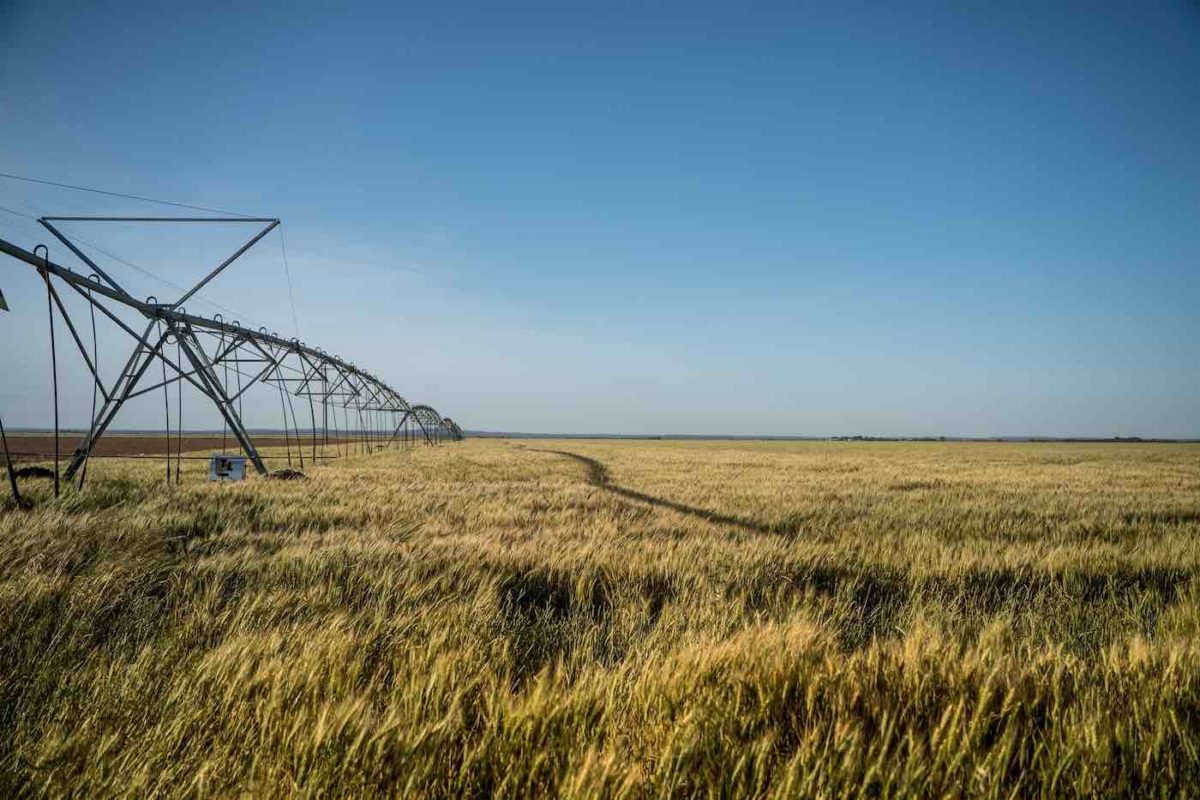
A center-pivot irrigation system uses a long, rotating arm mounted on a central pivot point to deliver water in a circular pattern. Center pivot systems are a very efficient way to water crops over hundreds of acres at once. They are adaptable to a wide range of climatic conditions and soil types, and can be fitted with drip emitters for even greater efficiency.
Quick Facts: Center Pivot Irrigation Systems
- Handles a wide range of weather and soil conditions
- Low daily labor requirement once installed
- Can be automated and monitored remotely
- High initial and maintenance costs
- Not suitable for irregularly shaped fields
Surface / Flood Irrigation
Surface or flood irrigation is the oldest irrigation method in the world — gravity does most of the work. Water is released at the top of a field and flows downhill through furrows or basins to reach plant roots. It’s still widely used for rice, alfalfa, and other field crops on flat terrain.
Water efficiency for flood irrigation typically sits around 60%, lower than sprinkler or drip alternatives. However, the setup cost is minimal — essentially just earthwork and gates — which makes it attractive for large-acreage operations on level ground with abundant water access.
Quick Facts: Surface / Flood Irrigation
- Very low setup cost — primarily earthmoving
- Best for flat fields growing rice, alfalfa, or pasture
- No energy required if field has natural slope
- Water efficiency around 60% — higher losses to evaporation and runoff
- Not practical on sloped or uneven terrain
Subsurface Drip Irrigation
Subsurface drip irrigation (SDI) takes the efficiency of standard drip systems one step further by burying the drip lines 6–18 inches below the soil surface. With water delivered directly to the root zone and no surface wetting at all, evaporation is near zero. SDI is most commonly used in permanent crops like vineyards and orchards, or in high-value vegetable rotations.
The main tradeoff is cost and accessibility — buried lines are harder to inspect and replace, so installation quality and good filtration matter a lot. When done right, though, SDI systems often last 10–20 years with minimal upkeep.
Micro-Sprinklers for Orchards
Micro-sprinklers — sometimes called micro-jets or spinner heads — are low-volume sprinklers that wet a 6–12-foot diameter area around each tree or shrub. They’re particularly popular in orchards and vineyards because they can be used for both irrigation and frost protection: running water through micro-sprinklers on a freezing night releases latent heat as water freezes, protecting blossoms down to about 26°F.
Quick Facts: Micro-Sprinklers
- Dual-purpose: irrigation and frost protection
- Ideal for orchards, vineyards, and nursery stock
- Low flow rates conserve water compared to standard sprinklers
- Requires clean water to prevent clogging
Farm Irrigation Systems Compared
Here’s a quick side-by-side comparison to help you see where each system fits.
| System Type | Best Crop Types | Water Efficiency | Setup Cost | Maintenance Level |
|---|---|---|---|---|
| Drip / Trickle | Vegetables, orchards, berries | Up to 90% | Low–Medium | Medium (filter cleaning, emitter checks) |
| Sprinkler (solid set) | Row crops, lawns, field vegetables | 70–80% | Medium–High | Low–Medium |
| Center Pivot | Corn, wheat, soybeans, large row crops | 75–85% | High | Medium (mechanical parts) |
| Surface / Flood | Rice, alfalfa, pasture (flat terrain) | ~60% | Very Low | Low (mostly land management) |
| Subsurface Drip | Vineyards, orchards, high-value vegetables | 90–95% | High | Low (once installed) |
| Micro-Sprinklers | Orchards, nurseries, frost-sensitive crops | 80–90% | Medium | Low–Medium |
| Big Gun / Traveling Gun | Pasture, field crops, large acreage | 65–75% | Medium | Low |
The Best Irrigation Method for Small Farms & Hobby Farms
Small farms and hobby farms can use a wide variety of irrigation techniques. Drip irrigation, sprinkler irrigation, and micro-irrigation systems are a few common ways. For a medium-sized farm, a big gun irrigation system can also be practical.
Here’s a summary of these methods’ benefits and drawbacks for small farms or gardens:
| System Name | Main Benefits | Drawbacks |
|---|---|---|
| Sprinkler | Best for both large and small areas; easy to operate and set up | Needs additional sprinklers for full coverage; doesn’t supply water directly to roots |
| Drip | Most water-efficient; supplies water to roots; automatic or manual operation | Higher upfront cost; emitters need maintenance |
| Micro-irrigation | Cost-effective; great for lawns, gardens, and small farms; conserves water | Slower application rate |
| Big gun | Maneuverable; easy setup; suitable for small and large areas | Some models require manual repositioning |
What is the most efficient watering system?
If you’re looking for the most efficient watering system, drip irrigation is hard to beat. It uses significantly less water than any other method, delivers moisture exactly where it’s needed, and can be adjusted to match the specific needs of your crops.
What is the most sustainable irrigation system?
When it comes to long-term sustainability, drip irrigation wins again. It uses less water, reduces soil erosion, minimizes water pollution from runoff, and keeps soils healthy by avoiding the compaction that heavy flooding can cause.
Choosing the Right System for Your Farm
No single irrigation system is best for every farm. The right choice depends on a combination of factors that are specific to your land, crops, and resources. Here are the key questions to work through before committing to a system.
- Acreage. Small market gardens (under 2 acres) generally do well with drip tape or micro-sprinklers. Larger row crop operations of 10+ acres often point toward solid set sprinklers, traveling guns, or center pivots.
- Crop type. Vegetables and fruit trees benefit most from the precision of drip irrigation. Pasture, hay, and field grains are more forgiving and work well with sprinkler or flood methods.
- Water source. A gravity-fed pond or canal makes surface irrigation easy. A well or municipal connection typically requires a pump, which suits pressurized drip or sprinkler systems. See the water sources section below.
- Terrain. Flat fields suit almost any system, including flood. Sloped or rolling ground rules out flood irrigation and may require pressure-compensating drip emitters to ensure even distribution.
- Budget. If capital is tight, starting with drip tape on vegetable beds delivers the best return per dollar. A full solid-set sprinkler system or center pivot is a larger investment that pays off over years of operation.
- Labor availability. If you’re farming with limited help, automated systems — drip on timers, solid set sprinklers — reduce daily workload. Hand-moved pipe or big gun systems require more regular human input.
Water Sources for Farm Irrigation
Every irrigation system needs a reliable water source. On a small farm, you typically have several options — and often a combination works best.
- Wells. Drilled wells are the most common source for farms without surface water. Well yield (measured in gallons per minute) determines what irrigation system is feasible. A well producing 10–20 GPM can typically support drip irrigation on 2–5 acres of vegetables.
- Farm ponds. A pond is an excellent gravity-fed or pump-fed reservoir for irrigation. Building a farm pond as a water source gives you stored water that can buffer dry periods and reduce dependence on wells or municipal supply.
- Rivers and streams. Surface water rights vary widely by state. In the western US, water rights are strictly regulated and require permits. In the East, riparian rights generally allow reasonable use. Always confirm legal access before drawing from moving water.
- Rainwater harvesting. Collecting roof runoff into cisterns or stock tanks can supplement irrigation in areas with reliable summer rainfall. It won’t replace a well or pond but helps during light dry spells and reduces pump runtime.
- Municipal water. City or rural co-op water is the most reliable source but the most expensive. It works well for small market gardens where water costs are offset by high-value crops.
Some farms are also exploring solar-powered irrigation to reduce pump operating costs — pairing a solar array with a well pump or pond pump can cut irrigation energy costs significantly over a 10–15 year horizon.
Irrigation Scheduling Tips
Having the right system is only part of the equation. Knowing when and how much to water makes the difference between thriving crops and wasted water.
- Water early in the morning. Watering at dawn minimizes evaporation — air temperatures are low and wind is usually calm. Water applied in the afternoon on a hot day can lose 20–30% to evaporation before it reaches the root zone.
- Match frequency to crop stage. Seedlings and transplants need frequent, light watering to keep the top few inches of soil moist. Established plants benefit from deeper, less frequent irrigation that encourages deep root development.
- Use a soil moisture meter. A simple tensiometer or electronic probe takes the guesswork out of when to irrigate. Aim to water when soil moisture drops to 50–60% of field capacity for most vegetables, and before plants show any visual stress.
- ET-based scheduling. Evapotranspiration (ET) data — available from most state agricultural weather networks — tells you how much water crops are actually using each day. Scheduling irrigation around ET values prevents both over- and under-watering and is the method of choice for serious market growers.
- Account for rainfall. Connect your irrigation timer to a rain sensor so systems automatically shut off after rain events. Overwatering after rain is one of the most common mistakes on small farms and wastes both water and energy.
Proper irrigation scheduling pairs well with a strong fertilization program — water moves nutrients into the root zone, so getting both timing and rates right maximizes results. For more on soil nutrition, see the guide to fertilizing irrigated crops.
Common Farm Irrigation Mistakes to Avoid
Even a well-designed irrigation system can underperform if it’s used incorrectly. Here are the pitfalls that catch small farm operators most often.
- Overwatering. More water is rarely better. Consistently saturated soil drives out oxygen, encourages root diseases like Pythium and Phytophthora, and leaches nutrients below the root zone. Learn your soil’s water-holding capacity and respect it.
- Ignoring pressure requirements. Every irrigation system has an optimal operating pressure range. Too little pressure and sprinkler heads won’t distribute evenly. Too much pressure and drip emitters blow out or mist instead of drip, losing much of the efficiency advantage. Install a pressure regulator appropriate for your system.
- Skipping seasonal maintenance. Filters should be checked and cleaned regularly during the irrigation season. Drip lines need flushing at the end of each season. Sprinkler heads need clearing of debris. Neglecting maintenance leads to uneven distribution and expensive failures.
- Using the wrong system for your soil type. Sandy soils drain fast and need frequent, light applications — drip systems shine here. Heavy clay soils absorb water slowly, so flood and high-rate sprinkler systems can cause pooling and runoff. Match your application rate to your soil’s infiltration rate.
- No backflow prevention. Irrigation lines that connect to a well or municipal supply should always have a backflow preventer installed. Without it, fertilizer injected into the system or soil contaminants pulled in by pressure changes can enter your drinking water supply.
- Watering in the evening. Night irrigation leaves foliage wet overnight, which creates ideal conditions for fungal diseases like powdery mildew and botrytis. If you must water later in the day, drip systems that keep foliage dry are the safer choice.
In Summary
Farm irrigation systems are one of the highest-impact investments a small farm can make. The right system protects yields through dry spells, conserves water, and can reduce the daily labor of hand-watering dramatically.
For most small farms and market gardens, drip irrigation offers the best combination of water efficiency, crop health, and return on investment. Larger operations growing row crops or field grains may be better served by sprinkler systems or center pivots. And on flat ground with an abundant water source, surface irrigation is still a perfectly viable and very low-cost option.
Whatever system you choose, pair it with a solid scheduling plan, keep up with maintenance, and match your water application to what your crops and soil actually need. That combination — right system, right timing, right rate — is what turns a good farm into a great one. For more resources on building a productive operation, browse the Farming hub and Homesteading hub.
Frequently Asked Questions about Farm Irrigation Systems
The four main types of agricultural irrigation are surface irrigation, center-pivot irrigation, sprinkler irrigation, and drip irrigation. The right irrigation system can save time, money, and water while ensuring a thriving yield.
Most farm irrigation systems work by using a pump to draw water from a source — such as a well, river, or pond — and distributing it evenly across the field through a network of pipes, emitters, or sprinkler heads. The specific delivery method varies by system type.
The five core irrigation systems are: drip irrigation, subsurface drip irrigation, sprinkler irrigation (including solid set and center pivot), surface/flood irrigation, and micro-irrigation. Many farms use a combination of these depending on their crops and field layout.
Drip irrigation is widely regarded as the most efficient and effective system for agriculture. It delivers water directly to the root zone with up to 90% efficiency, reduces weed pressure, and can be automated for low-labor operation.
Farmers use a range of irrigation systems depending on their crop type, field size, and water source. Common choices include drip systems for vegetables and orchards, sprinkler systems for row crops, and flood irrigation for rice and pasture on flat terrain.