Energy costs are one of the largest operating expenses on a working farm. Between powering irrigation pumps, grain dryers, lighting, cold storage, and livestock water systems, a farm’s electricity bill can run $100–$200 per month for a modest operation, and considerably more for larger acreage. Solar panels for farmers offer a way to cut those costs dramatically — often by 50–90% — while improving energy independence and taking advantage of some of the best federal incentives currently available.
This guide covers everything from installation types and costs to USDA grants, payback timelines, and the practical steps for getting started. Whether you’re running a small homestead or managing dozens of acres, there’s a solar setup that can work for your farm.
Why Farmers Are Going Solar
The economics of farm solar have shifted dramatically in the past decade. Panel costs have dropped by more than 80% since 2010, federal tax incentives remain at historic highs, and USDA grant programs now cover up to half the cost of installation for eligible farmers. The result: payback periods that once stretched to 15–20 years now commonly run 6–10 years — leaving two full decades of near-free electricity production over a typical 30-year panel lifespan.
The average US farm spends between $100 and $200 per month on electricity for basic operations, and that figure climbs quickly for operations running heavy equipment like grain dryers, irrigation pumps, or refrigerated storage. A well-sized solar system can eliminate most or all of that expense.
Beyond the bill savings, grid independence matters. Power outages during critical windows — a late frost when heat lamps are running, or a summer afternoon when irrigation pumps need to be at full capacity — can cost more than an entire year of electricity bills. A solar-plus-battery setup insulates the farm from those risks.
Farmers are also increasingly drawn to solar for its alignment with the broader values of sustainable land stewardship — the same organic farming approach that prioritizes reducing inputs and working with natural systems rather than against them.
Why solar energy is a good choice for farmers
There are a few core reasons why solar energy suits agricultural operations particularly well.
First, solar energy is reliable. You can count on sunlight in some regard every day, which makes it a very dependable source of energy — especially in the high-sun summer months when farm energy demand peaks.
Second, solar energy is affordable. Once the panels are installed, the energy they produce is effectively free. This makes solar a very cost-effective choice for powering your farm over the long run.
Third, solar energy is sustainable. As a renewable resource, it can be used indefinitely without depleting any inputs — a natural fit for farming operations that are already focused on long-term land health.
Finally, solar energy is environmentally friendly. Solar panels produce no emissions during operation, which benefits both the local environment and the farm’s carbon footprint.
How solar energy can help your farm
Solar energy can be put to work across the entire operation. It can power farm buildings and equipment, run solar-powered irrigation pumps, supply heat and light for livestock facilities, and generate excess power that can be sold back to the grid through net metering programs.
What installing solar panels does for your farm
- You can use the solar energy harvested to power your buildings and technology
- You can use solar energy to power irrigation pumps and reduce water system operating costs
- Solar energy creates renewable energy — great for the environment and your long-term costs
Types of Solar Installations for Farms
Not all farm solar installations look the same. The right setup depends on your available space, your primary energy needs, and whether you want to integrate solar into your existing farming activity or dedicate land to it.
- Rooftop solar (barn or shed). Mounting panels on an existing barn, equipment shed, or grain storage roof is the most space-efficient option. It uses structures you already own, doesn’t consume any additional land, and keeps the array protected. Barn roofs typically face south and have generous square footage — a 40×80 ft barn roof can support a 20–25 kW system, enough to offset a substantial portion of most farm energy budgets.
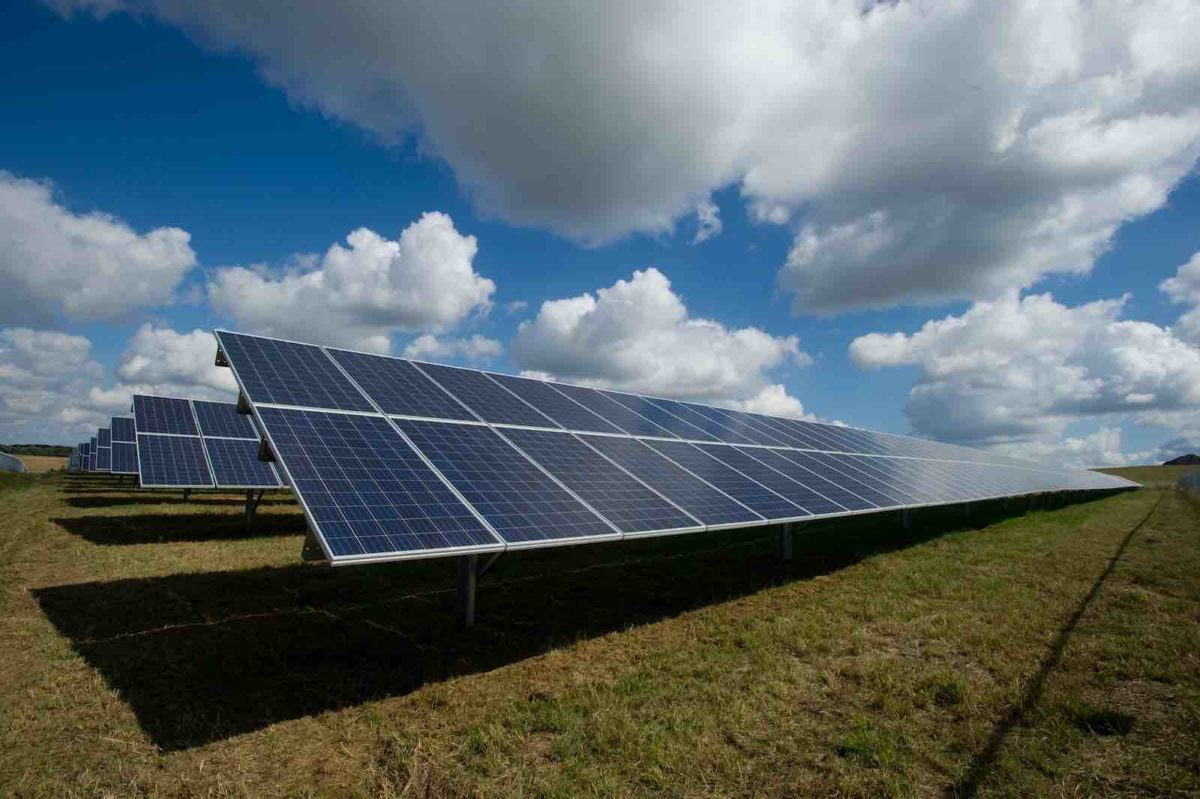
- Ground-mount systems. For farms with open south-facing fields and no suitable roof space, ground-mounted arrays on racking systems are a popular choice. They can be oriented at the optimal angle for maximum production and are easier to access for cleaning and maintenance. The tradeoff is land use — a 25 kW ground-mount array requires roughly 2,500–3,000 square feet.
- Agrivoltaics. Agrivoltaics — also called “dual-use solar” — places panels above crops at a height that allows farming to continue underneath. Research has shown that certain crops (lettuce, herbs, shade-tolerant vegetables) actually perform as well or better under elevated panels because the shade reduces heat stress and water demand. This approach lets farmers generate solar income while continuing to produce food on the same land.
- Solar water pumping systems. Standalone solar pump systems are one of the most cost-effective uses of solar on a farm. A dedicated photovoltaic panel array powers a pump directly — no grid connection, no generator, no fuel cost. These are particularly practical for remote stock water points, irrigation ponds, and well pumps in areas without easy grid access.
USDA and Federal Incentives for Farm Solar
US farmers have access to some of the best solar incentives in the world. Stacking federal grants, tax credits, and state programs can dramatically reduce the net cost of a solar installation.
- REAP (Rural Energy for America Program). The USDA’s REAP program is the flagship grant for farm solar. It covers up to 50% of eligible project costs for agricultural producers and rural small businesses. In recent years REAP has been significantly expanded under the Inflation Reduction Act, with more funding and simplified applications. Grant amounts range from $2,500 to $1 million for solar projects. Applications are accepted on a rolling basis through your local USDA Rural Development office.
- Investment Tax Credit (ITC). The federal ITC currently provides a 30% tax credit on the full installed cost of a solar system for businesses, including farms. For a $40,000 system, that’s $12,000 directly off your tax bill — not just a deduction, but a credit. Farm LLCs and sole proprietors can both claim it on Schedule F.
- Bonus depreciation / MACRS. Commercial solar systems qualify for 5-year accelerated depreciation under MACRS (Modified Accelerated Cost Recovery System), plus 60% bonus depreciation in 2024. Combined with the ITC, a farmer in a meaningful tax bracket can recover 60–70% of system cost in the first year through credits and depreciation alone.
- Net metering. Most states require utilities to credit farmers for excess solar electricity sent to the grid. Net metering effectively turns your meter backward when you’re producing more than you consume, further shortening the payback period.
- State-level rebates and programs. Many states offer additional incentives — property tax exemptions for solar systems, sales tax exemptions on equipment, and utility rebate programs. Check your state’s energy office or the DSIRE database (dsireusa.org) for a full list of what’s available in your area.
How Much Does a Farm Solar System Cost?
Installed solar costs for farm systems typically range from $2.50 to $4.00 per watt, depending on system size, equipment choices, mounting type, and local labor rates. Larger systems cost less per watt than smaller ones due to economies of scale.
Here’s how that translates to typical farm system sizes before incentives:
- 10 kW system (small homestead or market garden): $25,000–$40,000 installed. After 30% ITC: ~$17,500–$28,000.
- 25 kW system (mid-size farm): $62,500–$100,000 installed. After ITC + REAP grant (if approved): potentially under $35,000 net.
- 50 kW system (larger operation): $125,000–$200,000 installed. After incentives, net cost could be $60,000–$80,000 or less.
The cost of solar panel systems has been falling consistently and is expected to continue declining. The lifespan of a quality solar system is approximately 25–30 years, and most panels carry 25-year performance warranties.
How much farmland will solar panels take up?
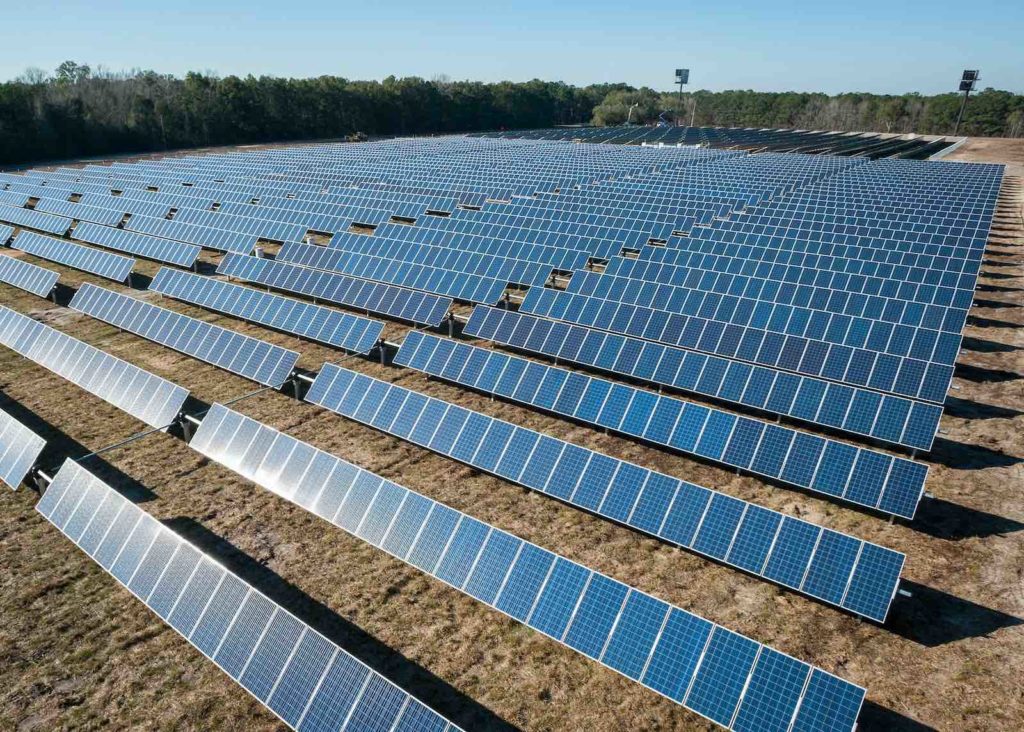
Solar panels don’t take up a lot of space when mounted on existing rooftops. For ground-mount systems, a 10–15 kW array typically requires 1,000–1,500 square feet of land. Most small to mid-size farms can accommodate this easily on non-productive areas — fence lines, odd corners, or areas near buildings.
To determine your panel count, multiply your farm’s hourly energy requirement by peak sunlight hours for your area and divide by panel wattage. Use both a low-wattage (150 W) and high-wattage (370 W) example to get a planning range.
Buying vs. leasing solar panels
Buying outright (or financing with a solar loan) gives you access to the full ITC and depreciation benefits and results in the largest long-term savings. Leasing or a Power Purchase Agreement (PPA) requires no upfront capital but typically doesn’t qualify for the ITC — the leasing company claims that instead. For most farms with any tax liability, ownership delivers better returns over a 15–20 year horizon.
Powering Farm Equipment with Solar
One of the most practical arguments for solar on a working farm is its ability to offset the highest-energy operations. Here’s where solar dollars go furthest:
- Irrigation pumps. Pumping water is the single largest electricity draw on many farms. A dedicated solar array powering well pumps or pond pumps can eliminate that cost entirely. For remote water points, a standalone solar pump system with no grid connection is often the simplest and cheapest solution. See the complete guide to farm irrigation systems for more on pump sizing.
- Grain dryers. On grain farms, harvest-season drying is an enormous energy expense. Solar doesn’t fully power high-BTU propane dryers, but it can offset the electrical components — fans, conveyors, controls — and in some setups supply electricity to electric heat pump dryers.
- Livestock water heaters. Keeping stock tanks from freezing in winter is a constant energy drain. Solar-charged battery systems can power immersion heaters or recirculation pumps that prevent freezing without running grid power to remote pastures.
- Farm lighting. Barn lighting, security lighting, and poultry lighting (which can run 14–16 hours a day for laying hens) are ideal solar loads — predictable, consistent, and easy to automate.
- Cold storage. Refrigerated storage for vegetables, dairy, and meat is one of the largest continuous loads on a small farm. Pairing a cold room with a solar-plus-battery system allows pre-cooling during daylight hours, reducing peak demand charges and grid dependence.
Solar vs. Grid Power for Farmers: A Comparison
| Factor | Grid Power | Solar Power |
|---|---|---|
| Monthly energy cost | $100–$400+ depending on usage | Near $0 after payback period |
| Reliability | Vulnerable to outages and rate increases | Stable; battery backup option available |
| Setup cost | None (already connected) | $10,000–$200,000 depending on scale |
| Payback period | N/A | Typically 6–10 years with incentives |
| Maintenance | None (utility responsibility) | Minimal — panel cleaning, annual inspection |
| Environmental impact | Dependent on grid mix (often fossil fuels) | Zero emissions during operation |
| Income potential | None | Net metering credits; potential REAP grant |
The benefits of on-grid vs off-grid solar power for your farm
There are two main types of solar power: on-grid and off-grid. On-grid solar is connected to the electricity grid, while off-grid solar is not.
Which type will benefit your farm depends on factors like how much energy you need, whether grid power is already available, and what your state’s net metering policy looks like.
On-grid solar is a great choice for farms that need to generate a lot of energy. When your farm is connected to the electricity grid, you can sell any excess energy you produce back to the grid through net metering, which can reduce your electric bill to near zero and even create a small income stream.
Off-grid solar is a good choice for farms in remote areas where grid connection is impractical or expensive. Off-grid systems almost always include a battery bank to store energy for nighttime and overcast days. The key consideration is ensuring the system is sized to generate enough electricity to meet the farm’s needs through the lowest-sun winter months.
If you’re more interested in going off-grid than installing a solar system for your farm, read this incredible guide by Zoe: Living off grid in homestead
How to choose the right solar system for your farm
When choosing a solar system for your farm, there are a few key questions to work through.
The first is how much energy you need. Review past utility bills to understand your monthly and seasonal usage. Size your system to cover your highest-use months — typically summer for irrigation-heavy operations, or winter for livestock facilities.
The second is the quality of sunlight your farm receives. Peak sun hours vary significantly by geography — Arizona farms may see 6–7 peak sun hours per day, while farms in the Pacific Northwest average closer to 3–4. Your installer should use local solar irradiance data to calculate system output accurately.
The last thing to consider is your budget — and whether you plan to pursue REAP or other grants, since these can dramatically change what’s affordable. Always get multiple installer quotes and ask each one to model your projected return after all applicable incentives.
Can I Farm the Land Once the Panels Are Removed?
Yes. The land will be fully farmable once the solar panels are removed. Ground-mount racking systems use driven posts that leave minimal disturbance when removed, and the soil beneath panels is often in excellent condition — protected from compaction and benefiting from the organic matter that accumulates in the shaded zone.
Will Solar Panels Contaminate My Soil?
No. Solar panels do not contaminate soil. Modern panels are glass, aluminum, and silicon — inert materials with no leaching risk under normal conditions. The shaded area underneath ground-mount panels can actually build organic matter more quickly, improving soil health over time.
Can I grow crops under solar panels?
Yes — this is the principle behind agrivoltaics. Shade-tolerant crops like lettuce, spinach, herbs, and some root vegetables can perform well or even better under elevated panels. You may need to adjust your irrigation approach since the panels intercept some rainfall; a drip irrigation system works particularly well in agrivoltaic setups.
Are Animals Affected By Solar Panels?
No. Solar panels produce no noise, no radiation, and no harmful emissions. Sheep and goats are commonly grazed under ground-mount solar arrays — they keep the vegetation down and the panels clean, while benefiting from the shade. It’s one of the more practical dual-use arrangements in farm solar.
Do you need planning permission for solar panels on a farm?
In the US, solar panel installations on farm buildings typically fall under standard building permit requirements rather than special agricultural land-use permits. Requirements vary by county and state. Always check with your local building department and zoning office before installation — the process is usually straightforward and most installers will handle permit applications as part of their service.
How to maintain your solar panels
Once your solar panel system is installed, maintenance is minimal compared to most farm equipment. The main tasks are cleaning the panels periodically to remove dust, pollen, and bird droppings (a hose-down a few times a year is usually sufficient), and having an annual inspection of the inverter, wiring, and mounting hardware.
You can hire a professional for cleaning and maintenance, or handle it yourself if you’re comfortable working at height. Keep a record of monthly production output — a sudden drop in output that doesn’t correspond to weather is usually the first sign of a failing inverter or a shading issue that needs attention.
The main pros and cons of installing solar panels on your farm
Pros
- Dramatically reduces or eliminates electricity bills
- Access to REAP grants (up to 50% of cost) and 30% ITC
- Reliable — no fuel costs, no supply chain risk
- 25–30 year system lifespan
- Environmentally friendly — zero emissions during operation
Cons
- Significant upfront capital cost
- Ground-mount systems consume land that could otherwise be farmed
- Output varies seasonally and requires battery storage for 24-hour reliability
How to Get Started with Farm Solar
Getting a solar system installed doesn’t have to be complicated. Most farmers find the process straightforward once they know the steps.
- Energy audit. Review 12 months of electricity bills to understand your consumption patterns by season. Identify your largest loads — irrigation pumps, refrigeration, lighting — and decide which you want solar to cover.
- Site assessment. Evaluate available roof space on barns and sheds (south-facing roof is ideal), any open ground suitable for a ground-mount array, and the quality of solar access (shading from trees, buildings, hills).
- Installer quotes. Get at least three quotes from certified solar installers. Ask each one to model the system with and without REAP, ITC, and state incentives applied, and to show projected annual production and payback timeline.
- Apply for REAP. If you’re eligible (agricultural producer or rural small business), submit a REAP application through your USDA Rural Development office before committing to an installer. REAP applications can be submitted before or after contractor selection, but approval takes time, so start early.
- Permits and interconnection. Your installer should handle building permits and the utility interconnection application for grid-tied systems. Allow 4–12 weeks for utility approval depending on your provider.
- Installation. A typical farm solar installation takes 1–3 days for rooftop systems, and 3–7 days for larger ground-mount arrays. Minimal disruption to farm operations.
- Monitoring. Most inverters include an app or web dashboard that shows real-time and historical production. Set up monitoring before your installer leaves — it’s the best way to catch any issues early.
Solar farms and solar parks: Is this an option to explore?
Yes, solar farms and solar parks are worth exploring for farmers with large acreage and favorable grid connection costs. A solar farm is a large-scale solar power plant — rows of panels generating electricity primarily for export to the grid rather than on-site use. A solar park is a designated area set aside for solar energy development.
How much land is needed for a solar farm?
A utility-scale solar farm typically requires at least 10 acres. The main difference between a farm-scale solar installation and a utility solar farm is purpose: a farm solar system is sized to meet the farm’s own needs, while a solar farm is sized for maximum generation and grid export. Some farmers lease portions of their land to solar developers as a reliable income stream.
Advantages and disadvantages of solar farms
The main advantages are a renewable income stream from land lease payments, reduced pressure to farm every acre productively, and a strong environmental contribution. The main disadvantage is land commitment — solar lease agreements often run 20–30 years, so land leased to a solar developer cannot be farmed during that period.
Conclusion
Solar panels for farmers represent one of the best-returning capital investments available to US agricultural producers right now. Between the 30% federal tax credit, USDA REAP grants covering up to 50% of project costs, accelerated depreciation, and net metering, a well-structured solar project can pay back in 6–8 years and deliver two decades of near-free electricity afterward.
Whether you start with a solar pump system for a remote irrigation point, a rooftop array on an existing barn, or a full ground-mount system tied into your main service panel — the technology is proven, the economics are compelling, and the support programs have never been more accessible. For more on running a productive, resource-efficient operation, browse the Farming hub, the Homesteading hub, and the Farm Supplies hub.
FAQ — Should I install solar panels on my farm?
Solar power helps farmers by significantly reducing or eliminating electricity bills, powering irrigation pumps and farm equipment, and providing energy independence from the grid. Federal incentives like the REAP grant and Investment Tax Credit make it financially accessible for most US farm operations.
Yes, and adoption is growing rapidly. Farmers use solar panels to generate electricity for buildings, power irrigation and water pumping systems, run cold storage and lighting, and reduce dependence on grid power. Some farmers also lease land to utility-scale solar developers for additional income.
It depends on the farm’s energy consumption. A small market garden or homestead might need a 10–15 kW system (roughly 25–40 panels). A mid-size farm running irrigation, cold storage, and livestock facilities might need 25–50 kW. The best approach is to review 12 months of utility bills and have an installer size the system to your actual usage.
Yes. Solar panels can be installed on agricultural land as rooftop systems on farm buildings or as ground-mount arrays. Agrivoltaic systems allow crops to be grown underneath elevated panels simultaneously. Check your local zoning requirements before installation.
A typical ground-mount solar installation fits roughly 150–200 panels per acre, depending on racking design and row spacing. That translates to approximately 50–75 kW of generating capacity per acre — enough to power a substantial farm operation from a relatively modest land footprint.
Solar farming works by using photovoltaic panels to convert sunlight into DC electricity, which an inverter converts to AC power usable by farm equipment and buildings. Excess generation can be exported to the grid for net metering credits, or stored in batteries for use at night and during low-sun periods.

3 replies on “Solar for Farmers: Take the first step towards using renewable energy for your farm”
[…] resources and making the most of your resources. You can do this by harvesting rainwater, using solar energy, or growing your own […]
[…] burn longer since it will gradually devour the wood the denser the wood is. All of us who rely on renewable energy sources must be aware of the different trees for […]
[…] you’re not connected to a public utility power line. You have a generator to provide power or solar panels that charges batteries. Off grid living can also mean you’re far enough away from city water that […]