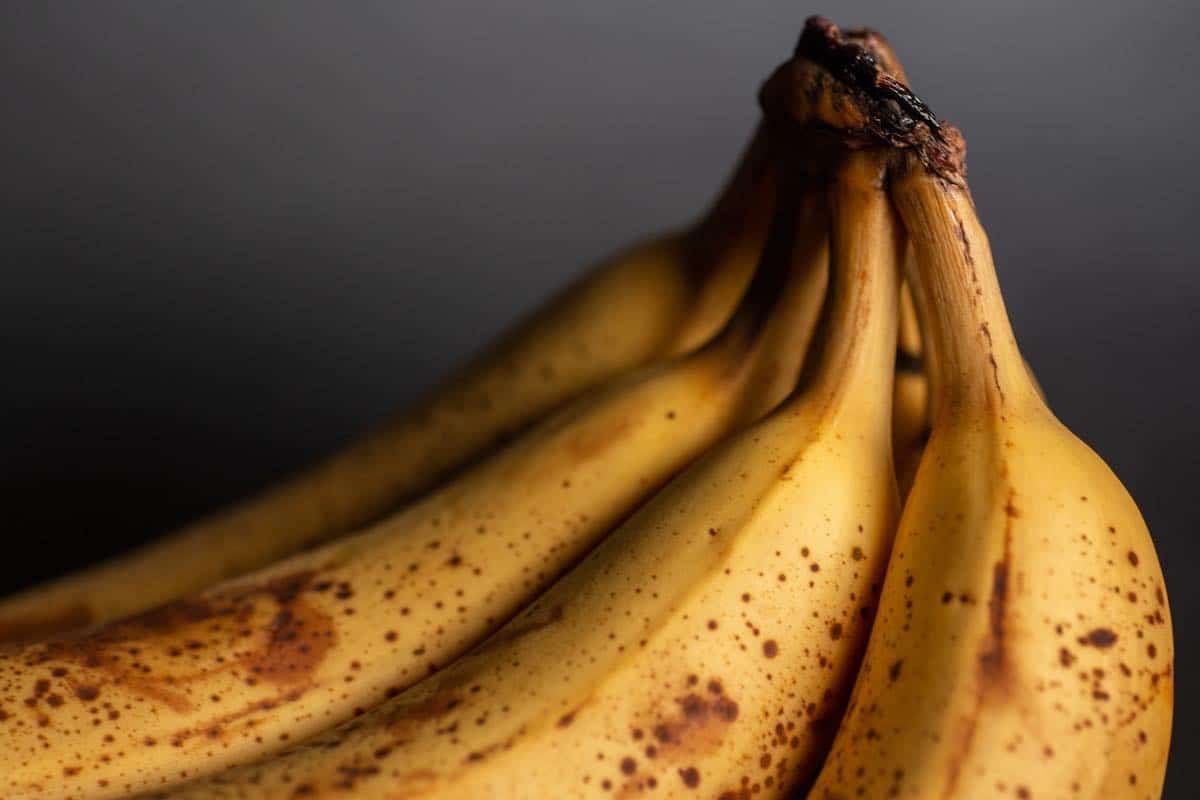
Fruit flies seem to appear out of nowhere — circling your kitchen fruit bowl, hovering around your compost bin, or swarming over garden crops. They’re one of the most persistent household and garden pests, and once they take hold, a few flies can become an infestation within days.
In this guide, we cover the most effective methods to get rid of fruit flies — DIY traps you can make in minutes, store-bought solutions, and how to tackle specific problem areas like kitchen drains, home and garden, and outdoor crops. We also cover prevention so they don’t come back.
Where do fruit flies come from?
Fruit flies are everywhere – in our homes, restaurants, and especially in grocery stores. They are basically common outdoor pests that live on overripe fruits and other fermenting liquids.
So, it’s quite easy to determine where those fruit flies on your farm are coming from. They can easily get inside your farm through any source and reside on your crops. And once they’re inside, they can multiply quickly, laying hundreds of eggs simultaneously.
Why fruit flies multiply so fast
Understanding the fruit fly lifecycle explains why even a small problem can spiral quickly. A female fruit fly can lay up to 500 eggs at a time. Those eggs hatch within 24 to 30 hours, and within about two weeks the larvae have become reproductive adults. This means a single overlooked piece of overripe fruit can seed hundreds of flies in under a month.
Adult fruit flies live around 40 to 50 days in warm conditions. They’re most active above 60°F, which is why infestations peak in summer and early fall. Acting at the first sign — even one or two flies near your fruit bowl — is far easier than dealing with a full swarm.
What’s the difference between fruit flies and gnats?
There are other insects known as gnats that people frequently mistake for adult fruit flies. They aren’t quite the same, though.
Fruit flies are winged insects, tiny in size, mostly attracted to overripe fruits and veggies. They’re also drawn to fermenting liquids, which is why you may often see them around beer or wine.
Gnats, on the other hand, are attracted to damp places like soil or decomposing leaves. They sometimes enter homes through open windows or doors.
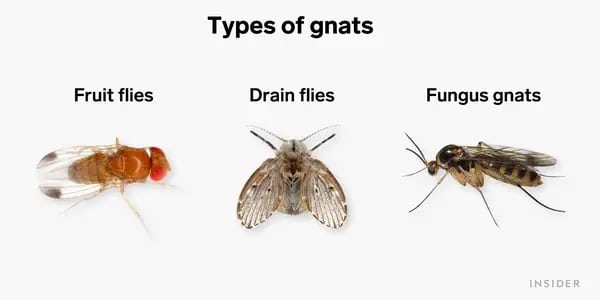
One of the easiest ways to tell fruit flies and gnats apart is their size. Fruit flies are comparatively smaller in size with red eyes, while gnats have black eyes.
So, if you’re dealing with small flying insects, look closely to see if they’re fruit flies or gnats. Essentially, throw out any spoiled produce and keep your farm clean to help prevent these pests from taking over!
How do you get rid of fruit flies?
The quickest method to get rid of fruit flies is not only about one, but several. Fruit fly traps, swatter, tapes, killing spray, etc., are all part of the fruit fly extermination process.
However, a DIY fruit fly trap is notably effective among all these methods. These fruit traps can be made in a variety of ways. Listed below are a few productive ones:
DIY tip: Fruit fly trap with apple cider vinegar
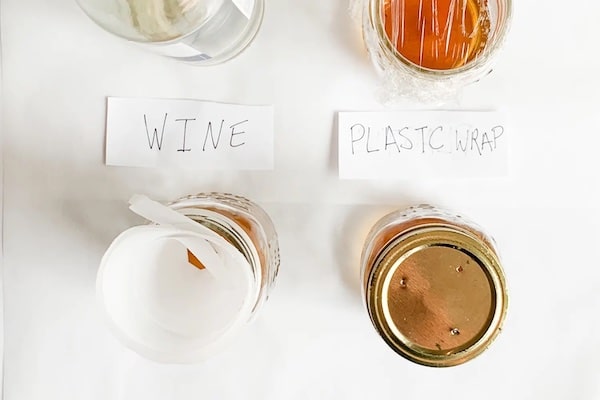
Apple cider vinegar works as an excellent fruit fly feed. So, here’s a popular technique using apple cider vinegar that will drain flies.
Time needed: 10 minutes
Get rid of fruit flies by doing a trap with apple cider vinegar
- Fill a cup, glass, or anything else with apple cider vinegar
Then, add a piece of fruit or vegetable matter to the bowl to attract the fruit flies.
- Trap it with a rubber band
Put a rubber band around the bowl’s plastic wrap to keep it firmly in place.
- Create entry holes
Make a few tiny holes in the wrap’s top.
- Place the trap!
Put the bowl in a location where you’ve noticed fruit flies gathering.
How does it work?
- They will fly in through the perforations on the top of the wrap after being drawn in by the vinegar.
- Once inside, the vinegar will soon cause them to drown.
- Empty the bowl and dispose of the contents when you see fewer and fewer fruit flies inside.
DIY tip: Mix apple cider vinegar and dish soap
- Start by adding apple cider vinegar to a fruit bowl or jar. You can use any bowl or jar, but ensure the opening is large enough for fruit flies to enter.
- Pour some dish soap into the vinegar. It will help break the surface tension of the vinegar, making it more difficult for fruit flies to escape.
- Put the container close to the area where you’ve spotted fruit flies. Due to the vinegar’s ability to draw insects, the pests will fall victim to the trap and become entrapped inside.
- Check the trap regularly and empty it when necessary. If you find that fruit flies are still escaping, you may need to add more dish soap to the mixture.
DIY tip: Lure fruit flies with beer and wine (or old homegrown fruits)
This simple trap is easy to make and effective at catching fruit flies. Here’s how to do it:
- Pour some beer or wine into a shallow dish and set out where the fruit flies congregate.
- Fruit flies will become drawn to the beer or wine and begin to feed on it.
- Once the fruit flies have been feeding for a while, they will become drunk and sluggish. At this point, you can simply scoop them up and dispose of them.
- Repeat as necessary until the fruit fly problem has been resolved.
DIY tip: How to trap fruit flies in a bottle
This is another quick method to get rid of fruit flies, and I bet you can’t go wrong with this one. All you will need is a bottle, a piece of fruit, or other sweet bait that can attract the critters.
At first, get a bottle that’s tall and narrow. It works well with using a glass soda or wine bottle.
Make a tiny hole in the bottle’s cap. You want the hole to be moderately large, so they can’t escape.
Place your chosen bait inside the bottle. Once the flies are inside, they’ll eventually die off, leaving you with a fruit fly-free farm.
How do you get rid of fruit flies instantly?
If you want to get rid of fruit flies instantly, you can do a few things.
First, use a piece of tape to catch them. Stick the tape to a surface near where the flies congregate, and they’ll be attracted to the sticky surface and get stuck.
To trap them, you can also try filling a bowl with vinegar or soapy water. Once drawn to the stench, the flies will drown.
Finally, you can use a fly swatter to kill them. Just be sure to swing quickly and aim carefully!
I’m not about DIY, what can I buy to make them go away?
Ok, I hear you. There are a few great fruit fly traps on the market. The best one we’ve tried is probably the LFTYV Best Seller. It’s a very cheap way to get them fruit flies out of your house!
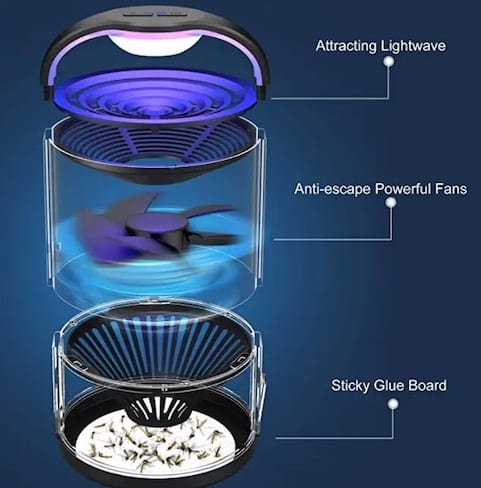
How does the LFTYV fruit fly trap work?
- Easy to operate, you only need to press catching button, and the trap will start working.
- Press catching button and light button to enter smart band change mode with 7 wavelengths in total, It will automatically switch every 15 minutes.
- It can simulates human body temperature to emit heat to further enhance the trapping ability.
- With 10 sticky glue boards, suitable to put the fly trap for indoor such as bedroom, living room, kitchen, office.
- 5W low power trap can save energy, and 4-ft power cable, you can put it wherever you want.
How to get rid of fruit flies in the kitchen
The kitchen is the most common fruit fly battleground because it provides everything they need: food, moisture, and warmth. The key is eliminating their breeding sites, not just trapping individual flies.
Common kitchen breeding sites
- Overripe or damaged fruit left on the counter
- Vegetable scraps and compost bins
- Empty bottles and cans with sticky residue
- Wet dish cloths and mops
- Kitchen drains and sink traps (see section below)
- Recycling bins with food residue
Step-by-step kitchen fix
- Remove all overripe and damaged fruit — refrigerate anything that’s ripening
- Empty and scrub your compost bin with hot soapy water
- Wipe down all surfaces, especially around the sink
- Rinse and seal all recyclables before storing
- Set an apple cider vinegar trap (see above) near the main problem area
- Keep traps running for at least a week after you stop seeing flies — eggs may still be hatching
How to get rid of fruit flies in drains
Drains are one of the most overlooked fruit fly breeding sites. Organic buildup inside pipes — food residue, grease, and slime — provides a perfect breeding environment deep inside where traps can’t reach. If you keep setting traps but the flies keep coming back, your drain is likely the source.
How to clean a drain to kill fruit flies
- Pour a full kettle of boiling water down the drain — this kills larvae and loosens buildup
- Pour ½ cup of baking soda down the drain, then follow with ½ cup of white vinegar — let it fizz for 10–15 minutes, then flush with hot water
- Use a drain brush to scrub the inside of the pipe if accessible
- Repeat every few days until the flies stop appearing
If fruit flies keep returning near your sink after thorough cleaning, a commercial enzyme drain cleaner can break down deeper organic matter that physical cleaning misses. These are safe for pipes and available at most hardware stores.
How to get rid of fruit flies on plants and in the garden
If you’re seeing flies around houseplants, check whether they’re truly fruit flies or fungus gnats (see the identification section above — gnats prefer damp soil while fruit flies are drawn to fermenting plant matter). For outdoor crops, fruit flies are most attracted to damaged and overripe produce.
Around houseplants
- Remove any damaged or overripe fruit from around the plant immediately
- Let the soil dry out between waterings — both fruit flies and gnats prefer moist conditions
- Replace the top inch of potting soil if you suspect eggs in the growing medium
- Place an ACV trap near the affected plant
In the garden and on farm crops
For outdoor crops — whether you’re growing your own vegetables or managing farm produce — harvest promptly and remove any fallen or damaged fruit from the ground. Rotting produce left in the field becomes a major breeding site. Covering fruit trees with fine mesh netting when fruit begins to ripen can prevent flies from reaching it in the first place. You can also set bottle traps (described above) near problem areas in the garden.
What smell do fruit flies hate? Natural repellents
Certain strong scents repel fruit flies and can reduce activity when used alongside traps and source removal. These aren’t standalone solutions, but they help:
- Basil: Fruit flies dislike the strong scent of fresh basil. A pot near your fruit bowl acts as a natural deterrent — and it’s easy to grow from a cutting.
- Lavender: Dried lavender sachets near fruit bowls and bin areas can help repel flies.
- Peppermint and eucalyptus essential oils: Add a few drops to a cotton ball and place near fruit fly hotspots.
- Cloves: Push whole cloves into a piece of citrus fruit and place it on the counter — it smells great and deters flies.
How to prevent fruit flies coming back
Once you’ve cleared an infestation, these habits will stop fruit flies from re-establishing:
- Refrigerate ripe fruit rather than leaving it on the counter
- Keep compost bins tightly sealed and empty them at least every two days in warm weather
- Rinse produce when you bring it home — eggs can be present on store-bought fruit and veg
- Wipe down kitchen surfaces daily, especially around the sink
- Don’t leave dirty dishes or wet cloths sitting out overnight
- Clean drains weekly with boiling water or a baking soda and vinegar flush
- Seal all bins and food waste containers
If fruit flies are a recurring problem, keeping a small permanent ACV trap near your fruit bowl year-round catches strays before they multiply. Change the vinegar every week or two to keep it fresh and effective.
Conclusion: Get rid of fruit flies for good!
Fruit flies are annoying but beatable. The key is attacking them on two fronts at the same time: removing their breeding sites (overripe fruit, moist drains, compost residue) and setting traps to catch the adults currently flying around. Traps alone won’t solve the problem if the breeding source is still active.
Work through the sections above that match your situation — kitchen, drain, plants, or outdoor crops — and keep traps running for a week after the last fly disappears. Eggs hatch long after the adults are gone. For prevention, the simplest habit is refrigerating fruit as soon as it ripens and keeping your compost bin sealed tight.
Frequently Asked Questions – Get rid of Fruit Flies
Fruit flies breed extremely fast. A female can lay up to 500 eggs at a time, and those eggs hatch within 24-30 hours. A single piece of overripe fruit left on your counter can trigger an infestation in less than two weeks. Common sudden triggers include fruit ripening faster than expected in warm weather, a forgotten vegetable at the back of the fridge, or flies entering on store-bought produce that already had eggs on the skin.
The fastest way to kill fruit flies on contact is a spray of rubbing alcohol diluted with water (70% isopropyl, sprayed directly at flies) or a commercial fly spray. A fly swatter works too for individual flies. However, killing adult flies on the spot won’t solve the problem if breeding sites are still active — eggs and larvae will keep hatching. Combine instant-kill methods with trap placement and source removal for lasting results.
The most common causes are overripe fruit left out, uncovered compost bins, damp drain buildup, and unwashed produce brought in from outside. Fruit flies can also breed in mop buckets, wet dish cloths, spilled juice under appliances, and recycling bins with food residue. Warm temperatures accelerate breeding, which is why infestations are worse in summer and early fall.
The fastest combined approach is: (1) remove all overripe fruit and seal your compost bin immediately, (2) set an apple cider vinegar trap with a few drops of dish soap within the next 10 minutes, and (3) pour boiling water down your drain. This attacks both the adults flying around and the most common breeding sites at the same time. You should notice a significant reduction within 24-48 hours.
Fruit flies are most strongly repelled by basil, lavender, peppermint, eucalyptus, and cloves. Placing a pot of fresh basil near your fruit bowl is one of the simplest natural deterrents. Peppermint and eucalyptus essential oils on a cotton ball work well near problem areas. Whole cloves pushed into a piece of citrus fruit are another classic and effective option. These smells won’t eliminate an active infestation on their own, but they help keep numbers down once you’ve dealt with the source.
Adult fruit flies live approximately 40-50 days under warm, favorable conditions. However, the full lifecycle from egg to adult takes only about 8-14 days. This rapid development is why infestations seem to explode quickly. Even after you eliminate the adults, eggs already laid will continue hatching for up to two weeks, which is why it’s important to keep traps running well after you stop seeing live flies.
No, fruit flies do not bite humans. They have no biting mouthparts. Their mouths are designed for feeding on liquids from fermenting fruit and organic matter, not for piercing skin. While they are a nuisance and can contaminate food, they pose no direct physical threat to people or animals.