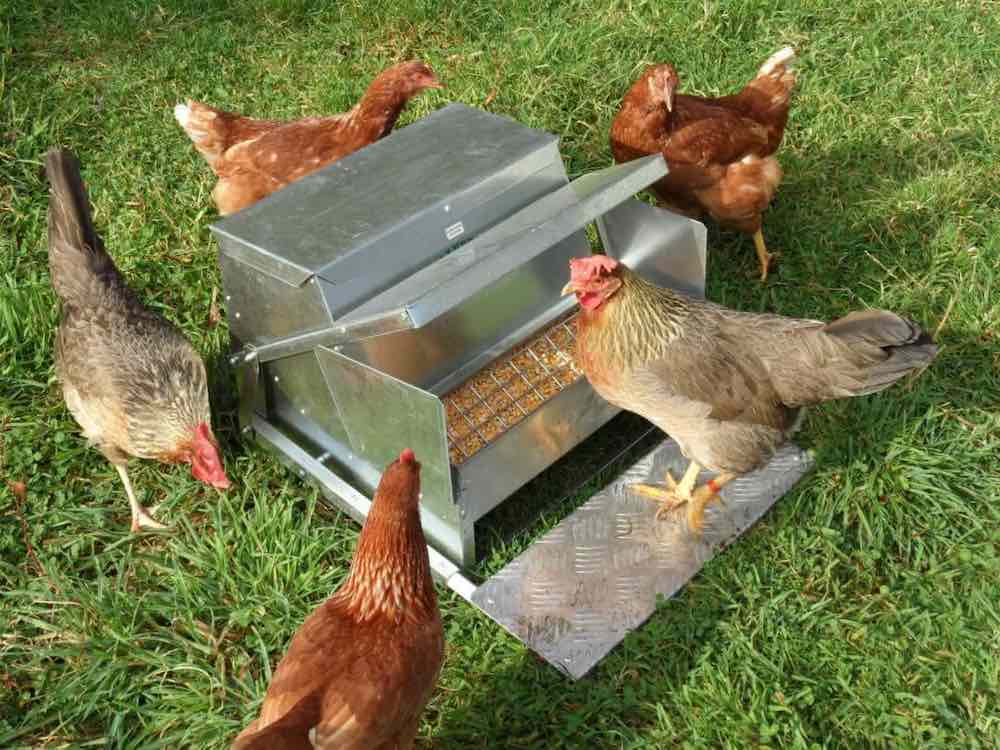
The right chicken feeder can make a real difference to your flock’s health, your feed bill, and how often you find yourself chasing spilled grain around the coop. A poorly designed feeder lets chickens scratch feed onto the ground, attracts rodents, and can expose wet feed to mold — and choosing the right chicken feed matters just as much as the feeder itself — all problems that cost money and stress birds out. Getting the feeder right from the start means less waste, a cleaner coop, and a flock that eats at its own pace without competition.
Whether you keep three backyard hens or manage a flock of thirty, there’s a feeder designed to match your setup. From simple gravity-fed hoppers to pest-proof treadle feeders, the options are more varied than you might expect. This guide walks you through what to look for, the different styles available, and our top picks for every flock size — so you can stop guessing and start feeding smarter. If you’re new to keeping chickens, the Farm Animals hub is a great place to start building your knowledge.
What to Look for in a Chicken Feeder
Before you buy, it’s worth thinking through a few key factors. The feeder that works for a backyard flock of four will not necessarily suit a farm with thirty birds — and vice versa.
Capacity
Capacity is the most practical starting point. Adult hens eat around 0.25 lbs (4 oz) of feed per day. A flock of 10 birds needs roughly 2.5 lbs of feed daily. A feeder holding 25 lbs would last around 10 days for that flock, which is a reasonable refill interval for most keepers. Larger feeders reduce your trips to the coop — a definite bonus in winter.
Material
Galvanized steel is the gold standard for outdoor feeders — it resists rust, holds up in all weather, and tends to last for years. Plastic feeders are lighter and often cheaper, but look for BPA-free, UV-resistant plastic if the feeder will be sitting in direct sunlight. Cheaper plastic can crack, warp, and start harboring bacteria over time.
Weather Resistance
Feed that gets wet clumps, molds, and can cause crop issues in your birds. Any feeder used outdoors needs a rain hood, covered ports, or a design that actively sheds water. Even inside the coop, look for a feeder with covered ports — chickens will roost on anything, and droppings in the feed are a real problem.
Anti-Waste Design
Chickens are enthusiastic eaters and remarkably efficient at flicking feed out of open troughs. Look for feeders with narrow feeding ports, anti-scratch lips, or recessed troughs that make it physically harder for birds to bill out their feed. A treadle-style feeder goes furthest here — the lid only opens when a bird steps on the treadle plate, keeping feed completely sealed the rest of the time.
Pest Control
An open feeder left overnight is essentially a dinner invitation for rodents. Treadle feeders close when not in use and are too heavy for rats to open. Hanging feeders, raised off the ground, also deter opportunistic pests. This matters more than it might seem — rat infestations in a chicken run are a serious biosecurity issue. You can read more about feed management on the Farm Feed hub.
Types of Chicken Feeders
Understanding feeder types makes it much easier to match the right option to your situation. Each style has a clear use case.
Gravity / Hopper Feeders
The simplest design around. Feed sits in a hopper and falls by gravity into a pan or trough at the base as birds eat. These are low-cost, require no batteries or mechanisms, and are easy to clean. The downside is they leave feed exposed — spillage and rodent access are real concerns unless the feeder is hung or positioned carefully.
Hanging Feeders
A gravity feeder suspended from a rope or hook so that the trough sits at bird chest height. Hanging keeps feed off the ground and makes it harder for rodents to access. Adjusting the height as chicks grow is easy. These are popular for small backyard flocks and work well both inside and outside the coop.
Treadle / Automatic Feeders
A step-on plate (treadle) opens the feeder lid when a bird stands on it, and closes again when the bird steps away. This keeps feed sealed from weather, wild birds, and rodents at all times. Treadle feeders are the best choice for outdoor runs and for anyone dealing with pests. They take a few days of training for birds to learn, but most flocks adapt quickly.
PVC Tube / Port Feeders
Feed is stored inside a vertical PVC pipe or purpose-built tube and dispensed through side-mounted ports that birds reach into to eat. These are popular as DIY builds and are excellent at reducing waste — narrow ports make it almost impossible for chickens to bill feed out. They work best inside a dry coop. You’ll find farm supplies including pipe fittings at most farm and hardware stores if you want to build your own.
Best Chicken Feeders
These five feeders cover everything from small backyard flocks to large free-range operations. All are available on Amazon and have been selected for their build quality, real-world reviews, and value for money.
1. Grandpa’s Feeders Automatic Chicken Feeder — Best Treadle Feeder Overall
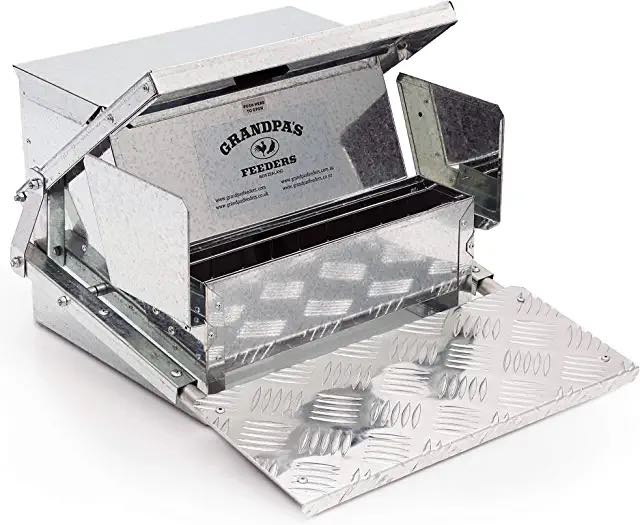
Grandpa’s Feeders has been making the same style of treadle feeder for over 20 years, and it shows. The galvanized steel body is built to sit in a run through every season without rusting or warping. The treadle mechanism is well-calibrated — light enough for a standard hen to open easily, but heavy enough that a rat simply cannot budge it. The lid seals completely when not in use, keeping feed dry and inaccessible to wild birds, sparrows, and vermin around the clock.
The feeder holds around 20 lbs of feed (approximately 9 kg), which is enough for a flock of 6–8 birds for around 10 days between refills. Safety side guards prevent curious birds from getting a wing or foot caught in the mechanism. If you have a free-range flock and a rodent problem, this feeder will pay for itself in saved feed in just a few months.
The main trade-off is price — it’s the most expensive option on this list. It’s also on the heavier side, which makes repositioning it inside a small coop a two-person job. But for anyone serious about reducing waste and keeping pests out, it’s hard to beat.
2. RentACoop Automatic Metal Treadle Feeder — Best Budget Treadle Feeder
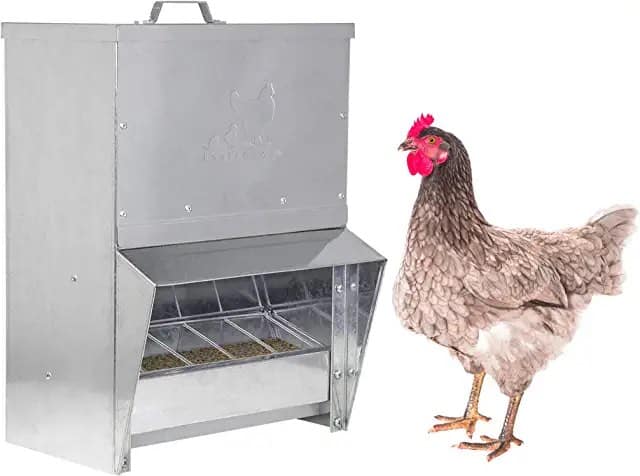
RentACoop’s treadle feeder delivers most of the pest-proofing benefits of the Grandpa’s Feeder at a noticeably lower price point. It’s constructed from galvanized aluminum, making it both weatherproof and light enough to move around the run without much effort. The lower-lid locking mechanism is specifically designed to stop raccoons from prying it open — a genuine problem in rural areas where wildlife pressure is high.
With a 25 lb capacity, it suits small to medium flocks comfortably. The included rain guard sits above the feeding area to deflect water, which is a thoughtful addition for anyone keeping the feeder outside year-round. The treadle mechanism is a little lighter than the Grandpa’s design, so if you keep bantam breeds or very small hens, you’ll want to confirm they have the weight to trigger it.
Most users find that birds learn to use the treadle within three to seven days — placing a few treats on the treadle plate speeds the training process significantly. Overall, this is an excellent mid-range choice for anyone wanting treadle-level protection without the premium price tag. The type of feed you use matters here — pellets flow more reliably than mash through treadle feeders.
3. OverEZ Chicken Feeder — Best for Large Flocks
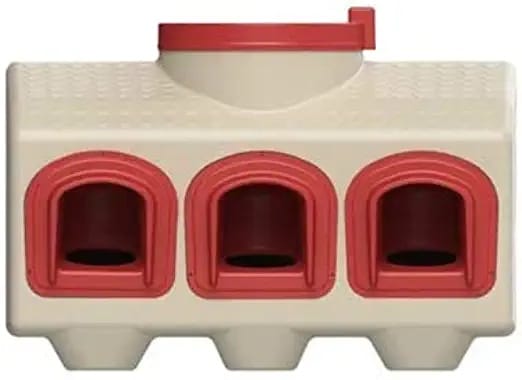
If you’re managing a larger flock and want to cut down on refill trips, the OverEZ is in a class of its own for capacity. It holds 50 lbs of feed — enough to last a flock of 10 birds around three weeks between refills. The wide-mouth opening at the top makes filling it a quick, no-spill job, and the recessed port channels are engineered so runoff water sheds away rather than draining into the feed.
The BPA-free, UV-stabilized plastic body is built for outdoor use and resists cracking even in cold weather. Three birds can feed simultaneously from the side ports, which reduces the kind of pecking-order stress you see at narrow-mouth feeders when one dominant hen monopolizes the feed. It works indoors and outdoors, and can sit flat on the floor or be raised on a platform to keep chickens from kicking debris into the tray.
The OverEZ is a gravity feeder rather than a treadle feeder, so it’s not as pest-resistant as the RentACoop or Grandpa’s models. For indoor coop use or well-secured runs, that’s a reasonable trade-off for the sheer convenience of a 50 lb capacity. It’s particularly popular with homesteaders who manage 12–20 bird flocks and want to spend less time at the feeder each week. Good pairing with the nutrients and feed guide if you’re also thinking about what to put in it.
4. Harris Farms Galvanized Hanging Poultry Feeder — Best Hanging Feeder
Harris Farms has been supplying poultry keepers for decades, and their 30 lb galvanized hanging feeder is a no-frills workhorse that just does its job year after year. The galvanized steel construction means it will outlast plastic equivalents by a wide margin. Hung at the right height — trough level with the birds’ backs — it significantly reduces the amount of feed that ends up on the ground.
The design is simple: a cylinder hopper that feeds grain down by gravity into a ring trough. Multiple birds can eat simultaneously from any point around the trough, which makes it good for flocks where pecking-order dynamics cause stress at single-port feeders. At 30 lbs capacity, it suits flocks of 8–15 birds without daily refilling.
This is the feeder to choose if you want something reliable, affordable, and built to last — and you’re not dealing with a significant rodent problem. It’s not pest-proof by design, but hanging it from a cord and bringing it inside the coop at night covers most situations. A solid everyday choice for backyard flocks that need more capacity than a small plastic hopper provides.
5. Little Giant Plastic Hanging Poultry Feeder — Best for Small Flocks and Chicks
For a small backyard flock, a 50 lb feeder is overkill — and the Little Giant 11 lb plastic hanging feeder is a much more proportionate fit. It holds enough feed for 3–5 birds for a week to 10 days, comes with an anti-scratch vane in the trough to reduce spillage, and is light enough to hang from a coop rafter with a simple carabiner clip. The bright red color makes it easy to spot when the feed level is getting low.
The plastic construction means it’s easy to sanitize thoroughly — a genuine advantage when keeping chicks or recovering birds that need a clean feeding environment. It’s also one of the most affordable feeders on the market, making it a good starter option for first-time chicken keepers who want to try out a hanging style before committing to a larger setup.
The downside is longevity — plastic does eventually crack, particularly in temperature extremes. But for a feeder that lives inside a coop or covered run, it can last several years without issue. Pair this with the homesteading hub if you’re just getting started with backyard poultry and want to learn more about the broader setup.
How Much Feed Does a Chicken Need Per Day?
The standard figure is around 0.25 lbs (4 oz) of feed per hen per day for a standard laying breed like a Rhode Island Red or Plymouth Rock. Bantam breeds eat less — closer to 2–3 oz — while large breeds like Jersey Giants can eat up to 6 oz daily.
Free-range birds who spend time foraging will eat less from the feeder, particularly in summer when insects, seeds, and green material are abundant. Confined birds or those kept in winter when foraging isn’t possible will rely entirely on the feeder for their nutritional needs.
Here’s a quick sizing reference:
| Flock size | Daily feed need | Weekly feed need | Minimum feeder capacity (1 week) |
|---|---|---|---|
| 4 birds | 1 lb | 7 lbs | 7–10 lb feeder |
| 8 birds | 2 lbs | 14 lbs | 15–20 lb feeder |
| 12 birds | 3 lbs | 21 lbs | 25 lb feeder |
| 20 birds | 5 lbs | 35 lbs | 50 lb feeder |
A good rule of thumb: buy a feeder that holds at least one week’s worth of feed for your flock. That way you’re refilling once a week at most, and you have a buffer for busy periods or unexpected flock growth.
How to Reduce Chicken Feed Waste
Feed waste is one of the most controllable costs in backyard chicken keeping. It’s estimated that 30% or more of the feed put into an open trough feeder ends up on the ground — eaten by wild birds, rodents, or simply trampled into the bedding. A few simple changes can cut that number significantly.
Match the Feeder Height to Your Birds
A feeder positioned too low invites chickens to scratch and bill feed out of the trough. The trough should sit at roughly back height for your birds — around 6–8 inches off the ground for standard laying hens. Hanging feeders make this adjustment easy as chicks grow.
Don’t Overfill the Feeder
Filling a trough-style feeder right to the brim guarantees spillage. Fill to about two-thirds capacity at most. Feed should be easily accessible without being so deep that birds fling it out when pushing their beaks in.
Use a Treadle Feeder in Pest-Heavy Environments
If you’re going through feed faster than expected and can’t account for it through your flock’s appetite, rodents are almost certainly the cause. A treadle feeder eliminates overnight feeding completely. This is also good biosecurity practice — rats that visit your coop can spread disease as well as steal feed.
Bring Feeders in at Night
If a treadle feeder isn’t in your budget, simply bringing any open feeder inside the coop at dusk removes nocturnal feeding opportunities for rodents. Chickens don’t eat in the dark anyway, so there’s no downside to the birds.
Switch to Pellets Rather Than Mash
Mash (finely ground feed) creates more waste than pellets or crumbles because it’s harder for chickens to pick up cleanly. Pellets are the most efficient feed form for reducing waste — birds eat them whole and can’t shake them out of the feeder as easily. Check the Farm Feed hub for guidance on which feed format works best for your breed and age group.
Frequently Asked Questions
How often should I fill a chicken feeder?
For most backyard flocks, once a week is the ideal refill frequency — it keeps things manageable without letting feed sit long enough to go stale or attract pests. Choose a feeder capacity that matches your flock size for weekly refills using the table above. Free-choice feeding (keeping the feeder topped up at all times) is the standard approach for laying hens, as restricting feed affects egg production.
Should chicken feeders be inside or outside the coop?
Either works, but there are good reasons for both. Keeping feeders in the run encourages birds to be active and outdoors during the day. Keeping them inside the coop helps protect feed from weather and wild birds. If you keep feeders outside, use a weatherproof design with a rain hood, or position them under a covered section of the run. Avoid leaving any open feeder outside overnight — that’s when rodent pressure is highest.
What size feeder do I need for 10 chickens?
Ten standard hens eat roughly 2.5 lbs of feed per day, or about 17–18 lbs per week. A 25 lb feeder will give you just over a week between refills, which is a comfortable interval. If you want to stretch that to two weeks, the 50 lb OverEZ feeder is the right move. Avoid going smaller than 20 lbs for a flock of 10 — you’ll be refilling every few days, which adds up quickly.
How do I stop rats getting into chicken feed?
The most effective solution is a treadle feeder — the lid requires a chicken’s body weight to open, which rats cannot replicate. Short of that: bring open feeders inside the coop at night, store your bulk feed in metal bins with tight-fitting lids, and check around the base of your coop for signs of burrowing. Wild bird feed and spilled grain are also major attractors, so keeping the run clean matters as much as the feeder design itself.
Can I use a chicken feeder for ducks or other poultry?
Most large-capacity gravity and hanging feeders work fine for ducks, turkeys, and other backyard poultry. Treadle feeders can be trickier — ducks in particular may not adapt to the step-on mechanism as quickly as chickens, and their wider bills can sometimes cause blockages in narrow ports. Check the product specifications for species suitability if you’re keeping mixed poultry. The Farm Animals hub has species-specific guides if you need more detail.

2 replies on “Best Chicken Feeder: The Right Automatic Feeder to Consider and How to Choose One”
[…] both an outdoor ranging area as well as an indoor feeding area. You could also consider getting an automatic chicken feeder, it’ll save you […]
[…] – Feeders are a great way to automate the feeding process for your birds. A centralized distribution mechanism feeds the plates along the lines of food that […]