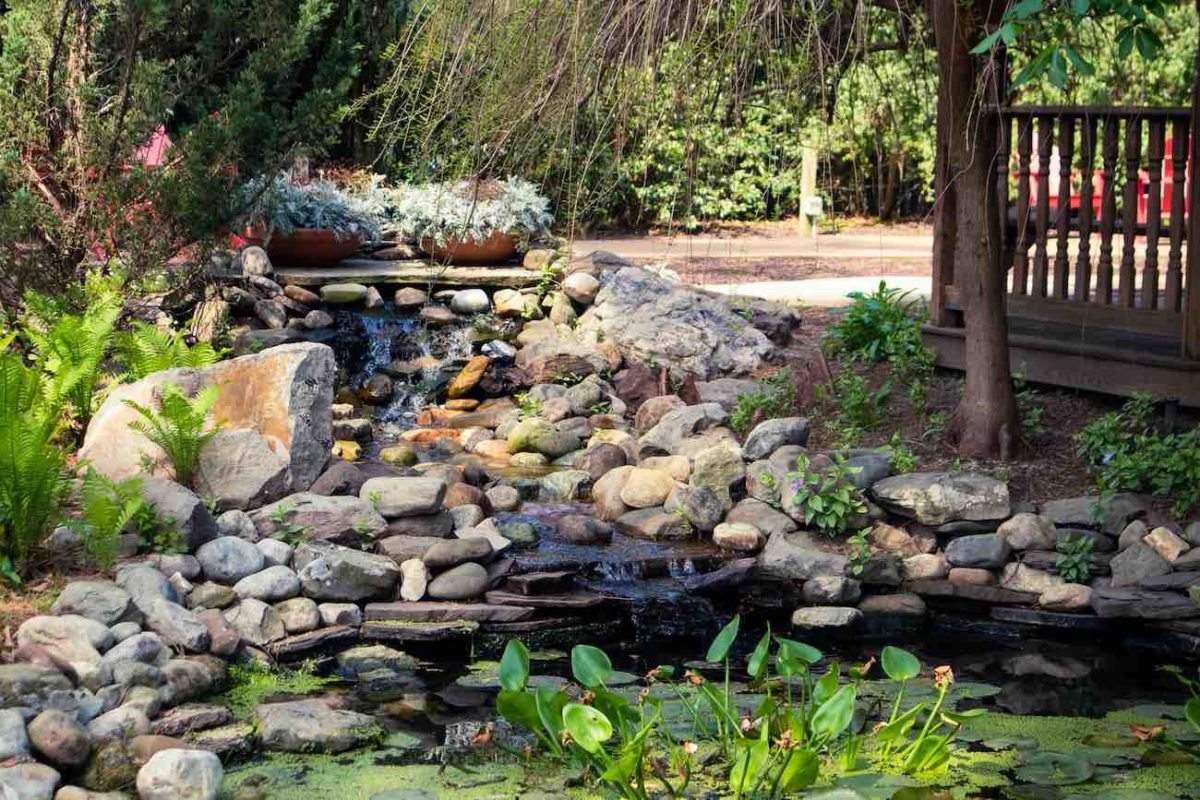
Building a pond on your farm is a great way to provide water for livestock and crops, and it can also be a beautiful addition to your property — and a feature that enhances the wider home and garden space around your farm. There are a few things to consider before you begin to build a farm pond, such as the size and location of your pond, as well as the type of liner you will use.
Future pond owners need to get the basics right around their pond site in regards to wildlife habitat, pond liner, soil erosion, and water quality to not go down a route of poor farming practices.
Here are some tips on how to build a pond on your farm and what to think about before you get started.
Why you should have a Farm Pond
There are many reasons why having a pond can be beneficial, such as:
- Providing water for your livestock
- Irrigating your crops
- Creating a natural habitat for wildlife
- Aesthetically pleasing
Using your pond to provide water for your livestock is probably the most common reason for building one. If you have cattle, they will need water to drink, and a pond is a great way to provide it.
You can also use your pond to water your crops if you have an irrigation system. This works especially well in hot weather when your crops need a lot of water.
Ponds can also be created for the purpose of providing a natural habitat for wildlife. This is especially beneficial if you have a lot of wildlife on your property. The pond will provide a place for them to drink and bathe, as well as a place to lay their eggs.
If you build your pond in the right location, you may even attract some new wildlife to your property.
Recommended reading:
What is Permaculture: Embracing the Permaculture System on Your Farm
Laws around Water
While building a pond on your farm can have many benefits, there are also some laws and regulations that you need to be aware of before you begin.
The first thing you need to do is check with your local zoning office to see if there are any restrictions on building a pond on your property. There may be setback requirements or other restrictions that you need to take into account. It’s important to have the proper permits in place before you start your new adventure.
You will also need to obtain a permit from your local Department of Health before you can begin construction. This is to ensure that your pond meets all the necessary health and safety standards.
The last thing to be aware of is that you will need to have your pond registered with the state if it is larger than 1/4 acre. There is a fee for this, but it is worth it to avoid any legal issues down the road.
Water Sources for your Farm’s Pond
The most common water source for farm ponds is a spring. If you have a spring on your property, it is probably the best option because it is already flowing and will not require any pumping.
Another option is to use surface water, such as runoff from rain or melting snow. On smaller properties, rain barrels are a practical way to collect that runoff before routing it to your pond. This is a good option if you live in an area with a lot of precipitation. Just be sure to check the local regulations to see if you need a permit to do this.
You can also use groundwater, which is water that is underground. This is usually the most expensive option, but it is also the most reliable.
There are also other options, such as using existing streams or wells. If you choose to go this route, be sure to have a professional inspect your water source to make sure it is safe for use.
Choosing the Right Location and Soil
Where you place your pond on the property matters almost as much as how you build it. The ideal site sits within a natural catchment area — a low-lying spot where rainwater already drains — so the pond fills readily without needing a pump or pipe feed from an outside source. You will also want full or near-full sun for most of the day, which helps keep the water warm enough for fish and aquatic plants while reducing the kind of deep shade that encourages harmful bacteria. Steer clear of spots that sit in a flood plain or collect standing water after every rain; chronic flooding disrupts water quality, erodes the banks, and can wash out your liner over time.
Beyond the surface landscape, pay close attention to the slope and surrounding land use. A gentle slope toward the pond on at least one side makes excavation easier and helps control the gradient of your dam wall or berm. Avoid locating your pond directly downhill from a feedlot, compost heap, or heavily fertilized field — nutrient runoff is one of the leading causes of algae blooms and poor water quality in farm ponds. If possible, keep a buffer strip of native grasses or shrubs at least 15 feet wide around the pond perimeter to filter runoff before it reaches the water.
Understanding Your Soil Type
Soil type is one of the most important — and most overlooked — factors in farm pond construction. The soil underneath and around your pond determines whether the water stays put or slowly seeps away into the ground. Before you break ground, dig a few test holes around your intended site to get a sense of what you are working with.
| Soil Type | Pond Suitability | Notes |
|---|---|---|
| Clay | Excellent | Naturally holds water, minimal liner needed |
| Sandy loam | Poor–Fair | High seepage risk, liner required |
| Silt | Good | Moderate water retention, erosion risk on banks |
| Rocky/gravelly | Poor | Excavation costly, liner essential |
| Black/organic topsoil | Fair | Good for banks but check subsoil for clay content |
A simple jar test will tell you a lot. Fill a mason jar about a third full of soil from your test holes, top it up with water, shake vigorously, and let it settle for 24 hours. Sand settles to the bottom within a couple of minutes, silt settles within an hour or two, and clay remains suspended or forms a thin layer on top. If you have mostly clay in that jar, you may be able to build a natural pond with little or no liner. If you see a thick layer of sand with almost no clay, plan on installing a synthetic liner or calling in a pond contractor who can compact bentonite clay into the base. For larger or more complex sites, it is worth hiring a soil engineer or your local USDA Natural Resources Conservation Service (NRCS) office — they offer free site assessments for farm pond projects in most states.
One more thing to check before finalising your site: the depth of the seasonal high water table. If groundwater sits only a foot or two below the surface in spring, you will struggle to maintain a stable water level and the wet conditions around the banks will become a breeding ground for mosquitoes. A simple way to test this is to dig a hole two to three feet deep after a period of heavy rain and see how quickly it fills with water. If it fills within an hour, look for a site with better drainage or plan to elevate your pond above the water table using berms rather than excavating down into it.
Farm Pond Design
Once you have chosen your water source for your new pond, it is time to start thinking about the design of your pond. The first thing you need to decide is the size of your pond. This will be determined by the purpose of your pond and the amount of space you have available.
The next thing to consider is the shape of your pond. The most common shape is oval, but you can also choose a rectangular or square shape. The shape of your pond will be determined by the space you have available and the purpose of your pond.
If you are using your pond for irrigation, you will want to make sure it is deep enough to hold a large amount of water. If you are using it for livestock, you will want to make sure it is shallow enough for them to reach the water.
The last thing to consider is the location of your pond. This is important because you need to make sure your pond is in a safe place. You will also want to make sure it gets enough sun and that the soil and surrounding land is not too sandy.
What size does my Pond need to be?
When you talk about size of a pond, pond volume is usually given in gallons. The average size of a backyard pond is about 1000 gallons. This will give you an idea of what size liner you need to purchase.
Pond depths differ based on your need. Most of the time ponds are 24″ at their deepest point. If you want aquatic plants for your pond there can be a shelf about 12″ deep for them.
A 24″ depth on the other hand is necessary if fish are going to be living in your pond. This depth keeps all the water from freezing during winter so your fish can hibernate.
To calculate the volume of your pond in gallons, use the following formula:
Width x Length x Depth x 7.5 = Volume in gallons
For example, if your pond is 10 feet wide, 20 feet long, and 3 feet deep, the calculation would be:
10 x 20 x 3 x 7.5 = 4,500 gallons
Farm Pond Construction
Step-by-Step Farm Pond Construction
- Survey and mark the site, staking out the perimeter of the pond and any dam or berm that will be required.
- Obtain all necessary permits and approvals from your local zoning office, Department of Health, and state environmental agency before any ground is broken.
- Clear vegetation from the site, removing trees, shrubs, and root systems that could compromise the liner or dam structure.
- Excavate the pond basin with a backhoe or tracked excavator, digging to your target depth and shaping the shelves for aquatic plants if desired.
- Grade and compact the banks and dam walls to a stable angle — typically no steeper than a 3:1 slope — to prevent slumping and erosion.
- Test soil seepage by filling the excavated pond with a small amount of water and checking for rapid loss over 24–48 hours before committing to a liner choice.
- Install the liner — either a synthetic EPDM or PVC sheet for sandy soils, or compact a layer of bentonite clay into the base and sides if your natural soil needs reinforcement.
- Install inlet and overflow pipes to manage water level during heavy rain events and prevent the banks from being overtopped and eroded.
- Fill the pond gradually, checking the liner and banks for leaks or movement as the water level rises, and making any adjustments before the pond is fully loaded.
- Establish vegetation on the banks using native grasses or sedges as soon as possible to stabilise the soil and reduce erosion around the pond edge.
Now that you have your design and size figured out, it is time to start construction. Farm pond building is highly dependant on the placement of your pond. The first step is to excavate the area where your pond will be located. This is best done with a backhoe or other heavy equipment.
The next step is to install a liner in your pond. There are two common types of liners: EPDM and PVC;
- EPDM is a synthetic rubber that is very durable and can last for decades.
- PVC is a plastic that is less expensive but not as durable.
Lining Your Pond
Having a liner in your pond is as essential as having a roof on your house. A liner protects the water from contamination and seepage. It also prevents the walls of your pond from collapsing.
Installing a liner is not a difficult task, but it is important to do it correctly. The first step is to lay out the liner in the excavation. Make sure it is big enough to cover the entire area with at least 2 feet of extra material.
The next step is to secure the liner in place. This can be done with sandbags, rocks, or other heavy objects. Be sure to evenly distribute the weight so that the liner does not rip or tear.
How much will it cost to build a Pond?
The cost of building a pond will vary depending on the size, location, and materials used. Small ponds are obviously likely to be cheaper but one rule of thumb can be that the average cost is between $500 and $5,000.
To get an idea of how much it will cost to build your pond, use the formula above for volume and then calculate the liner cost based on this:
Width x Length x Depth x 7.5 = Volume in gallons
The average cost of a liner is $0.50 per gallon. So, if your pond is 1,000 gallons, it will cost $500 for the liner.
Other materials you will need to purchase include:
- Pond Pump – $50-$250
- Pond Filter – $100-$300
- Pond Lights – $50-$200
- Pond Plants – $50-$200
- Pond Fish – $50-$200
Maintenance needs of a Farm Pond
Even though ponds are low-maintenance, they still need to be checked on a regular basis. You should check the water level and quality at least once a week.
It is also important to keep the pond clean. This can be done by skimming leaves and debris off the surface of the water. You should also remove any weeds that are growing in the pond.
If you have a fish pond, you will need to feed your fish on a regular basis. You should also check the oxygen levels of the water to make sure they are high enough for the fish to survive.
Pond maintenance is not difficult, but it is important to do it regularly. By taking the time to care for your pond, you will be able to enjoy it for years to come.
Seasonal maintenance is particularly important for long-term pond health. In late autumn, once aquatic plants have died back, it is a good time to partially drain the pond and remove accumulated silt and organic matter from the bottom — a layer of decomposing debris can deplete oxygen and release harmful gases as it breaks down over winter. After any heavy rain event, walk the perimeter of your pond and inspect the banks for signs of erosion, slumping, or undercutting at the waterline. Catching small problems early — a patch of bare soil on the bank, a small slump near the inlet pipe — is far cheaper than repairing a collapsed wall later.
Algae management is one of the ongoing challenges most farm pond owners face, especially in warm weather. The most effective long-term solution is good aeration: a fountain aerator or diffuser keeps the water moving, adds oxygen, and makes conditions less hospitable for algae. For a low-tech approach, barley straw bales placed at the water’s edge in early spring break down slowly and release compounds that inhibit algae growth without harming fish or other wildlife. If you have fish, avoid overfeeding — uneaten food sinks to the bottom and adds the same nutrients that fuel algae blooms. With a balanced approach to aeration and nutrient management, most farm ponds can stay clear and healthy with minimal chemical intervention.
Conclusion
Ponds are a great addition to any farm. They provide a place for livestock to cool off, a place for fish to live, and a place for plants to grow. They can also be a beautiful addition to your property.
If you follow the steps above, you can easily build a pond on your farm. Good luck!